Overview
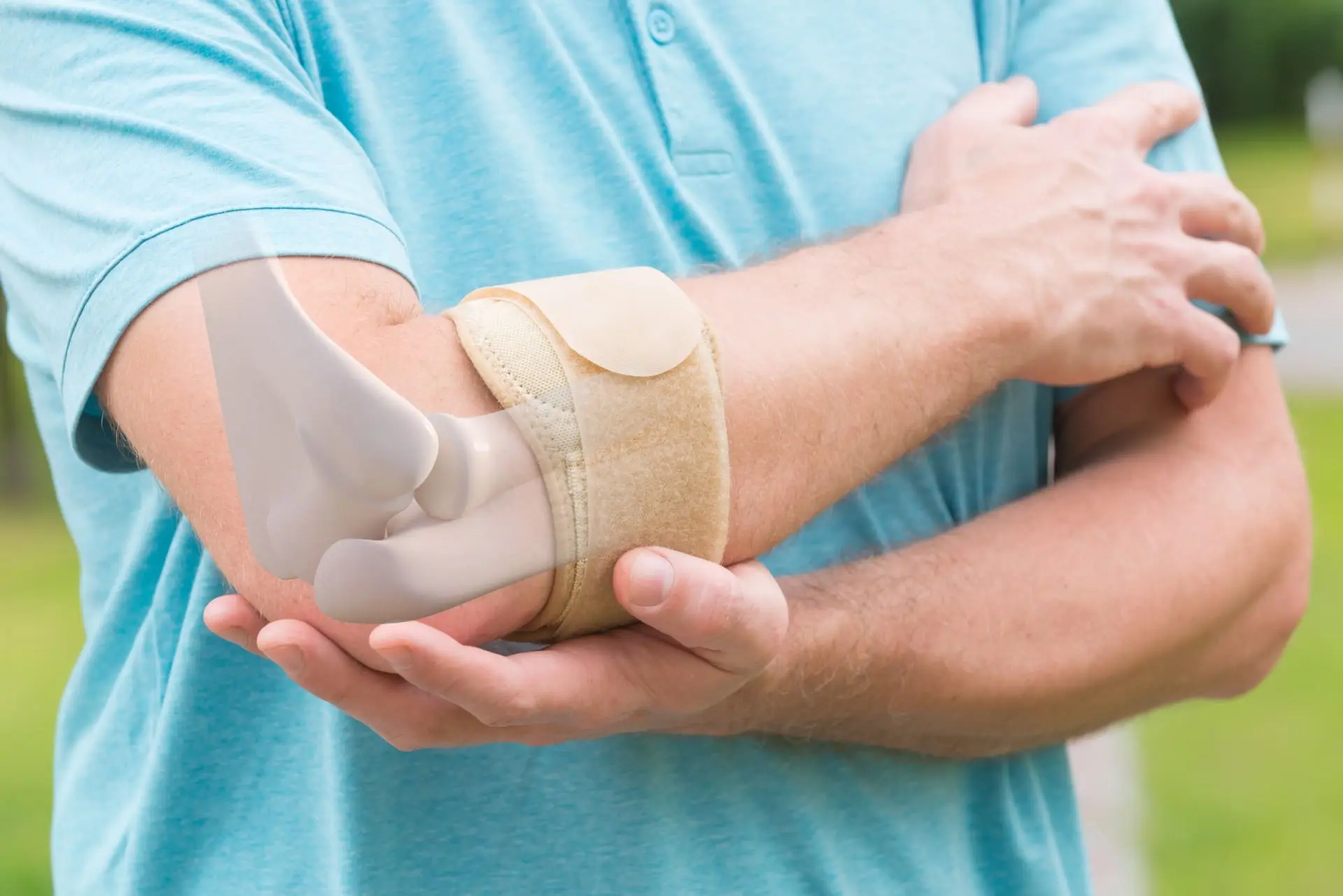
A fixed flexion deformity (FFD) is a condition in which a joint, most commonly the knee, elbow, hip, or finger, cannot be fully straightened due to stiffness, shortening of soft tissues, or structural changes around the joint. In simple terms, the affected joint remains in a bent or flexed position and cannot achieve its normal extension even with effort or external force.
This condition can arise from muscle contractures, joint capsule tightness, scar tissue, prolonged immobility, or neurological disorders. A fixed flexion deformity significantly affects daily activities such as walking, climbing stairs, dressing, or performing overhead movements depending on the joint involved.
Clinically, FFD is described in degrees—the extent to which the joint fails to reach a neutral or extended position. For example, a knee fixed flexion deformity of 15° means the knee remains bent by 15° and cannot fully straighten.
At DMPhysios, a renowned clinic in Noida specializing in spine and sports conditions, expert physiotherapists assess and manage fixed flexion deformity through patient-centered rehabilitation, focusing on restoring joint mobility, muscle length, and functional ability.
Symptoms
The presentation of fixed flexion deformity depends on the joint affected and the underlying cause. Common symptoms include:
- Limited range of motion: The joint cannot be straightened fully even with passive movement.
- Joint stiffness: Especially noticeable after prolonged inactivity or rest.
- Muscle tightness: Surrounding muscles (such as hamstrings in knee FFD) feel shortened or taut.
- Pain and discomfort: Mild to moderate pain, particularly during attempts to stretch or move the joint.
- Altered posture and gait: For example, a knee fixed flexion deformity can cause limping, compensatory hip flexion, or back pain.
- Swelling or thickening around the joint: In chronic cases due to fibrotic changes.
- Functional limitations: Difficulty in walking, standing, sitting, or performing fine motor tasks (if upper limb is involved).
Early recognition of these signs and consulting a physiotherapist at DMPhysios can help prevent the deformity from worsening and improve long-term outcomes.
Types of Fixed Flexion Deformity
While there are no strict universal classifications, fixed flexion deformity can be categorized based on severity, cause, and joint involvement:
1. Based on Severity
- Mild FFD: 5–15° restriction in extension. Often seen post-surgery or mild contracture.
- Moderate FFD: 15–30° restriction. Begins to affect functional mobility.
- Severe FFD: >30° restriction. Significantly impacts gait and posture.
2. Based on Cause
- Myogenic FFD: Due to muscle shortening or contracture (e.g., hamstrings or biceps).
- Arthrogenic FFD: Resulting from joint capsule stiffness, arthritis, or intra-articular adhesions.
- Neurogenic FFD: Arising from neurological conditions like cerebral palsy or stroke.
- Post-traumatic FFD: After fractures, burns, or prolonged immobilization.
- Post-surgical FFD: Following orthopedic procedures if postoperative rehabilitation is delayed.
3. Based on Joint Involved
- Knee Fixed Flexion Deformity
- Hip Fixed Flexion Deformity
- Elbow Fixed Flexion Deformity
- Finger or Wrist Fixed Flexion Deformity
Each type requires a specific assessment and treatment strategy, which the physiotherapy experts at DMPhysios Noida tailor to each patient’s condition and functional goals.
Causes
A fixed flexion deformity develops when the tissues around a joint lose their normal elasticity and adaptability. The most common causes include:
- Prolonged immobilization: After fractures, surgeries, or when the limb is kept in a flexed position for an extended period.
- Muscle contractures: Continuous shortening of muscles like the hamstrings (for knee) or biceps (for elbow).
- Arthritis: Rheumatoid arthritis or osteoarthritis can cause joint capsule fibrosis and fixed deformity.
- Scar formation: Post burns or deep soft tissue injury leading to restricted movement.
- Neurological disorders: Stroke, cerebral palsy, or spinal cord injuries can cause spasticity and contractures.
- Incorrect positioning: Especially in bedridden or post-operative patients.
- Postural abnormalities: Habitual bending or poor ergonomics contributing to gradual soft tissue shortening.
- Infections or inflammation: Chronic infections like tuberculosis or synovitis can cause structural joint damage.
Understanding the cause is crucial for targeted management, which is why DMPhysios employs detailed evaluation tools including goniometry, muscle length testing, and functional movement analysis.
Risk Factors
Certain factors increase the likelihood of developing fixed flexion deformity, such as:
- Advanced age (due to reduced tissue elasticity)
- Chronic joint diseases like osteoarthritis or rheumatoid arthritis
- Previous fractures or surgeries around the joint
- Neurological conditions leading to spasticity
- Prolonged bed rest or immobilization
- Poor rehabilitation compliance after injury or surgery
- Occupational postures that maintain the joint in flexion (e.g., desk jobs, sitting cross-legged for long hours)
At DMPhysios, therapists place strong emphasis on early prevention and patient education for those with high-risk factors to minimize deformity progression.
Treatment
The treatment of fixed flexion deformity involves both medical and rehabilitative interventions aimed at restoring joint mobility and preventing recurrence. The approach depends on the severity and underlying cause.
1. Medical Management
- Anti-inflammatory medications: To reduce pain and inflammation.
- Muscle relaxants or antispastic drugs: For neurological causes.
- Injections (steroids or botulinum toxin): In some cases to relax tight muscles.
- Surgical interventions:
- Soft tissue release for severe contractures
- Arthrolysis (removal of adhesions within the joint)
- Tendon lengthening procedures
However, surgery alone cannot fully correct movement patterns. Physiotherapy remains the cornerstone for regaining mobility and function, both pre- and post-surgery.
Physiotherapy Treatment
At DMPhysios, physiotherapy for fixed flexion deformity is highly individualized. Their approach focuses on progressive stretching, strengthening, joint mobilization, and functional re-education.
1. Assessment
The physiotherapist evaluates:
- Degree of deformity using goniometer
- Muscle tightness and weakness
- Joint mobility and end feel
- Posture, gait, and functional limitations
This helps design a personalized rehabilitation plan aligned with the patient’s needs.
2. Passive and Active Stretching
- Prolonged static stretching: Gradual stretching of shortened muscles (e.g., hamstrings or biceps).
- Active-assisted stretches: Patient-assisted exercises to encourage muscle participation.
- Manual stretching techniques: Therapist-assisted elongation of the contractured tissue.
At DMPhysios, stretching is done cautiously to avoid pain and micro-tears, often followed by heat therapy to enhance tissue elasticity.
3. Joint Mobilization Techniques
- Maitland or Kaltenborn mobilizations are applied to restore accessory joint motion.
- For the knee, posterior capsule mobilization and tibial glide techniques are effective.
- Mobilizations are combined with muscle energy techniques (MET) for optimal results.
4. Strengthening Exercises
Once range improves, strengthening of antagonist muscles (those opposing the flexors) is essential to maintain extension:
- Quadriceps strengthening for knee FFD
- Triceps strengthening for elbow FFD
- Gluteal strengthening for hip FFD
Exercises include isometrics, theraband resistance, and progressive functional strengthening. DMPhysios therapists ensure exercises are pain-free and progressively challenging.
5. Heat and Modalities
Before stretching, therapeutic modalities are used to relax soft tissues:
- Moist heat packs or paraffin wax therapy
- Ultrasound therapy to target deep tissue adhesions
- Tecar therapy or shockwave therapy (available at DMPhysios) to accelerate healing and improve tissue compliance.
6. Splinting and Positioning
- Static or dynamic splints may be used to maintain gradual correction.
- Night splints are particularly helpful for mild contractures.
- Correct ergonomic positioning and frequent postural changes are taught to prevent recurrence.
7. Functional Training
Once joint motion is restored:
- Gait training, balance exercises, and activity-specific retraining begin.
- Task-oriented exercises help reintegrate the joint into normal function.
At DMPhysios, therapists emphasize restoring movement confidence and daily independence, not just pain relief.
8. Patient Education
Education is key in preventing recurrence:
- Importance of regular stretching
- Maintaining good posture
- Early reporting of stiffness or pain
- Adherence to home exercise programs
Patients at DMPhysios receive detailed guidance on long-term joint care and ergonomic corrections suited to their lifestyle.
Prevention
Prevention plays a vital role in managing fixed flexion deformity. The following measures help reduce risk:
- Early Mobilization: Begin gentle joint movement soon after surgery or injury under supervision.
- Proper Positioning: Avoid prolonged joint flexion; maintain neutral alignment.
- Regular Stretching: Especially for individuals with sedentary or desk-bound jobs.
- Active Lifestyle: Engage in regular low-impact physical activities like walking, yoga, or swimming.
- Adherence to Rehabilitation: Consistent follow-up with a physiotherapist ensures optimal recovery.
- Monitor Neurological or Arthritic Conditions: Early physiotherapy intervention prevents secondary contractures.
The DMPhysios team strongly advocates proactive measures, educating patients and caregivers to incorporate movement-friendly routines into daily life.
Conclusion
A fixed flexion deformity is not just a mechanical issue, it affects posture, mobility, and quality of life. Early recognition, timely physiotherapy, and patient compliance are crucial for successful recovery. Whether the deformity stems from injury, arthritis, or neurological causes, a structured rehabilitation approach can restore function and confidence.
At DMPhysios, a leading Noida-based physiotherapy clinic for spine and sports conditions, each patient receives personalized, evidence-based rehabilitation focused on long-term improvement. Their expert physiotherapists use advanced manual therapy, therapeutic technology, and functional training to correct fixed flexion deformity effectively.
If you or a loved one are struggling with joint stiffness or a fixed flexion deformity, don’t wait until it limits your mobility.
Visit DMPhysios in Noida today to experience patient-centered rehabilitation designed to help you move freely, recover faster, and live pain-free.