
Overview
The trochlear nerve, also known as the fourth cranial nerve (CN IV), is one of the smallest and most slender cranial nerves in the human body, yet it plays an incredibly important role in coordinated and precise eye movement. This nerve supplies the superior oblique muscle, one of the six extraocular muscles that control the eye’s movements. The superior oblique muscle assists in depressing (moving the eye downward) and intorting (rotating inward) the eyeball, particularly when the eye is looking toward the nose.
When the trochlear nerve becomes injured or impaired, the condition is referred to as a trochlear nerve injury. Despite its small size, injury to this nerve can cause significant visual and functional problems because even minor misalignments in eye control can lead to noticeable symptoms. A trochlear nerve injury often results in difficulty looking downward or inward, vertical double vision (diplopia), and ocular misalignment, where one eye appears higher than the other. Patients frequently compensate by tilting their head to the opposite side of the affected eye to minimize the double vision and maintain binocular vision. Over time, this compensation may lead to neck strain and postural discomfort, making early rehabilitation essential.
The trochlear nerve is uniquely vulnerable among cranial nerves due to its long and thin course. It is the only cranial nerve that emerges from the dorsal aspect of the brainstem and travels a lengthy intracranial path before reaching the orbit. This long route makes it particularly susceptible to injury from head trauma, brainstem lesions, vascular problems, or compressive pathologies. Even mild concussions or whiplash injuries can sometimes cause a traction or stretch-related trochlear nerve injury.
At DMPhysios, a premier physiotherapy clinic based in Noida, known for its excellence in managing spine and sports conditions, cases of trochlear nerve injury are approached with a comprehensive and patient-centered rehabilitation model. The team at DMPhysios understands that every patient’s presentation and recovery pattern is unique. Their goal is not only to restore eye muscle coordination but also to enhance the patient’s postural alignment, balance, and overall visual comfort. By combining advanced neuro-physiotherapy techniques, ocular motor training, and posture correction, DMPhysios ensures that patients regain both functional vision and quality of life.
Symptoms
The symptoms of a trochlear nerve injury often depend on the severity and the cause of the nerve involvement. Common signs and symptoms include:
- Vertical diplopia (double vision) – This is the most characteristic symptom. The patient sees two images vertically displaced from each other.
- Head tilt – The patient typically tilts their head toward the side opposite to the lesion to minimize double vision.
- Difficulty looking downward and inward – Tasks like reading or descending stairs become difficult.
- Eye misalignment (hypertropia) – The affected eye may appear higher than the normal eye.
- Eye strain and fatigue – Particularly during prolonged reading or near work.
- Nausea and dizziness – Resulting from visual disorientation or eye strain.
- Reduced depth perception – Leading to clumsiness or imbalance in movement.
Patients often visit physiotherapy or neuro-rehabilitation centers like DMPhysios with complaints of dizziness, imbalance, or head tilt without initially realizing that the underlying cause is a trochlear nerve injury.
Types of Trochlear Nerve Injury
While classification may vary, trochlear nerve injuries are broadly categorized into the following types based on the site and cause of involvement:
- Congenital Trochlear Nerve Palsy
- Present since birth.
- Often due to developmental abnormalities or minor birth trauma.
- May remain unnoticed until adulthood when visual strain increases.
- Acquired Trochlear Nerve Injury
- More common and can result from trauma, vascular issues, tumors, or surgical complications.
- Typically unilateral but can sometimes affect both sides.
- Central vs Peripheral Lesion
- Central lesion occurs in the brainstem where the trochlear nucleus is located.
- Peripheral lesion affects the nerve after it exits the brainstem and travels toward the orbit.
- Central lesions often have additional neurological symptoms.
Understanding the type of trochlear nerve injury helps in determining prognosis and tailoring the rehabilitation plan at DMPhysios.
Causes
Several mechanisms can lead to trochlear nerve injury, including:
- Trauma
- The trochlear nerve is thin and long, making it particularly susceptible to head injuries.
- Even mild traumatic brain injury can stretch or damage the nerve.
- Common in road traffic accidents or sports injuries.
- Vascular causes
- Microvascular ischemia due to diabetes mellitus, hypertension, or atherosclerosis may affect the nerve’s blood supply.
- Tumors or compressive lesions
- Tumors in the brainstem, cavernous sinus, or orbit may compress the nerve.
- Infections or inflammation
- Conditions like meningitis, multiple sclerosis, or Guillain-Barré syndrome can cause demyelination or inflammation of the nerve.
- Post-surgical complications
- Cranial or orbital surgeries sometimes inadvertently damage the trochlear nerve.
- Congenital abnormalities
- Maldevelopment of the trochlear nucleus or the superior oblique muscle.
At DMPhysios, understanding the cause of trochlear nerve injury is essential in determining the rehabilitation goals and preventing recurrence or secondary complications.
Risk Factors
Certain individuals are more likely to develop trochlear nerve injury due to:
- Head trauma (sports, accidents, falls)
- Uncontrolled diabetes or hypertension
- History of neurological disorders
- Brain or orbital surgery
- Congenital eye muscle imbalances
- Microvascular disease
- Age-related vascular degeneration
Patients with any of these risk factors are advised to seek prompt medical evaluation and, if needed, specialized neuro-physiotherapy at DMPhysios for early intervention.
Treatment
The management of trochlear nerve injury depends on the underlying cause and severity. Treatment aims to restore visual alignment, reduce double vision, and improve quality of life.
1. Medical Management
- Observation: Some mild or microvascular cases resolve spontaneously within weeks to months.
- Medication: Anti-inflammatory or corticosteroid drugs may be prescribed in inflammatory causes.
- Prism glasses: Help realign images and reduce diplopia.
- Botulinum toxin injections: Temporarily relieve muscle imbalance in certain cases.
2. Surgical Management
- If diplopia or misalignment persists for more than 6–12 months, strabismus surgery may be considered.
- The surgery focuses on repositioning the extraocular muscles to restore alignment.
However, even after medical or surgical treatment, physiotherapy rehabilitation plays a vital role in restoring neuromuscular coordination and functional visual control.
Physiotherapy Treatment
Physiotherapy plays an essential role in the recovery process of patients with trochlear nerve injury. At DMPhysios, a leading clinic in Noida for spine and sports conditions, rehabilitation is patient-centered and functionally focused, targeting not only the eye muscles but also postural control, balance, and coordination.
1. Initial Assessment
The physiotherapist at DMPhysios conducts:
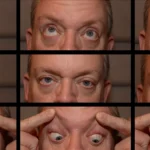
- Detailed ocular motility assessment (testing up and down, inward, and outward gaze)
- Postural evaluation (noting compensatory head tilt)
- Visual tracking and coordination tests
- Functional vision analysis (impact on reading, walking, or daily activities)
This forms the baseline for personalized rehabilitation planning.
2. Eye Movement Exercises
These help improve coordination and reduce double vision:
- Smooth pursuit exercises – Following a moving target slowly across all directions.
- Saccadic training – Quickly shifting gaze between two objects.
- Convergence and divergence drills – Focusing on near and far targets alternately.
- Superior oblique activation – Controlled downward and inward gaze exercises, focusing on re-engaging the weak muscle.
3. Visual Rehabilitation Techniques
- Alternate eye patching (temporary) to reduce visual strain.
- Fusion and stereopsis training to help the eyes work together again.
- Mirror and target board exercises to improve accuracy and alignment.
4. Balance and Posture Correction
Because trochlear nerve injury often leads to compensatory head tilt and neck strain, DMPhysios physiotherapists integrate:
- Neck and upper back muscle strengthening
- Postural correction exercises
- Proprioceptive training to restore spatial orientation.
5. Neuromuscular Re-education
- Techniques like proprioceptive neuromuscular facilitation (PNF) patterns may be applied to eye and head movement control.
- Vestibular rehabilitation exercises help manage dizziness and imbalance associated with visual disturbance.
6. Manual Therapy and Soft Tissue Release
To address neck and shoulder tightness due to chronic head tilt:
- Myofascial release
- Soft tissue mobilization
- Gentle cervical mobilization to restore alignment and relieve tension.
7. Electrotherapy (Adjunctive)
- Low-level laser therapy (LLLT) or microcurrent stimulation can support nerve healing.
- These are used cautiously under professional supervision.
8. Home Exercise Program
The rehabilitation team at DMPhysios provides individualized home exercise protocols to maintain progress. Patients are guided on performing short sessions multiple times daily for optimal results.
9. Patient Education and Counselling
Patient awareness is a major focus at DMPhysios. Patients learn:
- Importance of eye rest and ergonomics
- Avoidance of prolonged visual stress
- Maintaining good lighting and posture during work
- Adherence to rehabilitation programs for full recovery
Through consistent follow-ups, DMPhysios ensures long-term visual and postural improvement.
Prevention
Though not all cases can be prevented, certain strategies can minimize the risk:
- Use protective gear during sports or high-risk activities to prevent head trauma.
- Manage systemic conditions like diabetes and hypertension effectively.
- Avoid visual overstrain by taking regular breaks during screen time.
- Maintain good posture to prevent compensatory neck issues.
- Regular eye check-ups after head injuries to detect early signs of nerve involvement.
- Engage in balance and coordination exercises to maintain neuromuscular efficiency.
Preventive physiotherapy and postural training sessions at DMPhysios can help individuals prone to head or visual strain maintain optimal neuromuscular health.
Conclusion
A trochlear nerve injury may seem like a small neurological problem, but its impact on daily life, from reading to walking, can be significant. With timely diagnosis, proper medical management, and structured physiotherapy, full functional recovery is achievable.
At DMPhysios, a specialized clinic in Noida for spine and sports conditions, every patient with trochlear nerve injury receives individualized, evidence-based, and patient-centered rehabilitation. The focus goes beyond treating the eye; it’s about restoring the person’s confidence, function, and balance.
If you or someone you know is experiencing symptoms such as double vision, head tilt, or difficulty in eye movement, don’t delay your recovery journey. Visit DMPhysios today, where compassionate care meets clinical excellence in restoring your vision, posture, and overall well-being.