Overview
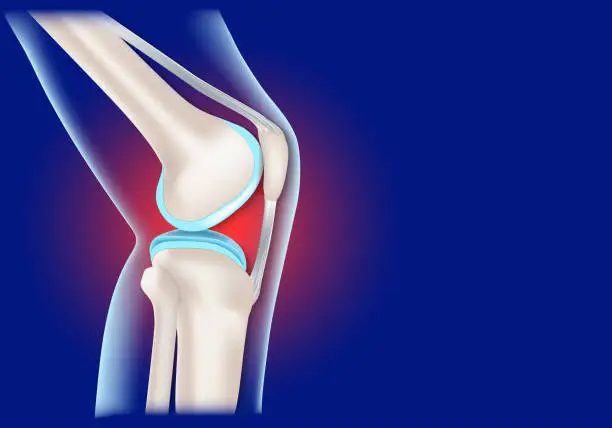
Patellar Tendinopathy, widely referred to as “jumper’s knee,” is one of the most frequent overuse injuries seen around the knee. It involves the patellar tendon — the strong, cord-like structure that connects the kneecap (patella) to the shinbone (tibia). This tendon acts as the vital link in the extensor mechanism of the knee, enabling activities such as running, squatting, climbing stairs, jumping, or kicking a ball. Every time these movements are performed, especially at high intensity, the tendon is placed under considerable mechanical load.
When this loading becomes excessive or is repeated without adequate recovery, tiny micro-tears develop within the tendon. Over time, the body’s ability to repair these small injuries lags behind the rate of damage. This imbalance leads to progressive structural changes, pain, and dysfunction — a process that, if left untreated, can progress to significant degenerative changes and long-lasting performance limitations.
Unlike an acute inflammatory injury, which is typically sudden and short-lived, Patellar Tendinopathy represents a chronic degenerative state. The collagen fibers inside the tendon lose their normal organized alignment, abnormal new blood vessels form within the tissue (increased vascularity), and cellular changes occur that further weaken the tendon. These biological changes explain why the pain is often stubborn and slow to resolve without appropriate management.
Although most commonly observed in athletes involved in sports with repetitive jumping, sprinting, or explosive movements — such as basketball, volleyball, football, and athletics — Patellar Tendinopathy is not restricted to elite players. Recreational athletes and even non-athletic individuals can develop the condition due to factors such as poor movement patterns, inappropriate training loads, or prolonged mechanical stress from daily activities.
DMPhysios — a leading physiotherapy clinic based in Noida with a strong reputation for treating spine and sports conditions through patient-centered rehabilitation — frequently manages cases of Patellar Tendinopathy. Their expert clinicians focus not just on relieving symptoms but on addressing the underlying causes, restoring tendon health, improving movement efficiency, and ensuring a safe, long-term return to full function.
Symptoms
Recognizing the hallmark signs of Patellar Tendinopathy is crucial for early diagnosis and intervention. Common symptoms include:
- Localized pain at the bottom of the kneecap, especially when pressing on the tendon.
- Pain during or after activities involving jumping, squatting, or climbing stairs.
- Stiffness or discomfort in the morning or after prolonged sitting.
- Gradual worsening of pain over weeks or months rather than sudden onset.
- Weakness or “giving way” sensation in the knee during high-demand tasks.
- Decreased ability to perform at previous levels of sport or exercise.
In more advanced stages, individuals may experience persistent pain even at rest, and the tendon may feel thickened. DMPhysios often evaluates these symptoms using evidence-based screening and functional tests to ensure accurate diagnosis of Patellar Tendinopathy.
Stages of Patellar Tendinopathy
Unlike a fracture or a ligament tear that can be classified neatly into distinct “types,” Patellar Tendinopathy is better understood as a continuum of change within the tendon. Rather than a single, uniform condition, it progresses through identifiable stages. Recognising these stages is critical, because the management plan that works in one stage may be ineffective or even harmful in another.
- Reactive Tendinopathy
This is considered the earliest stage of the process, typically triggered by a sudden increase in training load or repetitive stress on the tendon. The tendon responds by thickening in an attempt to cope with the extra demand, which leads to pain and stiffness. At this stage, the changes are largely cellular and reversible if managed promptly with appropriate load modification and early rehabilitation strategies. - Tendon Disrepair
If the excessive loading continues, the tendon enters a stage of disrepair. Collagen fibres begin to lose their neat, parallel alignment and become disorganised. There is an increase in ground substance within the tendon and an influx of new blood vessels (neovascularisation), which further disrupts normal tendon architecture. This stage represents a tipping point between short-term overload and more chronic pathology. - Degenerative Tendinopathy
In the long-standing phase, there is evidence of cell death, further breakdown of collagen, and a reduction in the tendon’s ability to tolerate load. The tissue becomes weaker and less capable of healing itself. This stage is frequently seen in individuals with months or years of symptoms. Rehabilitation needs to be highly structured and progressive, focusing on improving the remaining healthy tendon tissue and restoring function gradually.
Understanding which stage a patient is in helps clinicians select the right intervention at the right time. For example, an early reactive tendon often responds best to reduced loading and gentle isometrics, while a degenerative tendon may need heavier, slower strengthening and a longer timeline to recover.
At DMPhysios in Noida — a clinic well known for its patient-centred rehabilitation approach in spine and sports conditions — clinicians carefully assess where each patient falls on this continuum. This enables them to design a tailored, evidence-based programme for Patellar Tendinopathy, maximising healing potential and minimising the risk of recurrence.
Causes
Patellar Tendinopathy arises from a complex interplay of mechanical overload, tissue capacity, and recovery imbalance. Key causes include:
- Repetitive Jumping or Sprinting – High-frequency loading without adequate recovery.
- Sudden Increase in Training Volume or Intensity – Rapid changes in load without progressive adaptation.
- Poor Biomechanics – Faulty lower-limb alignment or landing technique that increases stress on the tendon.
- Tight or Weak Muscles – Quadriceps, hamstrings, and hip muscles imbalance can increase tendon load.
- Inadequate Footwear or Playing Surface – Hard courts or improper shoes can magnify impact forces.
- History of Previous Knee Injuries – Prior patellar tracking issues or knee surgeries predispose the tendon to overload.
DMPhysios’ team identifies these underlying contributors through a thorough evaluation of sport, movement, and training history to address the root causes of Patellar Tendinopathy.
Risk Factors
Certain factors increase an individual’s risk of developing Patellar Tendinopathy:
- Participation in high-impact sports like basketball, volleyball, football, or athletics.
- Male sex and younger age (commonly affects individuals between 15–30 years).
- Increased body weight or body mass index.
- Limited ankle dorsiflexion or poor hip/knee control.
- Insufficient warm-up or improper training programs.
- Previous episodes of knee pain or tendon issues.
Highlighting these risk factors allows DMPhysios to design preventive programs for athletes and active individuals in Noida, reducing the incidence of Patellar Tendinopathy.
Treatment
Management of Patellar Tendinopathy involves a multi-pronged approach targeting pain relief, tendon healing, and correction of contributing factors. Key elements include:
- Activity Modification – Reducing or altering high-load activities temporarily to allow tendon recovery.
- Pain Management – Use of ice, nonsteroidal anti-inflammatory medications (for short-term relief), or other modalities.
- Load Management – Gradually reintroducing and progressively increasing load to stimulate healthy tendon remodeling.
- Corrective Exercises – Strengthening and flexibility work for the quadriceps, hamstrings, and hip muscles.
- Adjunct Therapies – Shockwave therapy, dry needling, or platelet-rich plasma injections may be considered in persistent cases.
At DMPhysios, emphasis is placed on evidence-based rehabilitation rather than quick fixes, ensuring long-term recovery from Patellar Tendinopathy rather than temporary relief.
Physiotherapy Treatment
Physiotherapy is the cornerstone of successful management of Patellar Tendinopathy. DMPhysios, a Noida-based clinic for spine and sports conditions that offers patient-centered rehabilitation, follows a structured, individualized protocol. Key components include:
1. Comprehensive Assessment
- Functional testing: single-leg squat, jump landing, and strength assessment.
- Identification of faulty biomechanics or muscle imbalances.
- Use of pain scales and validated outcome measures to track progress.
2. Load Management Education
Patients are educated on how to monitor pain and load during sport or training. DMPhysios provides clear guidelines on activity modification and safe progression.
3. Eccentric and Heavy Slow Resistance (HSR) Training
- Eccentric Squats on a decline board: The gold standard for Patellar Tendinopathy, shown to stimulate tendon remodeling.
- HSR Training: Gradually increasing load and time under tension to improve tendon capacity.
- Single-Leg Step Downs / Split Squats: Build functional strength and control.
4. Hip and Core Strengthening
Weak gluteal muscles can increase knee load. Exercises like side-lying leg lifts, clamshells, bridges, and planks are integrated into the program at DMPhysios to support knee function.
5. Flexibility and Mobility Work
- Stretching tight quadriceps, hamstrings, and calves to reduce excessive strain on the patellar tendon.
- Soft tissue mobilization or myofascial release to address tightness in surrounding structures.
6. Neuromuscular Training
Re-educating landing mechanics, agility drills, and balance training to improve lower-limb control. DMPhysios often integrates sport-specific drills tailored to the individual’s goals.
7. Adjunct Modalities
- Shockwave Therapy: Stimulates healing in chronic tendinopathy cases.
- Ultrasound or Tecar Therapy: May be used to reduce pain and enhance tissue healing in early stages.
8. Gradual Return to Sport
A structured return-to-play protocol ensures the athlete regains full capacity without relapse. DMPhysios emphasizes pain-guided progression and functional readiness testing before clearance.
By combining these evidence-based strategies, DMPhysios helps patients overcome Patellar Tendinopathy and return to their preferred activities stronger than before.
Prevention
Preventing Patellar Tendinopathy is far more effective than treating it once established. Strategies include:
- Gradually increasing training load instead of sudden spikes.
- Incorporating eccentric and strength exercises into regular training.
- Maintaining flexibility of quadriceps, hamstrings, and calves.
- Ensuring proper warm-up and cool-down routines.
- Correcting biomechanical issues such as flat feet or poor landing technique.
- Using appropriate footwear and playing surfaces.
- Scheduling adequate rest and recovery between sessions.
DMPhysios runs preventive screening and conditioning programs for athletes in Noida to minimize the risk of Patellar Tendinopathy.
Conclusion
Patellar Tendinopathy is a common yet often misunderstood knee condition that can significantly impact athletic performance and daily activities. Early recognition, proper diagnosis, and evidence-based physiotherapy are key to successful recovery.
DMPhysios — a trusted clinic in Noida specializing in spine and sports conditions and renowned for its patient-centered rehabilitation — offers comprehensive assessment, advanced physiotherapy techniques, and individualized programs for Patellar Tendinopathy. Whether you’re an athlete or someone experiencing persistent knee pain, DMPhysios can help you restore function, reduce pain, and get back to your best.
Don’t wait until your knee pain worsens. Contact DMPhysios today to book an assessment and start your tailored rehabilitation plan for Patellar Tendinopathy.