Overview
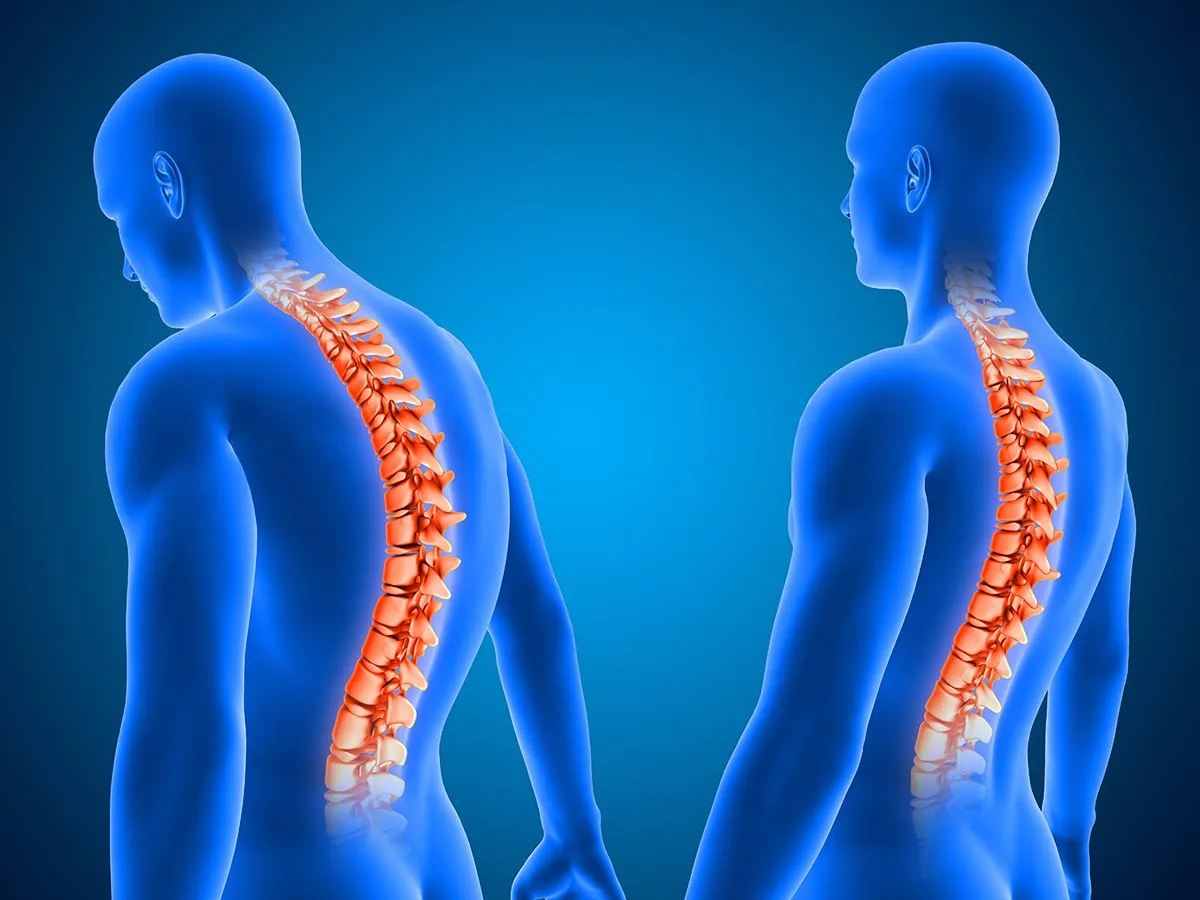
Scheuermanns Disease, commonly referred to as juvenile kyphosis, is a structural and developmental condition of the spine that typically emerges during the critical growth years of adolescence. It is distinguished by an exaggerated, rigid forward curvature of the thoracic spine, resulting in a visibly hunched or stooped posture.
Unlike postural kyphosis, which is flexible and can often be corrected with conscious effort, Scheuermann’s Disease is structural in nature—caused by the abnormal wedging of three or more consecutive vertebrae. This wedging alters the normal rectangular shape of the vertebral bodies into a more triangular configuration, which causes the spine to curve forward and lock into that position.
The onset of this condition often coincides with the adolescent growth spurt, and while it may initially present as a mild cosmetic concern—particularly in the form of rounded shoulders or poor posture—it has the potential to progress if not addressed in a timely and effective manner.
As the deformity advances, individuals may experience increasing back pain, muscular fatigue, spinal stiffness, and limited flexibility. In more severe or neglected cases, the deformity can persist into adulthood, leading to chronic discomfort, reduced functional capacity, and potential psychological impacts due to visible spinal distortion.
At DMPhysios, a premier physiotherapy and rehabilitation clinic located in Noida, we specialize in managing conditions like Scheuermanns Disease through a holistic, patient-centered approach. Our treatment philosophy emphasizes early intervention, thorough postural assessment, and a tailored rehabilitation program that focuses on restoring spinal alignment, enhancing muscular support, and improving overall mobility.
With a strong foundation in evidence-based practice and a commitment to long-term spinal health, DMPhysios is dedicated to helping adolescents and young adults overcome the challenges of Scheuermann’s Disease and lead active, pain-free lives.
Symptoms of Scheuermann’s Disease
The signs and symptoms of Scheuermann’s Disease can vary depending on the severity of the spinal curve and the individual’s age. Common symptoms include:
- A visible forward rounding or hunchback posture (particularly in the upper back)
- Mid-back pain, especially during prolonged standing or physical activity
- Back stiffness and reduced spinal flexibility
- Fatigue in the back muscles
- Tight hamstrings and hip flexors
- In severe cases, compression of the rib cage can lead to difficulty in breathing
In many adolescents, Scheuermanns Disease is discovered incidentally during routine physicals or school screenings. However, when symptoms do appear, early diagnosis and timely treatment are essential for preventing long-term complications.
Types of Scheuermann’s Disease
There are primarily two types of Scheuermanns Disease, based on the region of the spine involved:
1. Thoracic Type
This is the most common form, affecting the upper and mid-back region. It results in a noticeable forward rounding of the shoulders and upper spine.
2. Thoracolumbar or Lumbar Type
Less common but equally significant, this type affects the lower portion of the spine and may present with back pain without a visibly pronounced curve.
Both types involve structural changes in the vertebrae, such as wedging (anterior height loss), Schmorl’s nodes (disc protrusions into vertebrae), and endplate irregularities.
Causes of Scheuermann’s Disease
The exact cause of Scheuermann’s Disease is still not fully understood, but several theories exist. It is generally believed to result from:
- Genetic predisposition: A family history of spinal deformities or back problems increases the risk.
- Growth abnormalities: Uneven growth of the front and back portions of vertebral bodies leads to wedging.
- Mechanical stress: Excessive mechanical load or poor postural habits during growth spurts might contribute.
- Osteochondrosis: A disruption in the ossification process during bone growth may play a role.
At DMPhysios, we take a comprehensive approach to assess these contributing factors and develop a personalized plan for every patient.
Risk Factors
Understanding the risk factors for Scheuermanns Disease helps in early identification and prevention. These include:
- Adolescents between 12–17 years of age
- Male gender (higher incidence in boys)
- Family history of spinal deformities
- Poor posture during growth years
- Rapid skeletal growth during puberty
- Sedentary lifestyle or lack of spinal mobility
- High-intensity sports or activities that put excessive strain on the spine
DMPhysios, located in Noida, frequently educates parents and young athletes on these risks during school health programs and sports injury screenings.
Treatment
Treatment for Scheuermanns Disease depends on the age of the patient, severity of the curvature, symptoms, and progression. Common treatment pathways include:
1. Conservative Treatment
This is the first line of management, especially for mild to moderate cases:
- Activity modification
- Bracing (especially in adolescents with a curve between 45–75 degrees)
- Non-steroidal anti-inflammatory drugs (NSAIDs) for pain relief
- Postural correction techniques
- Targeted physiotherapy to restore spinal mobility and strengthen supportive musculature
2. Surgical Intervention
Surgery is reserved for severe curves (greater than 75 degrees), persistent pain, or neurological involvement. Spinal fusion is the most common procedure used to correct the curvature.
At DMPhysios, we prioritize conservative, non-invasive methods and refer for surgical opinion only when necessary, coordinating closely with orthopedic specialists.
Physiotherapy Treatment
At the heart of conservative management for Scheuermanns Disease is physiotherapy. As a spine-focused rehab center, DMPhysios offers tailored and progressive programs for adolescents and young adults diagnosed with the condition.
1. Postural Education and Ergonomic Training
- Educating the patient on optimal posture during sitting, standing, and carrying backpacks.
- Using mirrors, biofeedback tools, and cues to reinforce neutral spine alignment.
2. Mobility and Flexibility Exercises
- Thoracic extension drills: Foam roller extensions, towel roll supine extensions
- Chest openers: Doorway stretches, pectoralis major and minor stretches
- Hip flexor and hamstring stretches: To reduce compensatory lumbar lordosis and promote upright posture
3. Strengthening and Stabilization
- Spinal extensor strengthening: Prone Y-T-W exercises, superman holds
- Core strengthening: Dead bugs, bird-dogs, planks
- Scapular stabilizers: Rows, reverse flies, serratus anterior activation
4. Respiratory Training (for severe thoracic involvement)
- Diaphragmatic breathing techniques
- Rib cage mobility exercises
5. Neuromuscular Re-education
- Proprioceptive training to improve awareness of posture
- Functional movement retraining using resistance bands and light weights
6. Bracing Guidance and Monitoring
If a brace is prescribed, DMPhysios physiotherapists assist with:
- Education on brace use and wear schedule
- Monitoring brace fit and skin health
- Adapting exercises to complement bracing
7. Progression and Monitoring
- Regular assessment of spinal curvature through goniometry or radiographs
- Tracking posture, pain levels, and function through outcome measures
- Adjusting exercises based on skeletal maturity and response
Through consistent, supervised physiotherapy, patients at DMPhysios in Noida have seen excellent improvements in both posture and pain reduction without the need for invasive treatment.
Prevention
While not all cases of Scheuermanns Disease can be prevented due to genetic factors, the risk of severity and symptoms can be minimized by:
- Encouraging proper posture in school and home environments
- Promoting regular physical activity that emphasizes spinal mobility and flexibility
- Avoiding heavy backpack loads
- Monitoring spinal alignment during growth spurts
- Early screening during adolescence, especially with family history
At DMPhysios, prevention is as crucial as treatment. We regularly conduct community education and school-based screening programs to identify early signs of Scheuermann’s Disease.
Conclusion
Scheuermanns Disease may begin as a subtle postural issue but can progress into a lifelong spinal condition if not addressed early. With the right diagnosis, education, and rehabilitation strategy, most individuals can lead fully functional and pain-free lives.
DMPhysios, located in Noida, specializes in spine and sports rehabilitation using a patient-centered approach. Our experienced physiotherapists create individualized treatment plans that go beyond symptom relief, aiming for long-term postural correction and spinal health. Whether you’re a concerned parent, a young athlete, or an adult dealing with the residual effects of Scheuermanns Disease, we’re here to support your recovery journey.
Take the first step towards a straighter, stronger spine.
Contact DMPhysios today to book your comprehensive spinal assessment and get started on a path to better posture, mobility, and quality of life.
DMPhysios – Noida’s Trusted Clinic for Spine & Sports Conditions