Overview
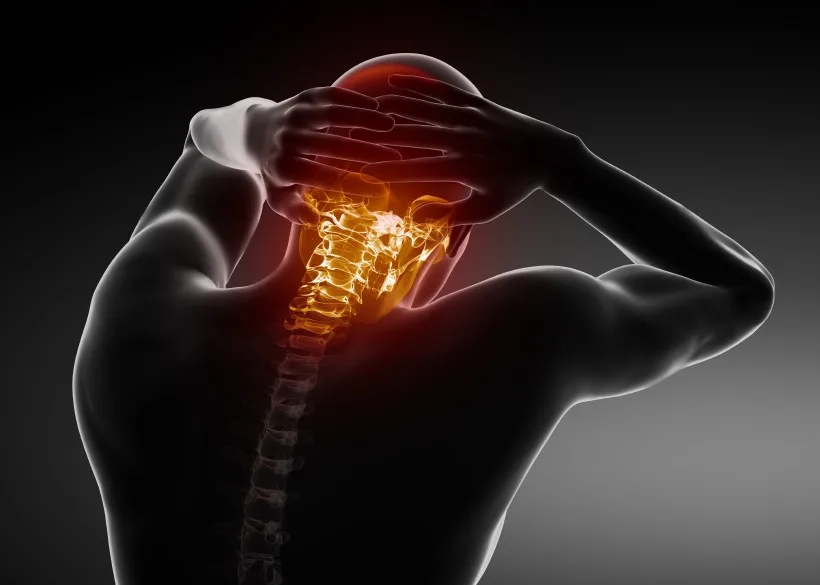
A cervicogenic headache is classified as a type of secondary headache, which means it develops as a direct consequence of an underlying disorder rather than existing as a primary condition on its own. Unlike more familiar forms such as migraines or tension-type headaches that originate from neurological or vascular factors, a cervicogenic headache stems specifically from dysfunctions within the cervical spine — the neck region.
This includes structures like the cervical vertebrae, intervertebral discs, facet joints, supporting ligaments, and the surrounding muscles. Because the nerves in the upper neck and the sensory nerves of the head converge and share similar pain pathways, irritation or structural problems in the cervical spine can lead to pain that is perceived in the head. In other words, while the pain is felt as a headache, its true source lies in the neck.
At DMPhysios, a renowned clinic in Noida recognized for its expertise in spine and sports conditions with a strong emphasis on patient-centered rehabilitation, we frequently encounter individuals who have been struggling with chronic headaches without realizing that their neck pain is the actual underlying cause.
This misunderstanding often delays appropriate care and prolongs discomfort. By identifying and diagnosing a cervicogenic headache early, patients can avoid unnecessary treatments aimed at the wrong cause and instead receive focused, evidence-based interventions that address the root of the problem. Our multidisciplinary approach at DMPhysios ensures that each patient receives a personalized plan to relieve pain, restore function, and prevent recurrences of cervicogenic headache.
Symptoms
Identifying the symptoms of a cervicogenic headache is essential for accurate diagnosis. Common features include:
- Unilateral Pain: Typically affects one side of the head and neck.
- Pain Originating in the Neck: Discomfort often starts at the base of the skull and radiates to the front of the head, around the eye, or behind the ear.
- Reduced Neck Range of Motion: Stiffness or difficulty turning the head, often accompanied by muscle tightness.
- Worsening with Neck Movements or Postures: Activities like prolonged sitting, looking up, or driving may aggravate the pain.
- Associated Shoulder or Arm Pain: Sometimes radiating pain occurs into the shoulder girdle.
- Nausea or Light Sensitivity: Less common but can be present, though milder than in migraine.
At DMPhysios, our clinicians take a detailed history and conduct thorough physical assessments to differentiate cervicogenic headache from other types of headaches such as migraine or tension-type headaches.
Types of Cervicogenic Headache
While cervicogenic headache is classified broadly as one condition, it may present in varying patterns depending on the underlying source:
- Facet Joint-Related Cervicogenic Headache: Pain arises from irritated cervical facet joints, often due to poor posture or arthritis.
- Discogenic Cervicogenic Headache: Caused by cervical disc degeneration or herniation pressing on nerve structures.
- Post-Traumatic Cervicogenic Headache: Develops after whiplash injuries, neck trauma, or repetitive strain.
- Muscular Cervicogenic Headache: Triggered by chronic tension in the suboccipital muscles or trapezius due to posture, stress, or overuse.
Understanding the specific type helps DMPhysios create individualized, patient-centered rehabilitation programs.
Causes
A cervicogenic headache is triggered by dysfunction of cervical spine structures. Common causes include:
- Poor Posture: Prolonged slouched sitting, especially at computers or mobile devices (“tech neck”).
- Degenerative Changes: Cervical spondylosis, facet arthropathy, or intervertebral disc disease.
- Trauma: Whiplash injuries, sports injuries, or repetitive microtrauma.
- Muscular Dysfunction: Tightness in the suboccipital muscles, upper trapezius, and levator scapulae.
- Nerve Irritation: Compression or irritation of upper cervical nerves like C1-C3.
At DMPhysios, located in Noida, we often identify a combination of these factors in patients suffering from cervicogenic headache, highlighting the need for a comprehensive approach rather than a one-size-fits-all solution.
Risk Factors
Certain factors increase the likelihood of developing a cervicogenic headache:
- Sedentary lifestyle with poor ergonomic setup
- Previous neck injury or whiplash
- Occupational hazards (drivers, office workers, athletes)
- Age-related degenerative changes
- Stress or anxiety leading to muscle tension
- Weakness of neck and upper back stabilizing muscles
Recognizing these risk factors allows the team at DMPhysios to implement early preventive strategies for high-risk individuals.
Treatment
Managing a cervicogenic headache requires addressing both the symptoms and the root cause in the cervical spine. Standard treatment approaches may include:
- Medications: Non-steroidal anti-inflammatory drugs (NSAIDs), muscle relaxants, or nerve blocks prescribed by a physician for acute relief.
- Manual Therapy: Gentle mobilization or manipulation of cervical joints by a qualified physiotherapist.
- Ergonomic Modifications: Improving posture, workstation setup, and activity habits.
- Lifestyle Changes: Incorporating breaks, stretching, and stress management techniques.
However, the most sustainable results come from a tailored physiotherapy treatment plan, which is the cornerstone of care at DMPhysios.
Physiotherapy Treatment
At DMPhysios, patient-centered rehabilitation for cervicogenic headache involves a multifaceted approach:
1. Comprehensive Assessment
Our physiotherapists begin with an in-depth evaluation of neck posture, range of motion, muscle imbalances, and functional activities. This helps identify the exact source of the cervicogenic headache.
2. Manual Therapy Techniques
- Cervical Mobilizations: Gentle, graded joint mobilizations to restore normal movement in stiff segments.
- Soft Tissue Release: Trigger point therapy and myofascial release for tight muscles like the suboccipitals, sternocleidomastoid, and upper trapezius.
- Neurodynamic Mobilizations: For nerve-related components contributing to pain.
These hands-on techniques reduce pain and improve mobility, a hallmark of our care at DMPhysios.
3. Targeted Exercise Therapy
Strengthening and stretching exercises form the foundation of rehabilitation for cervicogenic headache:
- Deep Neck Flexor Training: Activating and strengthening the longus colli and longus capitis for better neck stability.
- Scapular Stabilizer Strengthening: Focusing on lower trapezius, rhomboids, and serratus anterior to improve posture.
- Upper Cervical Stretches: Gentle stretches for the suboccipital muscles to relieve tension.
- Thoracic Mobility Drills: Enhancing mid-back movement to reduce cervical strain.
All exercise prescriptions at DMPhysios are progressive, individualized, and taught with correct technique to ensure safety and effectiveness.
4. Posture and Ergonomic Education
Our therapists educate patients on maintaining neutral spine posture at work, during driving, and while using electronic devices. Small changes like adjusting screen height or using supportive seating can dramatically reduce recurrence of cervicogenic headache.
5. Pain Management Modalities
We may use adjunct therapies such as ultrasound, interferential therapy, TENS, or heat/cold packs to relieve acute pain and muscle spasm.
6. Self-Management Strategies
We empower patients with home exercise programs, posture reminders, and stress-reduction techniques, making them active participants in their recovery from cervicogenic headache.
This comprehensive and patient-focused model of care is what makes DMPhysios stand out in Noida for spine and sports conditions.
Prevention
Prevention is always better than cure, especially for recurrent conditions like cervicogenic headache. Some strategies include:
- Ergonomic Workstations: Adjust screen height, chair support, and keyboard placement.
- Regular Breaks: Every 30–45 minutes, stand up, stretch, or perform gentle neck movements.
- Strength and Mobility Exercises: Maintain good neck and upper back strength with regular exercise.
- Proper Sports Technique: Use correct form during workouts, especially weightlifting or overhead sports.
- Stress Management: Incorporate mindfulness, breathing, or yoga to reduce neck muscle tension.
At DMPhysios, we offer preventive programs for individuals prone to cervicogenic headache, ensuring long-term relief and improved quality of life.
Conclusion
A cervicogenic headache can be debilitating, but with accurate diagnosis and the right management, recovery is very achievable. Unlike other headaches, the root cause lies in the cervical spine, which makes physiotherapy a key component of treatment.
If you or someone you know in Noida is struggling with recurring neck-related headaches, the expert team at DMPhysios—a clinic renowned for its patient-centered rehabilitation of spine and sports conditions—can help. Through thorough assessment, hands-on therapy, individualized exercises, and ergonomic guidance, we provide long-lasting relief from cervicogenic headache and restore your ability to live pain-free.
Contact DMPhysios today to schedule a consultation and take the first step toward overcoming cervicogenic headache.