Overview
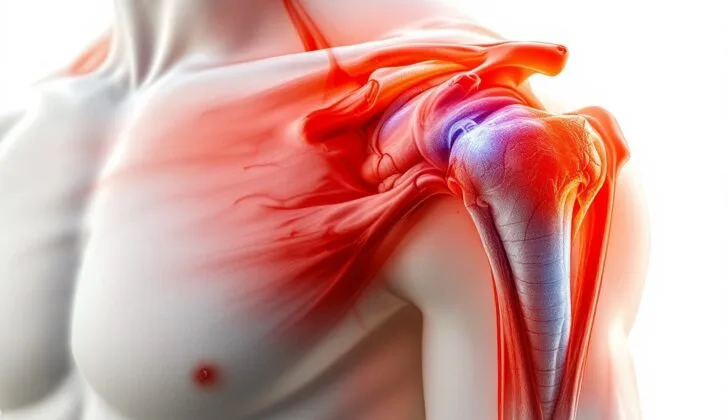
A shoulder anterior dislocation is by far the most frequent form of shoulder dislocation, making up about 90–95% of all dislocation injuries involving this joint. The shoulder joint—also called the glenohumeral joint—is a highly mobile, ball-and-socket structure where the rounded head of the humerus (upper arm bone) sits inside the relatively shallow socket of the scapula (the glenoid).
This configuration is what gives the human shoulder its unmatched freedom of movement, allowing us to lift, rotate, and reach in ways no other joint can. However, the same structural freedom that enables such mobility also makes the joint inherently less stable and therefore more susceptible to displacement.
During a shoulder anterior dislocation, the head of the humerus is forcibly driven out of its normal position in the glenoid cavity and shifts forward (anteriorly) relative to the socket. This abrupt change results in sudden, often severe pain, an obvious change in the contour of the shoulder, and immediate loss of normal function.
In many cases there is also swelling, bruising, or nerve irritation that can cause tingling down the arm. Because of its frequency, its tendency to recur, and its potential to damage surrounding structures like the labrum or rotator cuff tendons, a shoulder anterior dislocation represents a significant concern for athletes involved in contact or overhead sports, for active individuals with physically demanding jobs, and for older adults who may sustain it after a slip or fall.
At DMPhysios—a renowned physiotherapy clinic in Noida specializing in spine and sports conditions with a strong focus on patient-centered rehabilitation—we routinely see individuals recovering from shoulder anterior dislocation. Our multidisciplinary approach emphasizes not only the immediate management of the injury but also a comprehensive plan to restore full shoulder function, reduce the risk of repeated dislocations, and educate patients on strategies to protect their joints and maintain long-term shoulder health.
Symptoms
Recognizing the signs of a shoulder anterior dislocation early can help prevent further complications. Common symptoms include:
- Intense Pain: Sudden and severe pain in the shoulder after trauma.
- Visible Deformity: The shoulder may appear “out of place” or squared-off compared to the unaffected side.
- Restricted Movement: Inability to move the shoulder joint; any attempt at movement worsens pain.
- Swelling and Bruising: Around the joint or down the arm.
- Numbness or Tingling: In the arm, forearm, or hand due to nerve involvement (especially axillary nerve).
- Muscle Spasm: Protective contraction of surrounding muscles makes reduction harder.
If left untreated, a shoulder anterior dislocation can damage soft tissue structures such as the labrum, rotator cuff, or even cause fractures of the glenoid rim.
Types of Shoulder Anterior Dislocation
Although all anterior dislocations involve forward displacement of the humeral head, they can be sub-classified based on the exact direction or associated injuries:
- Subcoracoid Dislocation: The humeral head rests beneath the coracoid process; the most common type.
- Subglenoid Dislocation: The humeral head moves further down, beneath the glenoid.
- Subclavicular or Intrathoracic Dislocation: Extremely rare and severe, where the head displaces far medially.
In addition to these, shoulder anterior dislocation may be classified as:
- Acute Traumatic: Resulting from a direct injury (fall, collision).
- Recurrent or Chronic: Multiple episodes due to instability or poor rehabilitation.
At DMPhysios, patients are thoroughly assessed to identify the specific type of shoulder anterior dislocation, as it influences treatment decisions.
Causes
A shoulder anterior dislocation typically occurs due to a force applied to the arm when it is abducted, extended, and externally rotated. Common causes include:
- Sports Injuries: Especially contact sports (rugby, football, hockey) and overhead sports (tennis, volleyball).
- Falls: Falling onto an outstretched hand or directly onto the shoulder.
- Road Traffic Accidents: High-impact trauma.
- Occupational Hazards: Heavy lifting or repetitive overhead activities.
- Previous Dislocations: Weakens stabilizing structures, making re-dislocation easier.
Because of its anatomy, the shoulder is particularly vulnerable to anterior dislocation compared to posterior or inferior dislocations.
Risk Factors
Certain factors increase the likelihood of suffering a shoulder anterior dislocation:
- Age: Young adults and teenagers are more prone to recurrent dislocations.
- Gender: Males have a higher incidence due to higher participation in contact sports.
- Ligamentous Laxity: Naturally loose ligaments or hypermobility syndromes.
- Inadequate Rehabilitation: After an initial dislocation, incomplete recovery predisposes to recurrence.
- Poor Muscle Balance: Weak rotator cuff and scapular stabilizers.
At DMPhysios, we emphasize risk factor identification and targeted exercise programs to minimize recurrence of shoulder anterior dislocation.
Treatment
Immediate management of a shoulder anterior dislocation is crucial to reduce pain, prevent complications, and restore normal anatomy.
1. Initial Management
- Immobilization: A sling or shoulder immobilizer to keep the arm stable.
- Ice Therapy: To reduce pain and swelling.
- Analgesics: Prescribed for pain control.
2. Reduction
Reduction is the process of repositioning the humeral head back into the glenoid cavity. It must be performed by a trained medical professional, ideally under sedation or anesthesia. Various methods (Kocher’s, Hippocratic, Stimson’s) exist depending on the case.
3. Post-Reduction Care
- Confirm with Imaging: X-ray or MRI to ensure successful reduction and identify associated injuries.
- Immobilization: Typically 2–3 weeks in a sling for young adults (shorter for older adults to prevent stiffness).
- Begin Rehabilitation: Gradual introduction of motion and strengthening exercises under physiotherapy guidance.
Physiotherapy Treatment
Physiotherapy plays a central role in recovery and in preventing recurrence after a shoulder anterior dislocation. At DMPhysios, our patient-centered rehab approach ensures customized care plans for each individual.
Phase 1: Acute / Immobilization Phase (0–3 weeks)
- Goals: Pain control, protection of healing tissues, maintain mobility of adjacent joints.
- Interventions:
- Pendulum exercises (gentle).
- Hand, wrist, and elbow ROM exercises to prevent stiffness.
- Cryotherapy and gentle isometrics for surrounding muscles.
Phase 2: Early Mobilization (3–6 weeks)
- Goals: Restore pain-free ROM, prevent stiffness, begin reactivation of rotator cuff and scapular muscles.
- Interventions:
- Active-assisted ROM progressing to active ROM (avoiding extreme external rotation initially).
- Scapular setting exercises to improve shoulder blade control.
- Gentle rotator cuff isometrics.
Phase 3: Strengthening and Proprioception (6–12 weeks)
- Goals: Strengthen rotator cuff and dynamic stabilizers, restore full ROM, enhance proprioception.
- Interventions:
- Resistance band exercises for internal/external rotation.
- Closed-chain exercises like wall push-ups.
- Proprioceptive training (using a wobble board or ball for shoulder).
Phase 4: Advanced Strength and Return to Sport (12 weeks and beyond)
- Goals: Sport-specific conditioning, prevent recurrence of shoulder anterior dislocation.
- Interventions:
- Plyometric exercises (medicine ball throws).
- Overhead stability exercises.
- Gradual return-to-sport drills.
At DMPhysios, our rehabilitation is evidence-based, emphasizing not just healing but functional restoration and confidence in movement. Patient education about posture, ergonomics, and activity modification is integral to our programs.
Prevention
While not all cases are preventable, especially traumatic ones, several strategies can reduce the risk of a shoulder anterior dislocation:
- Strengthen the Rotator Cuff: Balanced strengthening of internal and external rotators.
- Enhance Scapular Stability: Focus on serratus anterior, trapezius, and rhomboids.
- Avoid Risky Positions: Limit combined abduction and external rotation if prone to dislocation.
- Protective Gear: In contact sports, use shoulder pads or braces.
- Complete Rehabilitation: Do not return to sport or heavy activity prematurely after an initial dislocation.
At DMPhysios, we regularly run preventive programs for athletes and workers at risk of shoulder anterior dislocation, ensuring long-term joint health.
Conclusion
A shoulder anterior dislocation is not only painful but also significantly impacts day-to-day activities and sports performance. Without proper management, it can lead to recurrent instability, chronic pain, and degenerative changes.
Comprehensive care—including accurate diagnosis, timely reduction, and especially structured physiotherapy—is essential for optimal recovery. At DMPhysios, a leading Noida-based clinic for spine and sports conditions with patient-centered rehabilitation, we specialize in managing cases of shoulder anterior dislocation from acute care to full functional recovery.If you or someone you know has experienced shoulder anterior dislocation, don’t wait for the problem to worsen. Reach out to DMPhysios for expert, patient-centered rehab and regain confidence in your shoulder movement.