Overview
Cerebral palsy is a permanent neurological disorder that impacts a person’s ability to move, maintain posture, and control muscle coordination. It arises due to brain damage or abnormal brain development, usually happening before, during, or just after birth. Though cerebral palsy does not worsen over time in terms of brain damage, the physical impairments can evolve and affect daily life in multiple ways as the child grows.
The term “cerebral” relates to the brain, and “palsy” refers to weakness or issues with movement. Children and adults living with cerebral palsy may have difficulty with tasks such as walking, sitting, balancing, and fine motor activities like writing or dressing. In some cases, cerebral palsy may also affect speech, cognition, and sensory processing.
At DMPhysios, a premier physiotherapy clinic located in Noida, we specialize in spine and sports conditions and offer patient-centered rehabilitation plans for individuals living with cerebral palsy. Our multidisciplinary, compassionate, and functional approach helps children and adults improve mobility, independence, and overall quality of life.
Symptoms
The signs and symptoms of cerebral palsy vary widely depending on the type and severity of brain damage. They often become evident during infancy or preschool years, and may include:
- Delayed developmental milestones (rolling over, crawling, walking)
- Stiff or floppy muscle tone
- Involuntary movements or tremors
- Poor coordination and balance
- Favoring one side of the body (hand preference before age two)
- Difficulty walking or abnormal gait (toe walking, scissor gait)
- Muscle contractures or joint deformities
- Trouble with speech, swallowing, or sucking
- Seizures (in some cases)
- Learning difficulties or intellectual disabilities (in some individuals)
Cerebral palsy is highly individual. Some children may only experience mild clumsiness, while others may be significantly limited in mobility and self-care abilities
Types of Cerebral Palsy
Cerebral palsy is a broad term that encompasses a variety of movement and posture disorders. Cerebral palsy is categorized into various types depending on the kind of motor dysfunction—such as muscle stiffness, uncontrolled movements, or balance difficulties—and the areas of the body that are involved. Understanding these classifications helps in tailoring individualized treatment and rehabilitation plans.
1. Spastic Cerebral Palsy
Spastic cerebral palsy is the most prevalent form, accounting for nearly 70–80% of all cerebral palsy cases. It is marked by increased muscle tone, or spasticity, which leads to stiffness, tightness, and resistance to movement. These children often exhibit exaggerated reflexes, jerky movements, and difficulty with fluid motion.
The severity and distribution of the spasticity determine the sub-type:
- Spastic Diplegia: This type primarily affects the legs, with the arms being less severely impacted. Children may have a scissoring gait (legs crossing over each other), tight hip flexors, and difficulty with walking or balance. Arm function may be mildly involved.
- Spastic Hemiplegia: This form impacts one side of the body, usually with greater involvement of the arm than the leg. Children may favor one hand early (early hand dominance), have difficulty with tasks on one side, or walk with an asymmetrical gait.
- Spastic Quadriplegia: This is the most severe subtype, involving all four limbs, the trunk, and often the facial muscles. Children may have limited voluntary movement, poor head and neck control, difficulty swallowing, and sometimes accompanying cognitive impairments or seizures.
Spastic cerebral palsy can range from mild stiffness with near-normal movement to severe disability requiring full-time care.
2. Dyskinetic (Athetoid) Cerebral Palsy
Dyskinetic cerebral palsy, also known as athetoid CP, is characterized by uncontrolled, involuntary movements. These movements are typically either slow and twisting, known as athetosis, or abrupt and jerky, referred to as chorea. The muscle tone fluctuates, shifting from too tight to too loose unpredictably, making it difficult to maintain stable posture or execute precise voluntary actions.
This form of cerebral palsy primarily affects the arms, hands, face, and sometimes the legs, leading to challenges in speaking, eating, writing, and self-care. Speech may be slurred due to facial and tongue muscle involvement. Despite the movement difficulties, many individuals with dyskinetic CP have normal intelligence.
Environmental factors like excitement or stress may worsen the involuntary movements. Managing dyskinetic cerebral palsy often requires a combination of physiotherapy, occupational therapy, and sometimes medication to reduce movement fluctuations.
3. Ataxic Cerebral Palsy
Ataxic cerebral palsy is the rarest form, occurring in approximately 5–10% of people with cerebral palsy. It results from damage to the cerebellum, the part of the brain responsible for balance, coordination, and depth perception.
Children with ataxic CP often have unsteady, shaky movements, poor coordination, and difficulty with fine motor skills. Their gait may be wide-based and unbalanced, and they may struggle with tasks like writing, tying shoelaces, or buttoning clothing. Intentional movements may cause tremors, and balance problems are prominent even when sitting or reaching.
Speech can also be affected, appearing slow and irregular in rhythm. Though cognitive function is often intact, motor control issues may interfere significantly with daily activities.
4. Mixed Cerebral Palsy
In some cases, children may display symptoms of more than one type of cerebral palsy, known as mixed cerebral palsy. The most frequently seen combination is a mix of spastic and dyskinetic characteristics. For example, a child might have stiff legs (spastic diplegia) along with involuntary movements in the arms or face (dyskinetic traits).
Mixed cerebral palsy occurs when multiple areas of the brain are affected, and the clinical presentation can be quite varied. The treatment approach for mixed CP is often more complex, requiring a multi-modal strategy that addresses all motor impairments involved.
Causes of Cerebral Palsy
Cerebral palsy is caused by brain damage or developmental abnormalities that interfere with the brain’s ability to control movement and posture. This damage usually occurs prenatally (before birth) but may also happen during birth or shortly after.
Common causes include:
- Lack of oxygen during birth (birth asphyxia)
- Infections during pregnancy such as rubella, cytomegalovirus, toxoplasmosis
- Premature birth, which increases vulnerability to brain damage
- Bleeding in the brain (intraventricular hemorrhage) in premature infants
- Head injuries shortly after birth
- Stroke or poor blood flow to the brain in infancy
- Maternal health issues, including thyroid problems, seizures, or exposure to toxins
Risk Factors
Several risk factors are known to increase the likelihood of developing cerebral palsy:
- Premature birth (before 37 weeks)
- Low birth weight (less than 2.5 kg)
- Multiple births (twins, triplets)
- Complicated labor and delivery
- Maternal infections during pregnancy
- Neonatal jaundice leading to kernicterus
- Lack of proper prenatal care
- Rh incompatibility between mother and baby
- Exposure to harmful substances (alcohol, drugs, lead)
While the presence of risk factors doesn’t always result in cerebral palsy, recognizing and managing them can reduce the probability of brain injury during early development.
Treatment
Though there is no cure for cerebral palsy, a range of treatments can significantly enhance a person’s functional abilities and independence. Treatment is personalized based on each individual’s specific needs and difficulties.
Common Treatment Modalities:
- Medications to reduce muscle spasticity (e.g., baclofen, botulinum toxin)
- Orthopedic surgery to correct bone deformities or muscle length
- Speech therapy for articulation, feeding, and swallowing difficulties
- Occupational therapy to promote fine motor skills and daily tasks
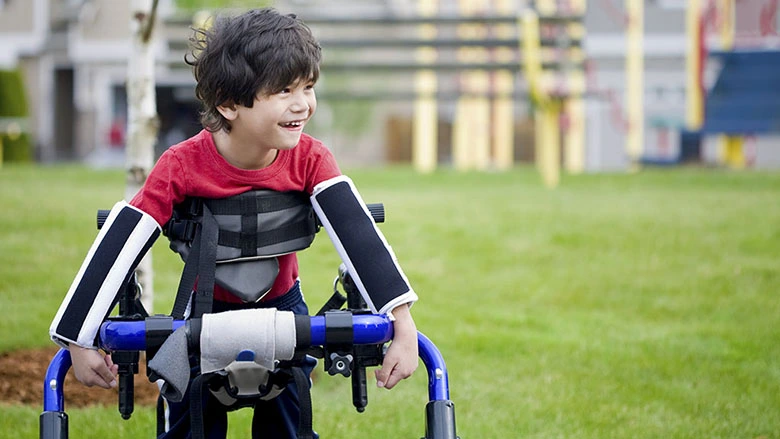
- Assistive devices like braces, walkers, or wheelchairs
- Behavioral therapy for emotional and social development
- Nutritional guidance for children with feeding issues
- Special education services for learning support
However, one of the most essential and effective components of treatment for cerebral palsy is physiotherapy.
Physiotherapy Treatment
At DMPhysios, we offer comprehensive, customized, and evidence-based physiotherapy for individuals with cerebral palsy. Our team in Noida uses advanced techniques, a multidisciplinary model, and a deeply empathetic approach to help patients reach their fullest potential.
1. Detailed Functional Assessment
Every child or adult with cerebral palsy at DMPhysios undergoes a thorough evaluation. This includes analyzing muscle tone, joint mobility, posture, balance, strength, gait, and reflexes. Based on findings, we create a personalized rehab program.
2. Early Intervention Therapy
For infants and toddlers, early physiotherapy intervention focuses on:
- Promoting motor development (rolling, sitting, crawling)
- Preventing muscle contractures and deformities
- Improving posture and head control
- Enhancing sensory-motor integration
3. Muscle Strengthening and Flexibility
Muscles affected by cerebral palsy may be weak, tight, or imbalanced. At DMPhysios, we design targeted exercise plans to:
- Strengthen weak muscles
- Stretch tight or spastic muscles
- Maintain or improve joint mobility
- Prevent secondary complications like scoliosis or hip dislocation
4. Gait and Mobility Training
Using tools like parallel bars, gait trainers, and body-weight supported treadmill systems, our therapists train patients to walk more efficiently and safely. Whether it’s learning to walk independently or with assistive devices, we focus on improving mobility.
5. Balance and Coordination Therapy
Many children with cerebral palsy have issues with balance. Through proprioceptive training, balance boards, and functional activities, we help improve postural stability and movement control.
6. Functional and Task-Based Training
Rehabilitation is meaningful only when it translates into real-world function. We work on:
- Sitting-to-standing transitions
- Floor mobility
- Stair climbing
- Transfers and self-care tasks
7. Constraint-Induced Movement Therapy (CIMT)
This method encourages use of the weaker limb by restricting the stronger one, promoting neuroplasticity and better function in children with hemiplegia.
8. Electrical Stimulation and Modalities
Functional Electrical Stimulation (FES) may be used to activate weak muscles or reduce spasticity. Additionally, heat and cold therapy, ultrasound, and vibration therapy may be integrated into sessions.
9. Parental Training and Home Exercises
At DMPhysios, we consider parents an integral part of therapy. We educate them on:
- Proper handling and positioning
- Stretching and mobility routines
- Assistive device usage
- How to foster independence at home
10. Long-Term Follow-Up and Support
Cerebral palsy requires ongoing rehabilitation. Our team conducts regular reassessments to modify treatment plans as the child grows and needs evolve. DMPhysios maintains close collaboration with pediatricians, neurologists, and orthotists.
Prevention
Not all cases of cerebral palsy are preventable, but several steps can be taken to reduce the risk:
- Proper prenatal care – Timely monitoring and management of maternal health conditions
- Vaccination – Immunizing against rubella and other infections before pregnancy
- Avoiding harmful substances – No alcohol, tobacco, or drugs during pregnancy
- Monitoring fetal distress – Using fetal heart monitors during labor
- Preventing premature births – When possible, through maternal health optimization
- Prompt treatment of newborn jaundice – To avoid kernicterus
- Safe handling of infants – To avoid head injuries during infancy
Education and access to quality healthcare are crucial in minimizing risk factors.
Conclusion
Living with cerebral palsy can pose unique challenges, but with timely intervention and a comprehensive rehabilitation plan, individuals can thrive, grow, and lead fulfilling lives. Whether it’s enhancing mobility, improving posture, or gaining independence in daily tasks, the right guidance and support make all the difference.
At DMPhysios, our mission is to offer world-class, patient-centered rehabilitation to every child and adult navigating life with cerebral palsy. Located in Noida, our clinic is equipped with modern facilities and led by a team of compassionate physiotherapists dedicated to helping each patient reach their highest potential.
If you or your child is facing challenges related to cerebral palsy, take the first step towards improvement today. Contact DMPhysios for a comprehensive evaluation and start your journey to better mobility, strength, and independence.