Overview
The forearm is one of the most active regions of the upper limb, constantly engaged in almost every task we perform throughout the day. Whether it’s gripping a water bottle, lifting groceries, stabilizing the wrist during a workout, twisting a doorknob, or simply typing on a keyboard for long hours, the forearm works tirelessly. All of these actions require the coordinated function of several muscles. Out of these, the forearm extensor muscles play a particularly important role, especially in movements that demand wrist extension, controlled gripping, racquet swings, weightlifting motions, or repetitive hand and finger activities. Because these muscles are involved in so many everyday and sport-specific tasks, they are highly susceptible to fatigue and overload. When pushed beyond their physiological capacity either due to sudden excessive force or repeated micro-stress, they may develop a Forearm Extensor Strain, a condition characterized by pain, stiffness, tightness, and a noticeable decline in functional strength.
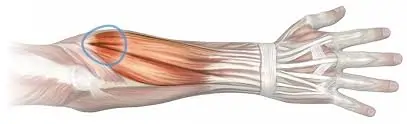
A Forearm Extensor Strain develops when the muscle fibers or the adjoining tendon structures within the extensor group, especially the Extensor Carpi Radialis Longus, Extensor Carpi Radialis Brevis, Extensor Digitorum, and related stabilizing tissues, are overstretched or subjected to repetitive tension. This repeated or excessive load creates microscopic tears in the tissue, leading to inflammation, discomfort, and weakness. Sometimes the strain occurs suddenly, such as during an unexpected forceful movement, but in many individuals, especially those who perform repetitive wrist or finger actions, the strain develops slowly over time as the tissues fail to recover adequately between bouts of activity.
At DMPhysios, a well-known physiotherapy clinic in Noida specialising in spine and sports rehabilitation with a strong patient-centered approach, forearm injuries like Forearm Extensor Strain are frequently observed. The clinic commonly treats athletes who overuse their grip and wrist during training, office workers who spend long hours typing or using a mouse, gym-goers performing repetitive lifting movements, and individuals whose professions or daily routines demand continuous hand activity. The team at DMPhysios focuses on identifying the underlying cause, correcting movement patterns, and restoring function through targeted rehabilitation to ensure patients return to pain-free performance in the shortest and safest way possible.
Symptoms
Symptoms of a Forearm Extensor Strain can vary in severity depending on the extent of tissue damage. Some patients report mild discomfort, while others struggle with significant functional limitations. Common symptoms include:
1. Pain on the dorsal (back) side of the forearm
This is the hallmark symptom. The pain typically worsens during wrist extension, gripping, typing, or lifting objects.
2. Swelling or tenderness
The extensor mass on the top of the forearm may feel swollen, warm, or tender to touch.
3. Reduced grip strength
Because the extensors stabilize the wrist during gripping, a Forearm Extensor Strain often causes reduced strength or early fatigue.
4. Stiffness
Patients often feel morning stiffness or discomfort after periods of inactivity.
5. Pain during resisted movements
Resisted wrist extension, finger extension, or even holding objects may reproduce or worsen the pain.
6. Radiating discomfort
Sometimes pain travels down into the wrist or up toward the elbow, especially if the strain coexists with overuse injuries like tennis elbow.
Types of Forearm Extensor Strain
Although not widely categorized into complex subtypes, a Forearm Extensor Strain can be classified based on severity:
1. Grade I (Mild Strain)
Involves microscopic tears in a small portion of muscle fibers. Pain is minimal to moderate and movement is still possible.
2. Grade II (Moderate Strain)
Involves partial tearing of muscle fibers. Swelling, pain, and reduced function are more significant.
3. Grade III (Severe Strain)
Complete rupture of the muscle or tendon. This is rare in forearm extensors but may require medical or surgical intervention.
Causes
A Forearm Extensor Strain usually develops due to repetitive overuse, improper technique, or sudden overload. Common causes include:
1. Repetitive wrist extension
Typing, mouse use, long hours of handwriting, carpentry, painting, or operating machinery can overload the extensor muscles.
2. Excessive gripping activities
Racquet sports, gym training, rock climbing, or heavy lifting often require sustained wrist extension, straining the forearm extensors.
3. Poor ergonomics
Improper desk setup or poor posture increases load on the forearm over time, leading to muscular fatigue and strain.
4. Sudden unaccustomed load
Lifting a heavy box, catching a falling object, or performing a new gym exercise can create excessive force on the extensor muscles.
5. Muscle imbalances
Weak flexors or poor shoulder and scapular mechanics can shift excess load onto the forearm.
6. Poor warm-up or lack of conditioning
Jumping into intense activity without preparation makes the muscle more vulnerable to strain.
Risk Factors
Several factors increase the likelihood of developing a Forearm Extensor Strain, including:
- Sports that overuse the wrist (tennis, badminton, cricket, weightlifting)
- Occupations involving repetitive tasks (desk workers, factory employees, artists)
- Improper lifting techniques
- Weak grip strength or reduced forearm conditioning
- Previous forearm or elbow injuries
- Poor posture, especially a forward head and rounded shoulders
- Age-related muscle stiffness
- Underlying tendinopathies, especially lateral epicondylitis
Treatment
Management of Forearm Extensor Strain depends on severity. Early intervention prevents chronic pain or degeneration.
1. Rest and Activity Modification
Initial rest allows tissues to heal. Avoid or reduce activities that worsen the symptoms, gripping, heavy lifting, racquet sports, or prolonged typing.
2. Ice or Heat Applications
- Ice during the first 48 hours helps reduce inflammation.
- Heat after the inflammation settles helps loosen tight muscles and improve blood flow.
3. Over-the-counter anti-inflammatory medication
Might be recommended by a physician to reduce pain and swelling.
4. Bracing or Taping
Forearm braces or kinesiology tape can offload pressure from the extensor muscle group.
5. Gradual stretching and strengthening
This forms the core of rehabilitation and prevents recurrence.
6. Physiotherapy
Physiotherapy is considered essential for complete recovery. At DMPhysios, treatment plans are tailored specifically to the nature of your Forearm Extensor Strain, lifestyle demands, and activity goals.
Physiotherapy Treatment
At DMPhysios, a patient-centered clinic in Noida focused on spine and sports rehabilitation, the physiotherapy management of Forearm Extensor Strain follows a structured, evidence-based approach. The goal is to reduce pain, restore strength, improve flexibility, and prevent the injury from recurring.
Phase 1: Pain Relief and Tissue Healing
1. Manual Therapy
Soft tissue mobilization, myofascial release, and trigger point therapy help reduce muscle tension and enhance circulation in the extensor mass.
2. Cryotherapy and Electrotherapy
Modalities such as Cold Therapy, Accelerated Healing Therapy, or Ultrasound may be used to reduce pain and inflammation.
3. Taping Techniques
Kinesiology taping supports the extensor muscles and reduces strain during daily activities.
4. Gentle Passive and Active Movements
Pain-free mobility exercises help maintain range of motion and prevent stiffness.
Phase 2: Stretching and Mobility
Once acute pain settles, physiotherapists at DMPhysios introduce controlled stretching to restore flexibility:
- Wrist flexor stretch
- Wrist extensor stretch
- Finger extensor stretch
- Forearm rotation mobility exercises (supination/pronation)
These stretches reduce tightness in extensors and restore normal muscle length, which is essential to recovery from Forearm Extensor Strain.
Phase 3: Strengthening Phase
Strengthening is crucial, as weak extensors are prone to reinjury.
Key strengthening exercises include:
- Isometric wrist extension
Holding resistance without movement helps initiate strengthening without strain. - Eccentric wrist extension
Slow, controlled lowering of the wrist against resistance, shown highly effective for tendon healing. - Concentric wrist extension
Lifting the wrist against resistance using a TheraBand or dumbbell. - Radial and ulnar deviation strengthening
- Grip strengthening exercises using putty, hand grippers, or towel squeezing.
- Finger extension strengthening using elastic bands.
- Combined forearm & scapular strengthening
Poor shoulder mechanics often overload the forearm, so strengthening the rotator cuff and scapular stabilizers reduces recurrence risk.
At DMPhysios, strengthening programs for Forearm Extensor Strain are customized based on the patient’s sport, job demands, pain level, and functional limitations.
Phase 4: Functional Training
As pain reduces and strength improves, functional and sport-specific exercises are added:
- Racquet swing mechanics
- Grip endurance drills
- Weightlifting form corrections
- Typing and ergonomic training
- Job-specific hand movements
This is where rehabilitation becomes individualized, one of the key strengths of the patient-centered approach at DMPhysios.
Phase 5: Return-to-Activity Progression
A graded return ensures tissues are ready for real-life demands:
- Gradual increase in load
- Task simulation (lifting, typing, sports drills)
- Monitoring for compensations
- Posture correction and ergonomic setup
Patients recovering from Forearm Extensor Strain at DMPhysios are guided until they can safely return to full activity without fear of reinjury.
Prevention
Preventing Forearm Extensor Strain is all about strengthening, mobility, and smart movement habits. Here are essential strategies:
1. Warm-up Before Activity
A proper warm-up increases blood flow and improves muscle elasticity.
2. Strengthen the Entire Upper Limb Chain
Not just the forearm, strengthen shoulders, wrists, grip muscles, and scapular stabilizers.
3. Maintain Flexibility
Regular stretching of the wrist extensors and flexors keeps the muscle healthy and reduces strain risk.
4. Improve Ergonomics
Adjust keyboard height, wrist position, and chair height. Avoid excessive wrist extension while typing.
5. Use Proper Technique in Sports
Poor racquet grip or faulty gym form is a major contributor to Forearm Extensor Strain.
6. Avoid Overloading
Increase weight, grip intensity, or training frequency gradually.
7. Take Regular Breaks
Micro-breaks during long typing or gripping tasks reduce muscle fatigue.
8. Strengthen Grip and Wrist Control
A strong, stable wrist prevents unnecessary load on the extensor muscle group.
Conclusion
A Forearm Extensor Strain might seem like a minor issue, but if ignored, it can interfere with day-to-day activities, sports performance, and occupational tasks. Early diagnosis, proper rehabilitation, strengthening, and movement correction are crucial for complete recovery. At DMPhysios, a Noida-based clinic known for its expert care in spine and sports injuries and patient-centered treatment, individuals with Forearm Extensor Strain receive personalized rehabilitation plans that ensure long-term recovery and prevention of recurrence.If you or someone you know is struggling with wrist, elbow, or forearm pain that resembles a Forearm Extensor Strain, don’t wait for it to worsen. Visit DMPhysios today for a comprehensive assessment and tailored physiotherapy plan to help you get back to pain-free living, training, and performance.