Overview
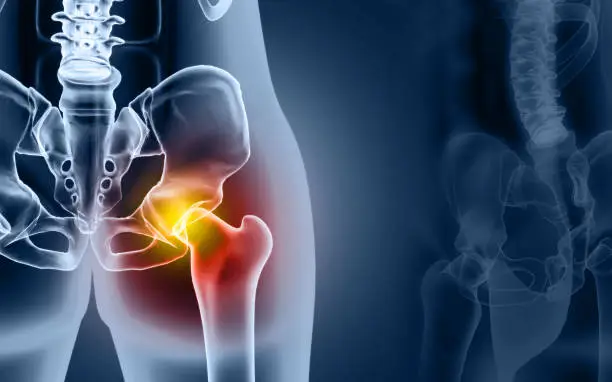
Hip arthritis is a chronic degenerative or, in some cases, inflammatory disorder that targets the hip joint, progressively impairing its normal function. The hip joint itself is a sophisticated ball-and-socket structure: the rounded head of the femur (the thigh bone) fits securely into the acetabulum, a cup-shaped socket within the pelvis. Under healthy conditions, this joint is cushioned and protected by a layer of smooth articular cartilage and lubricated by synovial fluid, allowing the bones to glide over each other effortlessly and absorb the stresses of daily activities such as walking, bending, or climbing stairs.
When hip arthritis develops, this once-resilient cartilage begins to deteriorate or becomes inflamed. Over time, the protective cushioning thins out or disappears entirely, leading to painful friction and direct “bone-on-bone” contact. As a result, individuals experience pain, stiffness, swelling, and a gradual decline in hip mobility. Everyday tasks such as getting out of a chair, tying shoes, or walking longer distances become increasingly challenging. In advanced stages, the joint may also undergo deformity or develop osteophytes (bony spurs), further restricting movement and intensifying discomfort.
At DMPhysios, a premier clinic in Noida specializing in spine and sports conditions with a focus on patient-centered rehabilitation, our team recognizes how deeply hip arthritis can impact not only physical activity but also independence and quality of life. Through a combination of expert assessment, evidence-based physiotherapy, and personalized care plans, we regularly assist individuals struggling with hip arthritis to regain their mobility, rebuild muscle strength, restore joint function, and return to their daily routines with greater confidence. Understanding the mechanics of the condition and the factors driving its progression is always the first step toward designing an effective, long-term management strategy tailored to each patient’s unique needs.
Symptoms
The symptoms of hip arthritis can develop gradually and worsen over time. Recognizing them early allows for timely intervention:
- Pain in the hip or groin – Typically felt during weight-bearing activities like walking or climbing stairs.
- Morning stiffness – Stiffness after periods of inactivity or upon waking up.
- Reduced range of motion – Difficulty with hip movements like bending, squatting, or rotating the leg.
- Clicking or grinding sensation – Due to irregular joint surfaces rubbing against each other.
- Radiating pain – Discomfort may extend to the thigh, buttocks, or even the knee.
- Functional limitations – Difficulty in daily activities like tying shoes, sitting cross-legged, or standing for long periods.
Patients at DMPhysios frequently report these symptoms, and early physiotherapy interventions have been shown to slow the progression of hip arthritis.
Types of Hip Arthritis
Hip arthritis is not a single entity. It includes several types, each with distinct underlying causes:
- Osteoarthritis of the Hip
- The most common type of hip arthritis.
- A “wear-and-tear” degeneration of cartilage over time.
- More prevalent in older adults.
- Rheumatoid Arthritis of the Hip
- An autoimmune condition where the body’s immune system attacks the synovial lining of joints.
- Leads to inflammation, pain, and progressive destruction of cartilage.
- Post-Traumatic Hip Arthritis
- Develops after a previous injury, fracture, or dislocation of the hip.
- Trauma accelerates joint degeneration.
- Avascular Necrosis leading to Arthritis
- Reduced blood flow to the femoral head can cause bone death and collapse, progressing to arthritis.
- Other Inflammatory Arthritides
- Conditions like ankylosing spondylitis, lupus, or gout can also involve the hip joint and lead to hip arthritis.
At DMPhysios, each type of hip arthritis is carefully assessed to design individualized rehabilitation plans.
Causes
Several factors can lead to the onset of hip arthritis:
- Age-related cartilage degeneration – The natural wear-and-tear process.
- Genetics – Family history of osteoarthritis or autoimmune disorders increases risk.
- Joint injury – Fractures, labral tears, or dislocations predispose the hip to arthritis.
- Repetitive stress – High-impact activities or certain occupations put excess load on the hips.
- Inflammatory conditions – Autoimmune diseases like rheumatoid arthritis.
- Obesity – Extra body weight increases stress on the hip joint.
- Poor biomechanics – Conditions like leg-length discrepancies or altered gait patterns.
Risk Factors
The risk factors for hip arthritis overlap with its causes but are worth highlighting:
- Advancing age – Risk increases significantly after 50.
- Family history of arthritis.
- Previous hip injury or surgery.
- Obesity and sedentary lifestyle.
- Occupations requiring heavy lifting or prolonged standing.
- High-impact sports participation.
DMPhysios emphasizes early screening of at-risk individuals to delay or prevent hip arthritis progression.
Treatment
Managing hip arthritis requires a multi-pronged approach. The main goals are to relieve pain, improve function, and slow disease progression.
Non-Surgical Treatments
- Medications
- Nonsteroidal anti-inflammatory drugs (NSAIDs) to reduce pain and inflammation.
- Disease-modifying agents in cases of rheumatoid arthritis.
- Injections
- Corticosteroid injections for temporary relief of severe pain.
- Viscosupplementation (hyaluronic acid) in select cases.
- Lifestyle Modifications
- Weight loss to reduce joint load.
- Activity modification to avoid high-impact exercises.
- Assistive Devices
- Use of canes, crutches, or walkers to reduce stress on the hip joint.
Surgical Treatments
If conservative treatment fails, surgical options may be considered:
- Hip Arthroscopy – To address labral tears or early degeneration.
- Osteotomy – Realignment of bones to offload the damaged area.
- Total Hip Replacement (THR) – For severe end-stage hip arthritis.
- Resurfacing Procedures – In younger patients with limited disease.
DMPhysios works closely with orthopedic surgeons to ensure seamless pre- and post-operative rehabilitation for patients undergoing hip surgery.
Physiotherapy Treatment
Physiotherapy is one of the cornerstones of managing hip arthritis, and DMPhysios, as a Noida-based clinic for spine and sports conditions, excels in delivering patient-centered rehabilitation programs. The goals of physiotherapy are pain relief, maintaining joint range of motion, strengthening surrounding muscles, improving posture, and optimizing functional activities.
Initial Phase (Pain and Inflammation Control)
- Education – Teaching patients about joint protection techniques and activity modification.
- Modalities – Heat therapy, cryotherapy or Accelerated Healing Therapy to manage pain.
- Gentle Range of Motion (ROM) Exercises – Passive and active-assisted movements to prevent stiffness.
Strengthening Phase
Focus on strengthening the muscles supporting the hip, especially the gluteals, quadriceps, and core.
- Isometric Gluteal Squeezes
- Isometric Quadriceps Contractions
- Bridging Exercises
- Side-Lying Hip Abduction
- Clamshells
These exercises stabilize the hip joint and reduce stress on the arthritic area.
Stretching and Flexibility Training
- Hip Flexor Stretch
- Hamstring Stretch
- Piriformis Stretch
Improved flexibility reduces abnormal loading and compensatory movement patterns.
Gait Training and Balance Exercises
- Use of walking aids initially, progressing to independent ambulation.
- Balance exercises such as single-leg stands on stable and unstable surfaces to improve proprioception.
Functional and Postural Retraining
- Training for sit-to-stand transfers, stair negotiation, and proper footwear.
- Ergonomic advice for daily tasks to minimize hip strain.
Aquatic Therapy
Exercising in water reduces joint stress while maintaining cardiovascular fitness and muscle strength.
Progression and Maintenance
As symptoms improve, the program progresses to include low-impact aerobic activities such as stationary cycling, swimming, or elliptical training to maintain fitness without stressing the hip.
At DMPhysios, physiotherapy treatment for hip arthritis is individualized—tailored to the patient’s pain levels, disease stage, and lifestyle needs.
Prevention
While not all causes of hip arthritis are preventable, certain strategies can significantly reduce risk or delay onset:
- Maintain a healthy weight to reduce load on the hips.
- Stay physically active with low-impact exercises to keep joints healthy.
- Strengthen supporting muscles like the gluteals and core for hip stability.
- Avoid repetitive high-impact activities or excessive heavy lifting.
- Address hip injuries promptly to prevent post-traumatic arthritis.
- Good posture and ergonomic practices at work and home.
DMPhysios offers preventive screening and exercise programs for individuals at risk of developing hip arthritis, ensuring long-term joint health.
Conclusion
Hip arthritis can be a debilitating condition if left unmanaged, but with early recognition, lifestyle changes, and proper physiotherapy, most individuals can lead active and fulfilling lives. At DMPhysios, a premier Noida-based clinic specializing in spine and sports conditions with a focus on patient-centered rehabilitation, we believe in empowering patients with education, personalized exercise programs, and holistic care.If you or someone you know is experiencing symptoms of hip arthritis, don’t wait for it to worsen. Book an appointment with DMPhysios today for a comprehensive assessment and individualized rehabilitation plan. Let us help you restore mobility, reduce pain, and regain control over your life.