Overview
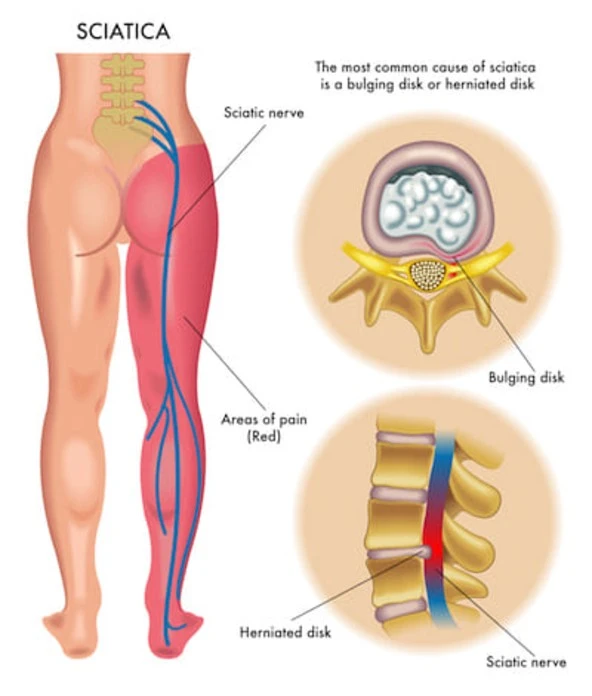
Lumbar radiculopathy refers to a condition where pain, numbness, tingling sensations, or muscle weakness extends from the lower back down into one or both legs. This condition arises due to irritation, inflammation, or compression of a spinal nerve root in the lumbar spine—the lower segment of the vertebral column.
While it is often referred to as “sciatica” by the general public, not all cases of lumbar radiculopathy are identical to sciatica, as the specific nerve root affected and the pattern of symptoms can vary. Nevertheless, lumbar radiculopathy remains one of the most common causes of neurological leg pain, especially among working professionals, athletes, and older adults who experience degenerative spinal changes.
The lumbar spine is composed of five vertebrae (L1–L5) that play a crucial role in bearing and distributing the body’s weight while allowing flexibility and movement. Between these vertebrae are intervertebral discs and nerve roots that branch off the spinal cord and travel through small openings called foramina, eventually extending into the pelvis, buttocks, and lower limbs. When these nerve roots become compressed or inflamed—whether due to a herniated disc, spinal stenosis, or age-related degenerative disc disease—it leads to the development of lumbar radiculopathy, manifesting in various degrees of discomfort and functional limitation.
At DMPhysios, a leading physiotherapy clinic based in Noida and widely recognized for its expertise in spine and sports-related conditions, we specialize in the accurate diagnosis and comprehensive management of lumbar radiculopathy. Through evidence-based clinical practices and a patient-centered rehabilitation approach, our team is dedicated to restoring movement, reducing pain, and improving the quality of life for every individual affected by this condition.
Symptoms of Lumbar Radiculopathy
The hallmark symptoms of lumbar radiculopathy vary depending on the affected nerve root but typically include:
- Radiating Pain: Sharp or burning pain traveling from the lower back through the buttock and down one leg.
- Numbness: A decrease or loss of sensation in the leg or foot.
- Tingling (Paresthesia): “Pins and needles” or a crawling sensation along the nerve path.
- Muscle Weakness: Difficulty lifting the foot (foot drop), standing on toes, or leg weakness.
- Reflex Loss: Reduced or absent reflexes in the knee or ankle.
- Postural Changes: Patients often lean or shift weight to reduce nerve compression.
- Worsening with Activity: Symptoms may worsen with sitting, coughing, sneezing, or prolonged standing.
Early identification and proper treatment are crucial to prevent permanent nerve damage and restore function, which is the core goal of our multidisciplinary team at DMPhysios in Noida.
Types of Lumbar Radiculopathy
Lumbar radiculopathy can be classified according to the specific nerve root in the lumbar spine that is affected. Each nerve root supplies different areas of the lower limb with motor and sensory function, which is why the symptoms can vary significantly depending on which level is involved. Understanding these types helps clinicians tailor treatment more precisely and aids patients in recognizing the origin of their symptoms.
L2 Radiculopathy
This is relatively rare. The L2 nerve root contributes to hip flexion and sensation in the upper thigh. Compression of this nerve may cause:
- Pain in the groin or upper anterior thigh
- Mild weakness in the hip flexors (e.g., iliopsoas muscle)
- Occasional sensory changes in the front of the thigh
L3 Radiculopathy
Slightly more common than L2, L3 radiculopathy also affects the front of the thigh, but symptoms may extend lower.
- Pain and/or tingling in the anterior thigh and inner knee
- Weakness in the quadriceps muscles, leading to difficulty straightening the knee
- Hyporeflexia or loss of the patellar (knee jerk) reflex
- Mild sensory deficits over the inner thigh and knee
L4 Radiculopathy
L4 nerve root involvement is a moderate frequency presentation of lumbar radiculopathy. It often overlaps with L3 and L5, making clinical assessment essential.
- Pain in the lower back, radiating to the front of the thigh, knee, and sometimes into the medial calf
- Weakness in knee extension and ankle dorsiflexion
- Decreased patellar reflex
- Numbness or tingling along the inner calf and ankle
L5 Radiculopathy
This is the most common type of lumbar radiculopathy, often caused by L4-L5 disc herniation.
- Sharp, shooting pain that radiates from the back or buttock to the outer thigh, lateral calf, and top of the foot
- Difficulty lifting the foot or big toe, a condition commonly referred to as foot drop
- Weakness in dorsiflexors and toe extensors (e.g., tibialis anterior, extensor hallucis longus)
- Numbness or altered sensation on the top of the foot and between the big and second toes
S1 Radiculopathy
S1 radiculopathy is also relatively common and is typically due to L5-S1 disc pathology.
- Pain that starts in the lower back or buttock and travels down the back of the thigh, calf, and lateral foot
- Weakness in calf muscles (especially during plantar flexion like tiptoeing)
- Loss of the Achilles (ankle jerk) reflex
- Sensory deficits in the sole and outer portion of the foot.
Understanding the affected level is key for targeted rehabilitation, which is part of the customized treatment plan offered at DMPhysios, a premier center for spine care in Noida.
Causes of Lumbar Radiculopathy
Several structural and mechanical abnormalities can cause lumbar radiculopathy, including:
- Herniated Disc: Most common cause; nucleus pulposus protrudes and compresses a nerve root.
- Degenerative Disc Disease: Age-related disc wear narrows space and irritates nerves.
- Lumbar Spinal Stenosis: A condition where the spinal canal narrows, putting pressure on the nerve roots.
- Spondylolisthesis: Forward slippage of a vertebra causing nerve compression.
- Facet Joint Arthritis: Inflammation in joints can impinge nearby nerves.
- Trauma or Injury: Falls, car accidents, or sports injuries may lead to disc or vertebral damage.
- Tumors or Infections: Though uncommon, they can lead to compression of the spinal nerves.
Risk Factors
Certain individuals are more susceptible to lumbar radiculopathy:
- Age (30–60 years): Degenerative changes accelerate with age.
- Sedentary Lifestyle: Weak muscles and poor posture stress the spine.
- Occupational Strain: Jobs involving lifting, twisting, or prolonged sitting.
- Smoking: Reduces disc nutrition and healing capacity.
- Obesity: Increased mechanical stress on lumbar discs.
- Family History: Genetic predisposition to spine disorders.
- Diabetes: Can affect nerve health and recovery.
Addressing modifiable risk factors is an essential part of our patient-centered rehabilitation strategy at DMPhysios.
Medical Treatment for Lumbar Radiculopathy
The management of lumbar radiculopathy usually begins with conservative methods and progresses to invasive options if needed:
1. Medications
- NSAIDs: Ibuprofen or naproxen for pain and inflammation.
- Oral Steroids: Short-term relief during acute flare-ups.
- Neuropathic Agents: Gabapentin or pregabalin for nerve pain.
- Muscle Relaxants: To reduce spasms.
- Opioids: Rarely used, only for short-term severe pain.
2. Epidural Steroid Injections
- Injected close to the affected nerve root to help decrease inflammation and alleviate pain.
3. Surgical Intervention
Indicated if conservative care fails after 6-12 weeks or there’s:
- Progressive weakness
- Loss of bowel/bladder control
- Severe, unrelenting pain
Common Procedures:
- Microdiscectomy: Removal of part of a herniated disc.
- Laminectomy: Removal of lamina to relieve pressure.
- Spinal Fusion: Stabilization procedure in case of instability.
Physiotherapy Treatment at DMPhysios
At DMPhysios, a leading clinic in Noida for spine and sports conditions, our rehabilitation for lumbar radiculopathy is personalized and evidence-driven. Physiotherapy plays a critical role in both acute and chronic stages of the condition.
1. Initial Phase (Pain Relief & Protection)
- Modalities: TENS, IFT, ultrasound for analgesia.
- Cryotherapy/Heat Therapy: Depending on inflammation stage.
- Education: Postural training, activity modification, spine hygiene.
2. Movement Restoration & Core Stability
- McKenzie Method: Directional preference exercises, especially for disc-related radiculopathy.
- Neural Mobilizations: Sciatic nerve flossing and gliding to reduce tension.
- Core Activation: Drawing-in maneuvers, pelvic tilts, TA and multifidus strengthening.
- Isometric Strengthening: Glutes, quadriceps, and lumbar stabilizers.
3. Progressive Strengthening & Endurance
- Bridges: Double and single-leg variants.
- Bird Dog: To improve neuromuscular coordination.
- Planks & Side Planks: Gradual hold times with proper form.
- Resistance Band Work: To strengthen hip abductors and extensors.
4. Functional & Return-to-Activity Training
- Squat Mechanics: Safe bending and lifting patterns.
- Balance Training: BOSU, single-leg stance for proprioception.
- Aerobic Conditioning: Walking, cycling, or pool therapy.
Every treatment plan at DMPhysios is patient-specific, adjusting exercises based on presentation, goals, and response. Regular re-evaluation ensures optimal outcomes for individuals dealing with lumbar radiculopathy.
Prevention of Lumbar Radiculopathy
While not all causes of lumbar radiculopathy are preventable, lifestyle choices play a significant role in reducing the risk:
- Maintain Core Strength: Regular core exercises support spinal alignment.
- Ergonomics: Use proper sitting posture and lumbar support at work.
- Limit Long Periods of Sitting: Stand up and move around every 30 to 60 minutes.
- Lift Properly: Bend at knees and not at the waist.
- Healthy Weight: Reduces spinal load.
- Quit Smoking: Enhances spinal disc health.
- Stretch Regularly: Hamstrings, hip flexors, and piriformis muscles.
Our team at DMPhysios educates each patient on personalized strategies to prevent recurrence of lumbar radiculopathy through posture correction and habitual changes.
Conclusion
Lumbar radiculopathy is a common yet potentially debilitating condition that affects the quality of life and functional independence of many individuals. Prompt diagnosis, comprehensive management, and personalized rehabilitation are critical in ensuring recovery and preventing recurrence.
At DMPhysios, our Noida-based clinic specializing in spine and sports conditions, we provide patient-centered care rooted in evidence-based physiotherapy, expert diagnosis, and holistic rehabilitation. Whether you’re experiencing mild symptoms or struggling with chronic radiculopathy, our multidisciplinary team is here to support your healing journey.
If you’re struggling with lower back pain or nerve-related leg symptoms, don’t wait. Book your consultation with DMPhysios today and take the first step toward lasting relief and functional recovery.