Overview
Paget-Schroetter Syndrome, also known as effort thrombosis, is a rare but serious vascular condition that involves the development of a blood clot (thrombosis) in the deep veins of the upper extremity, particularly the subclavian or axillary vein. Unlike typical deep vein thrombosis (DVT), which often occurs in the legs, Paget-Schroetter Syndrome specifically affects the veins of the shoulder and arm region.
This condition was first described by Sir James Paget in 1875 and later elaborated upon by Leopold von Schroetter in 1884, which is why it carries a double eponym. It is often considered a form of “primary upper extremity deep vein thrombosis.”
Paget-Schroetter Syndrome commonly occurs in young, healthy, and physically active individuals, especially athletes or people engaged in repetitive upper limb movements. Because of its association with physical exertion, it is often referred to as effort thrombosis. Early recognition and treatment are vital to prevent complications like pulmonary embolism or long-term venous obstruction.
Symptoms
The symptoms of Paget-Schroetter Syndrome usually develop suddenly after strenuous upper limb activity, although they can also progress gradually. Common clinical signs and symptoms include:
- Swelling of the arm or shoulder – Usually sudden and noticeable.
- Pain and heaviness – A deep, throbbing pain in the shoulder, chest, or arm, worsened by movement.
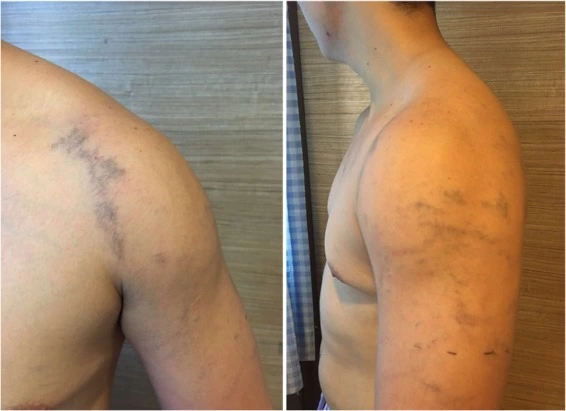
- Visible veins – Prominent superficial veins in the shoulder or chest (collateral circulation forming due to blockage).
- Bluish or reddish discoloration – The affected arm may appear darker than the other.
- Warmth in the arm – Increased temperature over the clot site.
- Decreased mobility – Difficulty in lifting or using the arm due to swelling and pain.
These symptoms are often mistaken for a simple muscle strain or shoulder injury, which delays proper medical care. That is why awareness of Paget-Schroetter Syndrome is crucial.
Types of Paget-Schroetter Syndrome
Although Paget-Schroetter Syndrome itself is considered a type of primary upper extremity deep vein thrombosis, it can be categorized based on cause and mechanism:
- Primary (Effort-related)
- Occurs due to repetitive arm use, overhead movements, or strenuous physical activity.
- Common in athletes like swimmers, baseball pitchers, weightlifters, and rowers.
- Secondary (Anatomical or Compressive factors)
- Caused by underlying anatomical variations such as cervical ribs, hypertrophied muscles, or thoracic outlet narrowing.
- This form overlaps with Venous Thoracic Outlet Syndrome (VTOS), where the vein is compressed between muscles, bones, or ligaments.
Causes
The main causes of Paget-Schroetter Syndrome can be grouped into mechanical, anatomical, and physiological factors:
- Repetitive physical activity – Overhead arm movements cause microtrauma to the subclavian vein, triggering clot formation.
- Thoracic Outlet Compression – Narrowing between the clavicle and first rib compresses the vein.
- Anatomical abnormalities – Extra cervical rib, fibrous bands, or abnormal muscle insertions can increase vein compression.
- Endothelial injury – Damage to the inner lining of the vein due to repetitive stress or trauma.
- Hypercoagulable states – Genetic or acquired clotting disorders can make blood more prone to clotting.
- Direct trauma – Rarely, blunt trauma to the chest or shoulder can initiate thrombosis.
Risk Factors
Certain groups of individuals are more susceptible to Paget-Schroetter Syndrome. Risk factors include:
- Athletes – Especially swimmers, baseball players, volleyball players, and weightlifters.
- Young, healthy males – Typically aged between 20–40 years.
- Repetitive occupational activities – Carpenters, painters, or people who frequently use their arms overhead.
- Anatomical variations – Such as cervical ribs or hypertrophied scalene muscles.
- History of venous disease – Previous thrombosis or clotting disorders.
- Sudden increase in physical activity – Overtraining without conditioning can precipitate this condition.
Treatment
Timely diagnosis and treatment are critical to prevent long-term complications. Treatment usually involves a combination of medical, surgical, and rehabilitative approaches:
1. Medical Treatment
- Anticoagulation – Blood thinners (such as heparin, warfarin, or DOACs) prevent clot progression and reduce risk of pulmonary embolism.
- Thrombolysis – Catheter-directed clot-dissolving medications (like tPA) may be used if diagnosed early.
- Analgesics and anti-inflammatories – To manage pain and swelling.
2. Surgical Treatment
- First rib resection – Removes the compressive element if thoracic outlet narrowing is present.
- Venoplasty or stenting – Helps restore blood flow in severely narrowed veins.
- Thrombectomy – Surgical removal of the clot in acute cases.
3. Lifestyle & Activity Modification
- Avoiding strenuous overhead activity during recovery.
- Gradual return to sports with medical supervision.
Physiotherapy Treatment
Physiotherapy plays a vital role in both post-treatment recovery and prevention of recurrence. At DMPhysios in Noida, specialized rehabilitation programs are tailored to each patient’s needs, focusing on restoring mobility, strength, and circulation while minimizing risks.
Goals of Physiotherapy:
- Reduce pain and swelling.
- Restore normal upper limb function.
- Improve posture and thoracic outlet space.
- Prevent re-thrombosis and complications.
Physiotherapy Techniques:
- Acute Phase (Immediately after clot treatment)
- Gentle elevation of the limb to reduce swelling.
- Compression sleeves to support venous return (if advised by the physician).
- Pain management with modalities like ice therapy (in non-acute clot risk phases).
- Mobilization and Postural Training
- Gentle range of motion (ROM) exercises for the shoulder, elbow, and wrist to prevent stiffness.
- Scapular stabilization exercises – Improving shoulder blade positioning reduces stress on the subclavian vein.
- Postural correction training – Strengthening deep neck flexors, upper back, and scapular retractors.
- Strengthening Phase
- Focused strengthening of the rotator cuff, scapular stabilizers, and thoracic extensors.
- Avoidance of excessive pectoralis major and scalene hypertrophy which may worsen compression.
- Resisted band exercises for controlled strengthening without overloading.
- Stretching and Mobility Work
- Stretching of tight pectoralis minor and scalene muscles.
- Thoracic mobility drills to open up the chest and improve rib cage movement.
- Advanced Rehabilitation
- Gradual reintroduction of sport-specific drills.
- Neuromuscular re-education for safe overhead activity.
- Functional training to allow safe return to sports or work.
At DMPhysios in Noida, therapists carefully progress patients through each stage, ensuring patient-centered rehabilitation and minimizing risks of recurrence.
Prevention
While not all cases are preventable, certain steps can reduce the risk:
- Avoid repetitive strain – Balance training intensity with adequate rest.
- Warm-up and stretching – Proper warm-up before sports reduces vein stress.
- Postural awareness – Maintaining good shoulder and spine posture prevents compression.
- Strength and mobility balance – Avoiding muscle imbalance between chest and back muscles.
- Early medical attention – Seek help if sudden swelling or pain in the arm occurs.
- Regular physiotherapy checkups – Especially for athletes, to monitor posture and prevent thoracic outlet issues.
Conclusion
Paget-Schroetter Syndrome, or effort thrombosis, is a rare but significant condition that can affect active individuals and athletes. It presents with sudden swelling, pain, and discoloration of the arm, often triggered by repetitive overhead activities. Left untreated, it can lead to severe complications such as pulmonary embolism or chronic venous obstruction.
Management of Paget-Schroetter Syndrome requires a combination of medical, surgical, and physiotherapy approaches. Anticoagulation and thrombolysis help manage the clot, while physiotherapy plays a crucial role in restoring function, improving posture, and preventing recurrence.
At DMPhysios in Noida, patients with Paget-Schroetter Syndrome receive personalized rehabilitation programs that focus not just on recovery but also on long-term prevention and return to active lifestyles. With expert guidance, athletes and patients can safely return to their daily routines with improved awareness and reduced risk of recurrence.If you or someone you know is experiencing symptoms of Paget-Schroetter Syndrome, don’t delay. Reach out to DMPhysios – your trusted partner in spine and sports rehabilitation – for expert evaluation and comprehensive, patient-centered care.