Overview
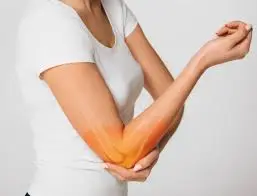
Panner’s Disease is a rare orthopedic condition that primarily affects children, particularly boys between the ages of 5 and 10. It is classified as an osteochondrosis — a group of disorders that involve temporary disruption of blood supply to the growing bones. Specifically, Panner’s Disease affects the capitellum, a rounded part of the distal humerus (upper arm bone) that forms a crucial portion of the elbow joint.
In children, the capitellum is still developing and composed largely of cartilage with a growing ossification center. When blood supply to this area is temporarily impaired, the bone undergoes necrosis (cell death) and degeneration, leading to pain, swelling, stiffness, and reduced range of motion. Fortunately, Panner’s Disease is self-limiting in most cases, meaning the bone typically heals and remodels over time as blood circulation is restored. However, early recognition and proper management are essential to avoid complications and ensure complete recovery.
At DMPhysios, a leading physiotherapy and rehabilitation clinic in Noida specializing in spine and sports conditions, children with Panner’s Disease receive patient-centered rehabilitation tailored to restore joint function, improve mobility, and support safe return to sports and daily activities.
Symptoms
The symptoms of Panner’s Disease are often subtle in the early stages but gradually worsen with activity. Common signs include:
- Elbow pain – usually localized over the lateral (outer) side of the elbow.
- Swelling – mild puffiness may appear around the joint.
- Stiffness – difficulty in bending or straightening the elbow fully.
- Restricted range of motion – especially in extension and supination (turning the palm upward).
- Tenderness on palpation – the capitellum region feels sore to touch.
- Weakness – children may struggle to grip objects or throw a ball.
- Clicking or locking sensations – though less common, some may experience mechanical symptoms.
These symptoms typically worsen with sports activities like baseball, cricket, gymnastics, or any sport requiring repetitive throwing or weight-bearing on the arms. Rest usually reduces the pain.
Types of Panner’s Disease
Unlike other osteochondroses, Panner’s Disease does not have formally classified subtypes. However, it is important to distinguish it from Osteochondritis Dissecans (OCD) of the capitellum, which occurs in slightly older children and adolescents (typically 12–16 years).
- Panner’s Disease: Seen in younger children (5–10 years), self-limiting, heals without long-term deformity in most cases.
- Capitellar OCD: Seen in adolescents, more serious, may require surgery, and can lead to joint degeneration.
Early diagnosis is critical to avoid confusing the two conditions.
Causes
The exact cause of Panner’s Disease is not fully understood, but several contributing factors have been identified:
- Repetitive microtrauma – Overuse injuries from throwing, gymnastics, or racquet sports can place excessive stress on the immature capitellum.
- Vascular compromise – Reduced blood supply to the growing bone center leads to necrosis and temporary collapse.
- Rapid growth – Children in growth spurts are more vulnerable due to the increased demands on developing bones.
- Genetic predisposition – Family history may play a role in susceptibility.
- Mechanical stress – Frequent loading and pressure on the lateral elbow joint may exacerbate the condition.
Risk Factors
Children at higher risk for developing Panner’s Disease typically share the following characteristics:
- Age group: Most common between 5 and 10 years.
- Gender: Boys are affected more frequently than girls.
- Sports participation: Young athletes in baseball, cricket, tennis, and gymnastics face greater risks.
- Repetitive elbow use: Activities that involve frequent throwing, lifting, or pushing through the arms.
- History of trauma: Even minor elbow injuries can increase vulnerability.
Treatment
The treatment of Panner’s Disease is usually conservative, as the condition often heals with time once stress on the elbow is reduced. Key components include:
- Rest and activity modification – Avoiding sports and activities that place stress on the elbow until symptoms subside.
- Immobilization – In some cases, a sling or cast may be used briefly to reduce pain and allow healing.
- Ice therapy – Applying cold packs can reduce swelling and discomfort.
- Medication – NSAIDs (Non-steroidal anti-inflammatory drugs) may be prescribed to manage pain.
- Gradual return to activity – Once pain-free, children are allowed to gradually resume normal activities under supervision.
If left untreated, Panner’s Disease can result in chronic pain, reduced mobility, or early degenerative changes. Hence, timely intervention is critical.
Physiotherapy Treatment
At DMPhysios in Noida, physiotherapy plays a central role in the safe and effective management of Panner’s Disease. Patient-centered rehabilitation ensures that each child’s treatment is tailored to their age, activity level, and stage of healing.
Goals of Physiotherapy:
- Reduce pain and inflammation.
- Restore normal elbow mobility.
- Strengthen supporting muscles.
- Prevent recurrence and long-term complications.
- Facilitate safe return to sports.
Physiotherapy Interventions:
- Pain Management
- Cryotherapy (ice application).
- Gentle soft tissue mobilization to relieve surrounding muscle tension.
- Range of Motion (ROM) Exercises
- Passive and active-assisted movements to maintain flexibility.
- Gradual stretching of the elbow joint to prevent stiffness.
- Strengthening Exercises
- Focus on wrist extensors, flexors, and forearm stabilizers.
- Progressive resistance training using therabands or light weights.
- Shoulder and scapular strengthening to reduce elbow strain.
- Neuromuscular Re-education
- Proprioceptive training to improve joint control and stability.
- Functional exercises to mimic sports-specific movements.
- Activity Modification Education
- Guidance on proper throwing mechanics.
- Advice on load management in young athletes.
- Ergonomic training for daily activities.
- Gradual Return-to-Sport Program
- Once pain-free with full ROM and adequate strength, children are guided back into sports with structured progression.
- Sport-specific drills under physiotherapist supervision ensure safe reintegration.
With the expertise of DMPhysios, families in Noida have access to advanced physiotherapy care that not only resolves symptoms but also addresses the root causes of Panner’s Disease, minimizing the risk of recurrence.
Prevention
While it may not always be preventable, the risk of developing Panner’s Disease can be significantly reduced with the following strategies:
- Encourage balanced activity: Avoid excessive sports specialization at an early age.
- Ensure proper warm-up: Gentle stretching and warm-up before sports reduce strain on growing joints.
- Monitor training load: Prevent overuse by balancing practice with adequate rest.
- Teach proper technique: Correct throwing or lifting techniques protect the elbow from repetitive stress.
- Strength and flexibility training: Supporting muscles should be conditioned to reduce joint strain.
- Regular check-ups: Early medical consultation at the first sign of elbow pain ensures timely diagnosis.
Conclusion
Panner’s Disease, though rare, can significantly impact a child’s ability to participate in sports and daily activities. It is a self-limiting condition that typically resolves with proper rest, conservative care, and structured physiotherapy. Early diagnosis and a patient-centered rehabilitation program are essential to restore function, relieve pain, and prevent long-term complications.
For families in Noida seeking expert care, DMPhysios provides specialized rehabilitation for Panner’s Disease and other sports-related conditions. With a focus on evidence-based treatment, personalized care, and long-term recovery, DMPhysios stands as a trusted clinic for spine and sports rehabilitation.If your child is experiencing elbow pain or limited motion, don’t delay seeking professional care. Contact DMPhysios today for a comprehensive evaluation and tailored physiotherapy plan to ensure a smooth and complete recovery.