Overview
The femur, or thigh bone, is the largest and strongest bone in the human body. When a fracture occurs in the femur, it is often the result of significant trauma, high-impact injuries, or underlying conditions such as osteoporosis. While surgical fixation and immobilization are usually necessary to achieve bone healing, many patients experience a common complication: post Femur fracture stiffness.
Post Femur fracture stiffness refers to the loss of normal movement at the hip and/or knee joints after a femoral fracture. This stiffness is typically caused by prolonged immobilization, surgical scarring, muscle weakness, and adhesions around the surrounding soft tissues. Although the bone may heal adequately, the restricted mobility can significantly limit activities such as walking, sitting, climbing stairs, and even returning to work or sports.
At DMPhysios, a premier physiotherapy clinic in Noida specializing in spine and sports conditions with patient-centered rehabilitation, this problem is frequently addressed. The clinic focuses on early detection, evidence-based therapy, and customized exercise programs to restore function and reduce pain in patients dealing with post Femur fracture stiffness.
Symptoms
Recognizing the symptoms of post Femur fracture stiffness early is critical for successful recovery. Common signs include:
- Restricted Range of Motion: Difficulty bending or straightening the knee or hip.
- Persistent Pain and Tightness: Aching or pulling sensations around the thigh, hip, or knee even after the fracture has healed.
- Difficulty with Daily Activities: Trouble sitting cross-legged, climbing stairs, standing up from a chair, or walking normally.
- Muscle Weakness: Quadriceps and hamstrings lose strength, making the leg feel heavy or unstable.
- Swelling or Thickened Scars: Scar tissue or post-surgical adhesions may cause localized swelling and decreased flexibility.
Left untreated, post Femur fracture stiffness may lead to long-term disability, gait abnormalities, and chronic pain. Clinics such as DMPhysios in Noida emphasize early intervention to minimize these complications.
Types of Post Femur Fracture Stiffness
Although not always formally classified into types, clinicians often categorize post Femur fracture stiffness based on the region affected:
- Hip Joint Stiffness Post-Femur Fracture: Reduced hip flexion, abduction, or internal/external rotation due to immobilization, scarring, or soft-tissue contracture.
- Knee Joint Stiffness Post-Femur Fracture: Limited knee bending (flexion) or straightening (extension) following distal femur fractures or intramedullary nailing.
- Combined Hip and Knee Stiffness: Occurs in severe injuries or when immobilization is prolonged, affecting the entire lower limb.
Each type requires a tailored rehabilitation approach, something DMPhysios excels at by designing individualized physiotherapy programs.
Causes
The development of post Femur fracture stiffness is multifactorial. Common causes include:
- Prolonged Immobilization: Extended bed rest or cast application leads to joint contractures and muscle shortening.
- Surgical Scarring: Incisions and internal fixation hardware can produce adhesions in muscles, tendons, and fascia.
- Inadequate Rehabilitation: Delayed or insufficient physiotherapy can allow stiffness to set in.
- Muscle Atrophy and Weakness: Disuse of the limb leads to decreased flexibility and contracture formation.
- Pain Avoidance: Patients may subconsciously limit movement because of pain, promoting stiffness.
- Complications: Infection, non-union, or malunion of the fracture may also contribute to stiffness.
Understanding these causes helps clinics like DMPhysios develop comprehensive treatment strategies.
Risk Factors
Certain individuals are more prone to developing post Femur fracture stiffness. Risk factors include:
- Advanced age
- Complex or comminuted femoral fractures
- Multiple surgeries or revision procedures
- Co-existing injuries to knee ligaments or hip structures
- Poor pain control post-surgery
- Delayed initiation of physiotherapy
- Pre-existing joint stiffness or degenerative conditions
Identifying these risk factors allows rehabilitation centers such as DMPhysios to implement preventive measures right from the acute stage.
Treatment
Management of post Femur fracture stiffness requires a combination of medical, surgical, and rehabilitative approaches:
- Medical Management: Adequate pain relief, anti-inflammatory medications, and sometimes injections to reduce swelling or adhesions.
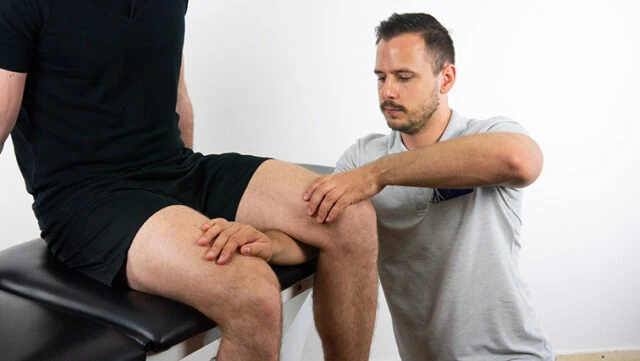
- Manual Mobilization: Performed by trained physiotherapists to stretch and mobilize the joints safely.
- Splinting or Bracing: Dynamic splints may be used to gradually improve knee or hip range of motion.
- Surgical Interventions: In severe cases, arthroscopic release of adhesions or removal of hardware may be necessary.
However, the cornerstone of recovery from post Femur fracture stiffness is physiotherapy, which should begin as early as the treating surgeon allows.
Physiotherapy Treatment
At DMPhysios in Noida, physiotherapy for post Femur fracture stiffness is patient-centered and evidence-based. The goal is to restore mobility, strengthen muscles, improve circulation, and retrain functional movement. Below is a detailed outline of the physiotherapy approach:
1. Early Phase (Immediately after surgeon clearance)
- Pain Management: Ice packs, gentle massage, and electrotherapy (Accelerated Healing Therapy) to reduce discomfort.
- Gentle Passive Movements: Therapist-assisted hip and knee range-of-motion exercises to prevent contractures.
- Isometric Exercises: Quadriceps sets, gluteal squeezes, and ankle pumps to maintain muscle activity.
- Positioning: Proper limb elevation and supported sitting to prevent swelling and stiffness.
2. Intermediate Phase (After bone healing is sufficient)
- Active-Assisted and Active Exercises: Gradual increase in hip flexion, abduction, and knee bending exercises.
- Strengthening Regimen: Focus on quadriceps, hamstrings, gluteals, and core muscles.
- Manual Therapy Techniques: Joint mobilizations, soft tissue release, and stretching of scar tissue.
- Balance and Proprioception: Use of wobble boards, parallel bars, or closed-chain exercises to retrain stability.
3. Advanced Phase (Functional and Sport-Specific Rehabilitation)
- Progressive Resistance Training: Using bands, weights, or gym equipment to regain full lower limb power.
- Gait Training: Correcting limping patterns, practicing stair climbing, and endurance walking.
- Functional Drills: Squats, lunges, mini-hops, and sport-specific movements as appropriate.
- Education: Teaching patients home exercise programs, posture correction, and self-stretching techniques.
The physiotherapists at DMPhysios continuously monitor pain, swelling, and mobility, adjusting programs for optimal outcomes. By addressing the individual’s goals—whether returning to daily activities, sports, or work—the clinic ensures that post Femur fracture stiffness does not become a permanent limitation.
Prevention
Preventing post Femur fracture stiffness is always better than treating it. Some strategies include:
- Early Mobilization: Start gentle movements as soon as medically allowed.
- Pain Control: Adequate analgesia encourages the patient to move without fear.
- Patient Education: Teaching the importance of exercise and adherence to rehabilitation plans.
- Regular Physiotherapy: Continuous supervision by qualified professionals such as those at DMPhysios.
- Scar Management: Early massage and stretching to prevent adhesions.
- Nutritional Support: Adequate protein and vitamin intake to support muscle and bone healing.
By implementing these steps, clinics like DMPhysios in Noida help reduce the incidence of long-term disability caused by post Femur fracture stiffness.
Conclusion
Post Femur fracture stiffness is a common yet preventable complication that can drastically reduce a patient’s quality of life if not addressed promptly. It involves loss of movement, pain, and functional limitations at the hip and/or knee after a femur fracture. Causes include immobilization, scarring, and inadequate rehabilitation, while risk factors range from advanced age to delayed physiotherapy.
Effective management involves early detection, medical treatment for pain and swelling, and—most importantly—structured physiotherapy. At DMPhysios, a leading clinic in Noida specializing in spine and sports conditions with patient-centered rehabilitation, patients receive individualized care plans, hands-on therapy, and progressive exercise regimens designed to restore movement and independence.If you or a loved one are struggling with post Femur fracture stiffness, don’t wait for the problem to worsen. Contact DMPhysios today to schedule a comprehensive assessment and start your journey toward full recovery. With the right guidance and timely intervention, you can regain mobility, strength, and confidence in your leg once again.