Overview
Thoracic spondylitis is a progressive inflammatory or degenerative disorder that primarily affects the middle portion of the spinal column—the thoracic region. This section of the spine is made up of twelve vertebrae (T1–T12), which act as a bridge between the cervical (neck) and lumbar (lower back) regions and form the structural base for the rib cage. In individuals with thoracic spondylitis, the vertebrae, intervertebral discs, and surrounding ligaments may become inflamed, lose their normal resilience, or undergo gradual degenerative changes over time. These processes can lead to stiffness, persistent or activity-related pain, and a noticeable reduction in spinal flexibility.
Because the thoracic spine also serves as the anchor for the ribs and protects critical organs within the chest cavity, inflammation or degeneration in this area may produce symptoms beyond the spine itself. Many people with thoracic spondylitis experience not only mid-back discomfort but also pain radiating around the rib cage or into the upper abdomen. Some report a “band-like” tightness across the chest, which can be misinterpreted as cardiac or gastrointestinal in origin. This pattern of pain and stiffness makes thoracic spondylitis quite distinct from similar conditions in the cervical or lumbar spine, which typically produce neck or low-back symptoms alone.
At DMPhysios, a leading clinic based in Noida that specializes in spine and sports conditions with a strong focus on patient-centered rehabilitation, thoracic spondylitis is approached comprehensively. Patients receive evidence-based care aimed not just at reducing pain and inflammation, but at restoring normal movement, improving posture, strengthening supporting muscles, and implementing preventive strategies. This integrated approach helps people regain their quality of life while reducing the likelihood of recurrence or progression of the disease.
Symptoms
The symptoms of thoracic spondylitis can vary widely depending on the severity of inflammation or degeneration. Common symptoms include:
- Persistent mid-back pain: A dull ache or sharp pain localized to the thoracic spine that may worsen with activity or prolonged sitting.
- Stiffness and reduced mobility: Difficulty twisting, bending, or extending the back.
- Pain radiating around the ribs or chest: Because thoracic nerves travel around the rib cage, patients may experience “belt-like” pain encircling the chest.
- Postural changes: In advanced cases, thoracic spondylitis can contribute to kyphosis (forward rounding of the spine).
- Fatigue: Chronic pain and inflammation may lead to reduced activity levels and generalized tiredness.
- Neurological symptoms (rare): In severe cases, nerve compression can cause tingling, numbness, or weakness in the lower body.
Recognizing these symptoms early and seeking prompt evaluation at a specialized clinic like DMPhysios in Noida can help prevent complications and improve quality of life.
Types of Thoracic Spondylitis
Thoracic spondylitis can present in several forms depending on the underlying cause:
- Degenerative Thoracic Spondylitis
- Caused by age-related wear and tear of the intervertebral discs, vertebrae, and facet joints.
- Commonly seen in older adults or those with physically demanding lifestyles.
- Inflammatory Thoracic Spondylitis
- Related to autoimmune conditions such as ankylosing spondylitis or other spondyloarthropathies.
- Inflammation may gradually fuse the vertebrae, reducing spinal flexibility.
- Infectious Thoracic Spondylitis (Spondylodiscitis)
- Caused by bacterial or, rarely, fungal infections in the thoracic vertebrae.
- Requires early medical intervention to prevent severe complications.
- Traumatic or Postural Thoracic Spondylitis
- Chronic poor posture, repeated microtrauma, or past injuries to the thoracic spine can trigger degenerative changes leading to spondylitis-like symptoms.
Identifying the type of thoracic spondylitis is essential for tailoring treatment, something DMPhysios emphasizes in its individualized rehabilitation plans.
Causes
Several factors can lead to thoracic spondylitis, often acting together:
- Age-related degeneration of discs and vertebrae.
- Autoimmune conditions such as ankylosing spondylitis or psoriatic arthritis.
- Spinal infections, including tuberculosis of the spine.
- Chronic poor posture from prolonged sitting, especially with inadequate ergonomic support.
- Repetitive strain injuries in athletes or manual laborers.
- Previous spinal trauma or surgery.
- Obesity, which increases mechanical stress on the thoracic spine.
At DMPhysios, thorough evaluation of the underlying cause is performed to ensure that treatment addresses both symptoms and root factors.
Risk Factors
While thoracic spondylitis can affect anyone, certain groups are at higher risk:
- Older adults (age-related degeneration).
- Individuals with autoimmune conditions.
- People with a family history of spondyloarthropathies.
- Sedentary workers with poor posture.
- Athletes involved in high-impact sports.
- People with a history of spinal trauma or surgery.
- Smokers and those with poor bone health or vitamin deficiencies.
Knowing your risk factors allows you to take preventive measures—something DMPhysios actively educates its patients about.
Treatment
Treatment for thoracic spondylitis depends on the severity, underlying cause, and individual needs. A multimodal approach combining medical management and physical rehabilitation is most effective.
Medical Treatment
- Pain management: Nonsteroidal anti-inflammatory drugs (NSAIDs) to reduce pain and inflammation.
- Muscle relaxants: To relieve associated muscle spasms.
- Disease-modifying agents: For autoimmune-related thoracic spondylitis.
- Antibiotics or antifungals: In cases of infectious spondylitis.
- Corticosteroid injections: Occasionally used for severe pain or inflammation.
Lifestyle Modifications
- Ergonomic adjustments at work and home.
- Weight management to reduce stress on the spine.
- Balanced nutrition to support bone and joint health.
While medications provide short-term relief, physiotherapy and rehabilitation remain the cornerstone of long-term recovery for thoracic spondylitis, as practiced at DMPhysios.
Physiotherapy Treatment
At DMPhysios in Noida, physiotherapy for thoracic spondylitis is evidence-based and customized. The goal is to relieve pain, restore spinal mobility, strengthen supporting muscles, and prevent recurrence. Key components include:
1. Pain Management Techniques
- Thermotherapy: Hot packs to reduce stiffness and improve blood flow.
- Cold therapy: In acute inflammatory phases to reduce pain and swelling.
- Electrotherapy: TENS (Transcutaneous Electrical Nerve Stimulation) or IFT (Interferential Therapy) to modulate pain signals.
- Accelerated Healing Therapy for reducing pain and inflammation.
2. Manual Therapy
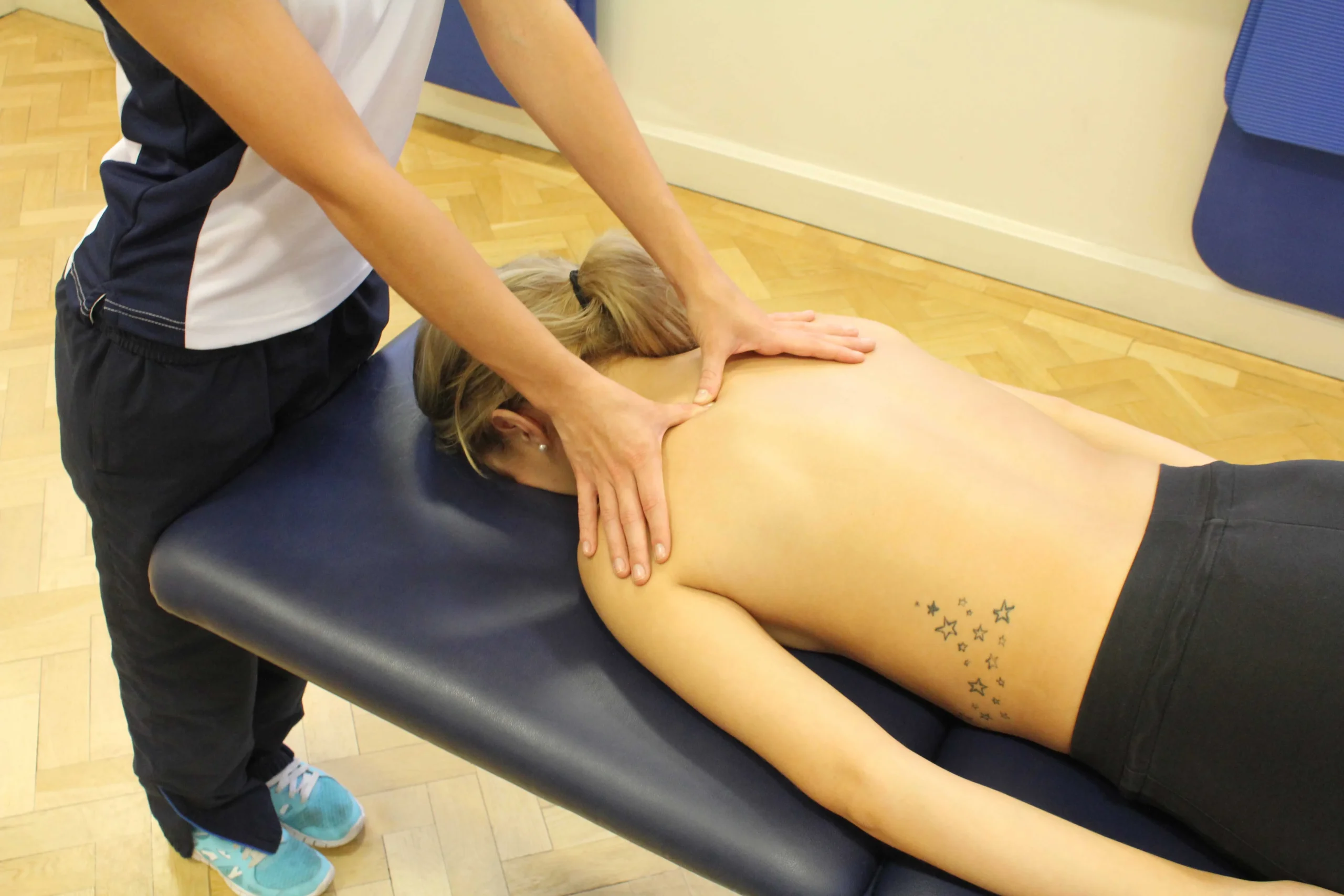
- Mobilization of thoracic segments to restore joint play.
- Soft tissue release for tight paraspinal muscles.
- Myofascial release techniques for chronic tension.
3. Posture Correction
- Education about proper sitting, standing, and lifting mechanics.
- Ergonomic advice for workstations and daily activities.
- Taping techniques to provide proprioceptive feedback for posture correction.
4. Therapeutic Exercises
A structured exercise plan is crucial for thoracic spondylitis management:
- Stretching exercises
- Cat-cow stretch for thoracic mobility.
- Chest and pectoral stretches to counteract rounded shoulders.
- Thoracic extension over a foam roller.
- Strengthening exercises
- Scapular retraction and depression exercises.
- Back extensor strengthening.
- Core stabilization exercises (planks, bird-dogs).
- Breathing exercises
- Deep diaphragmatic breathing to improve rib cage mobility and reduce stiffness.
At DMPhysios, these exercises are progressed gradually to match the patient’s capacity and ensure safety.
5. Education and Self-Management
Patients are educated about:
- Recognizing early warning signs of flare-ups.
- The importance of regular movement breaks.
- Long-term home exercise programs.
6. Advanced Modalities (if indicated)
- Dry needling for myofascial trigger points.
- Ultrasound therapy to enhance tissue healing.
- Kinesio taping for pain relief and postural support.
This detailed, patient-centered physiotherapy approach distinguishes DMPhysios as a leader in spine care in Noida.
Prevention
Although not all cases can be prevented particularly autoimmune or infectious causes, adopting healthy habits can reduce your risk:
- Maintain good posture while sitting, standing, and lifting.
- Use ergonomic furniture and supportive mattresses.
- Engage in regular exercise, especially core and back strengthening.
- Maintain a healthy weight to minimize spinal stress.
- Avoid smoking and ensure adequate calcium and vitamin D intake.
- Treat underlying infections or autoimmune conditions promptly.
At DMPhysios, prevention is a key focus. Patients are counseled on lifestyle changes to protect their thoracic spine for the long term.
Conclusion
Thoracic spondylitis, whether degenerative, inflammatory, or infectious, can significantly impact daily life if left untreated. Early recognition of symptoms such as mid-back pain, stiffness, and postural changes is crucial. A holistic treatment plan combining medical management with a tailored physiotherapy program offers the best outcomes.
DMPhysios, a trusted clinic located in Noida specializing in spine and sports conditions with patient-centered rehabilitation, provides comprehensive care for thoracic spondylitis. From detailed evaluation and individualized exercise plans to education and prevention strategies, DMPhysios ensures that every patient receives the highest quality of care.If you’re experiencing persistent thoracic back pain or have been diagnosed with thoracic spondylitis, don’t wait for symptoms to worsen. Contact DMPhysios today for a thorough assessment and a personalized rehabilitation plan designed to restore your spine health and improve your quality of life.