Fat Wallet Syndrome: The Hidden Danger Lurking in Your Back Pocket

fat wallet syndrome

Fat Wallet Syndrome

The Hidden Danger Lurking in Your Back Pocket
M any people, especially men, have the habit of slipping their wallet into their back pocket and sitting down without a second thought. While it may seem harmless and convenient, this everyday habit can actually lead to serious problems with your posture, spinal alignment, and overall health. Carrying a wallet in the back pocket can sometimes cause a condition called Fat Wallet Syndrome, which happens due to pressure on the sciatic nerve.

This condition is well-known among men and is sometimes called Hip Pocket Syndrome, Wallet Sciatica, Fat Wallet Syndrome, or even Credit Carditis.

What Is Fat Wallet Syndrome ?

Fat Wallet Syndrome occurs when a bulky wallet placed in the back pocket compresses the sciatic nerve near the piriformis muscle. This compression can cause pain and symptoms similar to sciatica that comes from the lower back. Additionally, carrying a thick wallet can affect the posture of the pelvis and lower spine, putting uneven pressure on pelvic muscles, spinal discs, and nerves.

How Does It Happen?

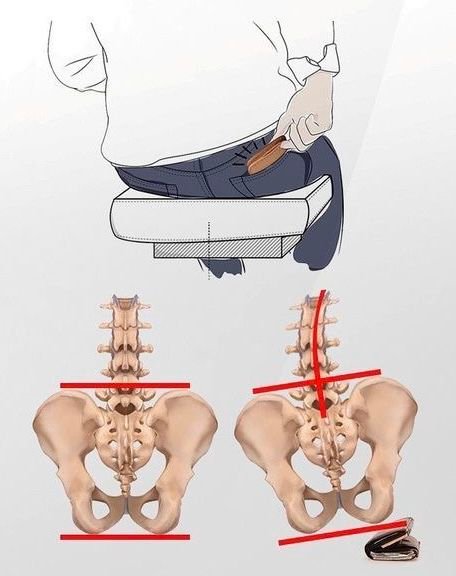
Every time you sit on a bulky wallet, your pelvis tilts unevenly. This tilt puts pressure on the sciatic nerve beneath the piriformis muscle, which is located deep in your buttock. Over time, this constant pressure irritates the nerve and surrounding muscles, leading to pain and other symptoms. What starts as mild discomfort can quickly become chronic if the habit continues.

Who Is Most at Risk?

  • Men who regularly carry large wallets in their back pockets.
  •  

  • Anyone who frequently sits for long periods, especially without changing position.
  •  

  • People with existing lower back or hip problems may experience worsened symptoms.
  •  

  • Those with poor posture habits or weak core muscles.

Changes in our body due to sitting on the wallet

Our body is designed to sit evenly on a flat surface. When we place a wallet in our back pocket and sit on it—even if the wallet is thin—it causes our pelvis to tilt slightly. This small imbalance creates an uneven base for your spine, which can lead to a range of problems over time.

Effect of sitting on a wallet :

  • Pelvic Misalignment: Pelvis becomes uneven, disrupting the natural posture.
  •  
  • Spinal Compensation: The spine shifts to adjust for the imbalance.
  •  
  • Muscle Strain: Lower back muscles work harder, leading to fatigue and tightness.
  •  
  • Nerve Compression: The sciatic nerve may get compressed, causing pain and discomfort.
  •  
  • Hip Muscle Tightness: Uneven pressure causes stiffness in the hip muscles.
  •  
  • Disc Wear and Tear: Unequal pressure on spinal discs increases the risk of damage
  •  
  • Nerve Irritation Symptoms: Tingling, numbness, or weakness can present in the legs.
  •  
  • Headaches and Neck Pain: Poor posture may contribute to pain beyond your back.
  •  
  • Altered Walking Pattern: Chronic imbalance can change the gait, causing further issues.
  •  
  • Reduced Circulation: Sitting unevenly can limit blood flow to the lower body.
  •  

It can take as little as 20 minutes of sitting on a wallet for these effects to begin. When this habit is repeated regularly, the strain and damage build up, potentially leading to chronic pain and postural issues.

Signs and Symptoms of Fat Wallet Syndrome

  • Persistent pain or aching in your lower back and buttocks
  • Tingling, numbness, or pins and needles sensations radiating down the leg
  • Muscle weakness or cramps in the affected leg
  • Difficulty sitting for long periods without discomfort
  • Pain that eases when you remove the wallet or change your sitting position

Why Should We Care ?

Ignoring Fat Wallet Syndrome can lead to ongoing nerve irritation, worsening posture, and muscle imbalances. It might even affect how you walk or stand, potentially causing pain in other parts of your body such as your hips, knees, or neck. Plus, chronic pain can impact your mood, sleep, and daily activities.

Prevention and Simple Fixes

1. Switch pockets: Move the wallet to the front pocket or carry it in a bag.

2. Slim down your wallet: Remove unnecessary cards and receipts to keep it thin.

3. Use a minimalist wallet: Opt for a smaller, sleeker wallet designed to reduce bulk.

4. Take breaks: Try to stretch every 30 min of sitting

5. Pay attention to posture: Sit with both feet flat on the floor and avoid leaning to one side.

6. Go Digital:

  • Use Mobile wallets (e.g., Apple Pay, Google Wallet, Samsung Pay) reduce the need to carry cards.
  •  Store membership and loyalty cards digitally.

7. Build a Habit:

  •  Before you sit, get used to removing your wallet.
  • Place it in a designated spot at your desk, in your car console, or in a drawer.

These small behavioral changes can prevent long-term damage  of Fat Wallet Syndrome and significantly improve the comfort.

Frequently Asked Questions

1. Can sitting on a wallet cause long-term nerve irritation?
Yes, sitting on a wallet for extended periods can gradually irritate nearby nerves, especially the sciatic nerve. When one side of the pelvis is elevated, it creates uneven pressure on muscles, joints, and nerve pathways is called Fat Wallet Syndrome. Over time, this constant imbalance may lead to nerve sensitivity, discomfort, or radiating pain into the hip or leg. Even after removing the wallet, symptoms can persist if the body has adapted to poor alignment, making corrective care important.
2. Why does pain from a back pocket wallet feel one-sided?
Pain associated with a back pocket wallet often feels one-sided because the pelvis tilts unevenly while sitting. This asymmetry shifts body weight to one hip, causing unequal stress on spinal joints and surrounding muscles. The body compensates by overworking one side while compressing the other, which can trigger localized pain. Over time, this imbalance may affect walking patterns, posture, and comfort during daily activities.
3. Can Fat Wallet Syndrome affect walking or posture?
Yes, altered sitting habits caused by a wallet can influence posture and walking mechanics. When the pelvis remains uneven for long periods, muscles adapt to the imbalance, potentially leading to a subtle limp or postural shift. These changes may not be obvious initially but can place extra strain on the lower back and hips. Addressing these movement changes early helps restore balanced posture and reduces future discomfort.
4. Is Fat Wallet Syndrome reversible with lifestyle changes alone?
In many cases, symptoms can improve with simple lifestyle changes such as removing the wallet, correcting posture, and reducing prolonged sitting. However, if discomfort has been present for a long time, muscles and joints may need guided rehabilitation. Physiotherapy helps retrain movement patterns, release tight structures, and restore pelvic alignment. Early action usually leads to faster and more complete recovery.
5. Why do symptoms sometimes worsen after standing up?
Fat Wallet Syndrome Symptoms may worsen after standing because the body transitions from an uneven seated position to upright movement. Muscles and joints that were compressed or overstretched during sitting suddenly bear load, triggering stiffness or pain. This is common when alignment has been altered for prolonged periods. Improving sitting habits and restoring proper muscle coordination can reduce discomfort during posture changes.
6. Can carrying items in only one pocket cause similar problems?
Yes, carrying items in one pocket repeatedly can create asymmetrical loading, even if it is not a wallet. Phones, keys, or thick objects can tilt the pelvis and disrupt balance. Over time, this habit may contribute to muscular tightness and spinal strain. Maintaining even weight distribution and avoiding bulky items in pockets helps protect posture and reduce unnecessary stress on the lower back.
7. How long does it take for symptoms to improve after removing the wallet?
Improvement timelines vary depending on how long symptoms have been present and how the body has adapted. Some people notice relief within days, while others may take weeks if muscle tightness or joint stiffness has developed. Consistent posture correction and movement awareness speed recovery. Physiotherapy support can further accelerate healing by addressing underlying imbalances rather than symptoms alone.
8. Can Fat Wallet Syndrome contribute to hip or leg discomfort?
Yes, the altered pelvic position caused by sitting on a wallet can affect hip mechanics and leg alignment. This may lead to tight hip muscles, reduced flexibility, or discomfort radiating down the thigh. Over time, uneven loading can strain the hip joint and surrounding tissues. Addressing pelvic symmetry and restoring normal movement patterns helps reduce referred discomfort in the lower limb.
9. Is this condition common among office workers and drivers?
Fat Wallet Syndrome is particularly common among individuals who sit for long hours, such as office workers and drivers. Prolonged sitting amplifies the effects of pelvic imbalance, especially when posture remains unchanged for extended periods. Frequent breaks, posture awareness, and avoiding back pocket items are especially important for people with sedentary or driving-heavy routines to prevent chronic discomfort.
10. How does physiotherapy help correct wallet-related posture issues?
Physiotherapy helps by identifying postural imbalances, muscle tightness, and movement restrictions caused by uneven sitting habits. Treatment focuses on restoring pelvic alignment, improving muscle balance, and retraining healthy movement patterns. Patients also receive guidance on sitting ergonomics and daily habits to prevent recurrence. This comprehensive approach addresses both the cause and the long-term prevention of symptoms.

Book a Consultation

It’s easy and free!

Dr. Ritika Aggarwal

Dr. Ritika Aggarwal

Physiotherapist

Related Posts

Best Physiotherapy Center in Ashok Nagar Delhi , Physiotherapy plays a vital role in modern healthcare by helping individuals recover from injuries, manage chronic pain, enhance mobility, and improve overall quality of life. Whether you are dealing with back pain, sports injury, post-surgery rehabilitation, or age-related conditions like arthritis, choosing the right physiotherapy center is …

Leave a Reply

Your email address will not be published. Required fields are marked *