Overview
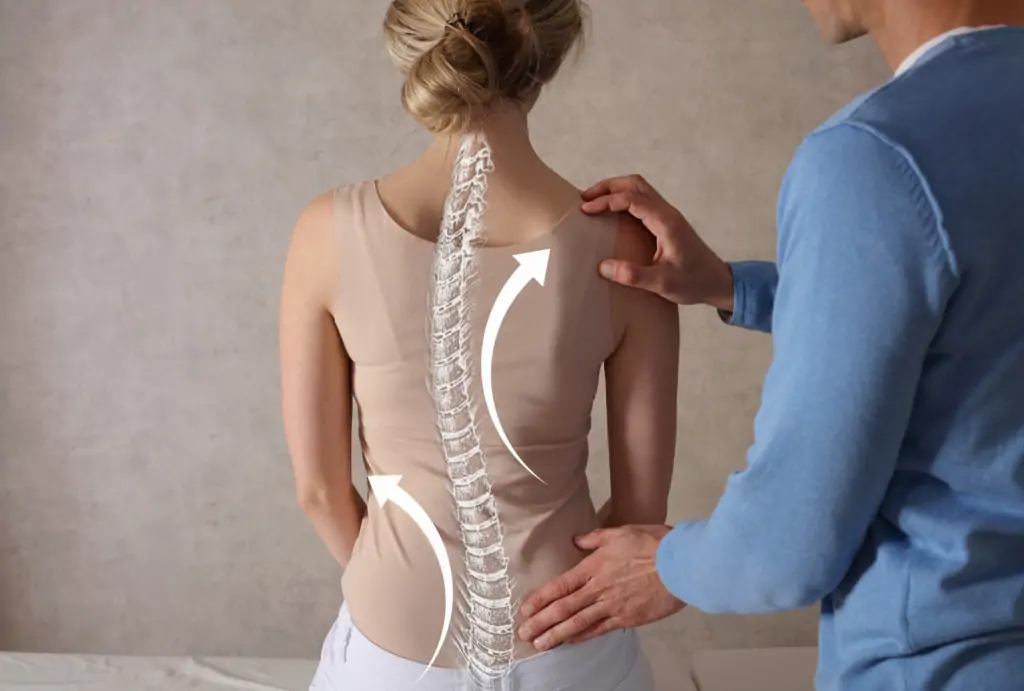
Scoliosis is a musculoskeletal disorder characterized by an abnormal lateral curvature of the spine, most commonly appearing during the growth spurt just before puberty. Unlike the natural curves of the spine (cervical, thoracic, and lumbar), it causes a sideways curve that may look like an “S” or “C” shape when viewed from behind.
This condition can range from mild and asymptomatic to severe, affecting lung function, mobility, posture, and quality of life. Timely diagnosis and appropriate treatment play a crucial role in the effective management of scoliosis. At DMPhysios, a leading physiotherapy clinic located in Noida that specializes in spine and sports conditions, we provide patient-centered rehabilitation programs designed specifically for scoliosis management and long-term recovery.
Symptoms
The symptoms of scoliosis may vary based on the degree of curvature, the age of onset, and the type of scoliosis present. Common signs and symptoms include:
- Uneven shoulders or shoulder blades
- One hip appearing higher than the other
- Asymmetrical waistline
- A visible protrusion of the ribs on one side of the back when bending forward, often indicative of spinal curvature
- Leaning to one side
- Back pain (especially in adults)
- Fatigue due to muscle imbalance
In severe cases, it may lead to cardiopulmonary issues due to the spinal curve compressing the lungs or heart. Children and adolescents may not always complain of pain, making visual inspection and regular check-ups crucial.
Types of Scoliosis
There are several classifications of scoliosis based on the age of onset and cause:
1. Idiopathic Scoliosis
The most common type, particularly in adolescents. “Idiopathic” means the cause is unknown. It is further divided into:
- Infantile (0-3 years)
- Juvenile (4-10 years)
- Adolescent (11-18 years) – the most prevalent
2. Congenital Scoliosis
Occurs due to malformation of the spine during fetal development. It is often diagnosed in early childhood and may be associated with other organ system defects.
3. Neuromuscular Scoliosis
Results from disorders such as cerebral palsy, muscular dystrophy, or spinal cord injury, where muscle control is impaired.
4. Degenerative Scoliosis (Adult-Onset)
Develops later in life due to spinal degeneration, arthritis, or osteoporosis, often accompanied by back pain and postural changes.
5. Functional Scoliosis
Also known as non-structural scoliosis, caused by muscle spasms, unequal leg length, or poor posture. The spine itself remains structurally normal.
At DMPhysios, we tailor scoliosis rehabilitation plans according to the specific type, ensuring that each patient receives the most suitable and effective treatment.
Causes
While most scoliosis cases are idiopathic, meaning the cause is unknown, several known factors can lead to the condition:
- Genetic predisposition: Scoliosis often runs in families.
- Congenital spine malformations: Errors in spinal development before birth.
- Neurological conditions: Such as spina bifida, muscular dystrophy, or cerebral palsy.
- Spinal injuries or infections: Trauma or infections affecting spinal growth plates.
- Poor posture or biomechanical imbalances: Contributing to functional scoliosis.
Understanding the underlying cause is essential to determine the most appropriate intervention strategy. At DMPhysios, our team conducts thorough assessments to identify the root cause before initiating treatment.
Risk Factors
Some individuals may be at higher risk for developing this deformity:
- Age: Most commonly detected during adolescence
- Sex: Females are more likely to develop severe curves requiring treatment
- Family history: Genetic factors can significantly influence scoliosis development
- Neuromuscular conditions: Increase the likelihood of spinal curvature
- Spinal degeneration: A common risk for older adults
These risk factors highlight the importance of early screening and evaluation, especially for adolescents and individuals with a family history.
Treatment Options
Treatment depends on the degree of curvature, age, types, and whether the condition is progressive. The three primary options include:
1. Observation
For mild scoliosis (curve < 20 degrees), especially in growing children, regular monitoring through X-rays every 4-6 months may be sufficient.
2. Bracing
Bracing is used to prevent further progression of the curve in growing children or adolescents with moderate curves (20-40 degrees). It is not intended to reverse scoliosis but to halt its advancement.
3. Surgery
In severe cases (curve > 40-50 degrees), especially with respiratory or postural complications, spinal fusion surgery may be recommended. Surgical intervention involves fusing two or more vertebrae to stabilize the spine.
At DMPhysios, we focus primarily on non-surgical scoliosis rehabilitation, integrating posture correction, spinal alignment, core stabilization, and muscle re-education through physiotherapy.
Physiotherapy Treatment
Physiotherapy is a key component in the non-surgical management of scoliosis, helping to improve posture, strength, and spinal alignment. At DMPhysios in Noida, our expert physiotherapists use evidence-based and personalized rehabilitation protocols to:
1. Correct Posture
Postural training helps patients become more aware of their spinal alignment. Specific exercises aim to reduce uneven shoulder height and hip position.
2. Strengthen Core Muscles
Strengthening the deep abdominal, lumbar, and pelvic muscles helps stabilize the spine. Core stability is essential to minimize progression and reduce pain.
3. Stretch Tight Structures
It is often causes muscle imbalance—tight on the concave side and weak on the convex side. Targeted stretches reduce muscle tension and restore symmetry.
4. Breathing Exercises
Severe scoliosis can limit lung capacity. At DMPhysios, breathing retraining and thoracic mobility drills help improve respiratory function.
5. Manual Therapy
Soft tissue mobilization and spinal manipulation techniques relieve pain and enhance spinal flexibility.
6. Schroth Method
This evidence-based method focuses on posture, breathing, and neuromuscular re-education specific to scoliosis. It is widely practiced at DMPhysios to guide curve-specific exercises.
7. Therapeutic Taping and Bracing
Kinesiology taping and scoliosis-specific orthotic bracing provide postural support during therapy sessions and daily activities.
8. Electrotherapy
Used as an adjunct to relieve muscle spasms, improve circulation, and reduce pain, particularly in adult degenerative scoliosis.
9. Education and Ergonomic Advice
Patients are educated about spinal health, daily activity modifications, and workplace ergonomics to reduce spinal strain.
At DMPhysios, our commitment to patient-centered rehabilitation ensures that each scoliosis patient receives a customized therapy program, continuously monitored and adjusted for best outcomes.
Prevention Strategies
While not all cases of this condition can be prevented, especially idiopathic or congenital types, the following strategies can help minimize risk and support spinal health:
- Encourage proper posture during sitting, standing, and walking
- Ensure children carry backpacks correctly (with both straps and not overloaded)
- Promote regular exercise, including core strengthening and flexibility training
- Screen children during their growth years for early detection
- Address leg length discrepancies or foot alignment issues
- Avoid prolonged sedentary behavior, especially in youth
Early detection through school or pediatric screening and prompt intervention at centers like DMPhysios can drastically reduce scoliosis complications and improve outcomes.
Conclusion
Scoliosis is more than just a spinal deformity—it can impact physical appearance, functional mobility, respiratory capacity, and emotional well-being. However, with early diagnosis, individualized treatment, and a multidisciplinary approach, most individuals with this condition can lead active and healthy lives.
At DMPhysios, a reputed Noida-based physiotherapy clinic known for its focus on spine and sports conditions, we emphasize patient-centered rehabilitation as the cornerstone of scoliosis management. Our expert team is committed to restoring postural balance, reducing pain, and enhancing functional independence in every scoliotic patient we treat.
If you or a loved one is showing signs of this deformity, don’t wait. Early intervention is key. Book a comprehensive screening today at DMPhysios, Noida, and take the first step toward a healthier spine.
DMPhysios – Your Trusted Partner in Spine Care and Sports Rehabilitation.