Overview
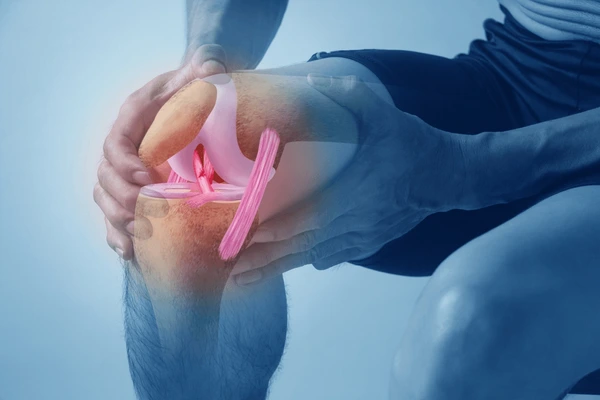
The Anterior Cruciate Ligament (ACL) is one of the most essential and structurally significant ligaments that provide stability and functional integrity to the knee joint. Anatomically, it connects the thighbone (femur) to the shinbone (tibia) and is primarily responsible for controlling forward movement of the tibia in relation to the femur, as well as restricting rotational forces that can cause instability during dynamic activities.
This ligament plays a crucial role in activities involving acceleration, deceleration, pivoting, and landing, making it especially vulnerable during high-intensity sports. When the ACL is stretched beyond its physiological limit, partially torn, or completely ruptured, the condition is medically classified as an Anterior Cruciate Ligament Injury.
ACL injuries are most prevalent among athletes, especially those participating in sports that demand sudden stops, cutting movements, jumping, and directional changes, such as football, basketball, soccer, skiing, and gymnastics. However, it’s important to note that ACL injuries are not limited to the athletic population. Non-athletes can also suffer ACL tears due to traumatic falls, road traffic accidents, sudden twisting of the knee while walking or climbing stairs, or missteps during daily activities.
At DMPhysios, a premier spine and sports rehabilitation clinic located in Noida, we recognize that an Anterior Cruciate Ligament Injury can be more than just a physical setback—it can impact mobility, independence, mental health, and overall quality of life. That’s why our team of experienced physiotherapists and rehabilitation specialists is committed to providing patient-centered, goal-oriented recovery plans. We focus on not just healing the injury, but rebuilding strength, restoring function, and preventing recurrence, using scientifically backed physiotherapy protocols tailored to each individual’s condition, lifestyle, and recovery goals.
Whether you’re a competitive athlete aiming to return to sport or a working professional looking to regain pain-free mobility, DMPhysios Noida offers the expertise, technology, and compassionate care to guide you through every step of recovery from an Anterior Cruciate Ligament Injury.
Symptoms of an Anterior Cruciate Ligament Injury
An ACL tear or sprain may vary in intensity depending on its severity. Common symptoms include:
- A loud “pop” or “snap” at the time of injury
- Immediate swelling around the knee joint
- Intense pain that prevents continued activity
- Instability or a sensation of the knee “giving way”
- Reduced range of motion
- Difficulty bearing weight on the affected leg
- Tenderness along the joint line
These symptoms should not be ignored, as early diagnosis and intervention significantly influence outcomes. At DMPhysios Noida, we prioritize accurate assessments using orthopedic testing and clinical insight to formulate the best rehabilitation pathway.
Types of ACL Injuries
Anterior Cruciate Ligament Injuries can vary widely in terms of severity, functional limitation, and structural damage. To better understand and manage these injuries, healthcare professionals often classify them into three main grades, ranging from a mild sprain to a complete tear. Each grade reflects the extent of damage to the ligament fibers and has distinct implications for treatment and recovery.
- Grade I: Mild Sprain
A Grade I Anterior Cruciate Ligament injury represents the least severe form of ligament trauma. In this case, the Anterior Cruciate Ligament has been stretched beyond its normal range, but no actual tearing of the ligament fibers has occurred. This type of injury is often seen in people who have twisted their knee during activity but haven’t experienced a full collapse or “giving way” of the joint.
Key Characteristics:
- The ligament remains intact, with only microscopic damage.
- There may be minimal swelling, mild tenderness, or stiffness.
- The knee remains functionally stable, and most daily activities can still be performed.
- Often resolves with conservative physiotherapy under expert guidance.
- Grade II: Partial Tear
In a Grade II injury, the ACL fibers are partially torn, leading to noticeable discomfort and mechanical compromise in the knee joint. While the ligament is not completely ruptured, the structural integrity is weakened, and the knee may not perform well under stress.
Key Characteristics:
- Moderate pain and visible swelling may develop shortly after injury.
- The knee might feel unstable during certain movements, especially pivoting or sudden stops.
- There’s often difficulty with running, squatting, or climbing stairs.
- Without proper rehabilitation, there’s a risk of progressing to a Grade III injury.
- Grade III: Complete Tear
A Grade III ACL injury is the most severe form, involving a complete rupture of the ligament. In these cases, the ACL is torn into two distinct pieces, and functional stability of the knee is significantly compromised. These injuries are common in high-impact sports or traumatic incidents like falls, tackles, or road accidents.
Key Characteristics:
- Immediate and severe pain, followed by rapid swelling and knee stiffness.
- A distinct “pop” sound is often heard at the moment of injury.
- The knee frequently buckles or gives way, especially during walking, turning, or weight-bearing.
- High-grade tears typically require surgical reconstruction, especially in active individuals.
In some cases, ACL injuries occur in combination with damage to other knee structures such as the medial collateral ligament (MCL) or meniscus — a condition known as the “unhappy triad.”
Causes of Anterior Cruciate Ligament Injury
The primary mechanisms that result in ACL injury include:
- Sudden deceleration while running
- Pivoting or twisting motions with a planted foot
- Incorrect landing from a jump
- Direct blow to the knee, commonly in contact sports
- Hyperextension of the knee joint
At DMPhysios, we also pay close attention to biomechanics, posture, and neuromuscular imbalances that may predispose individuals to ACL injuries, helping not just in recovery but also in prevention of future injuries.
Risk Factors
Certain individuals are more prone to sustaining an Anterior Cruciate Ligament Injury, including:
- Female athletes (due to anatomical and hormonal differences)
- Participants in high-impact sports
- People with poor lower limb alignment or muscle imbalances
- Previous knee injuries
- Improper training techniques
- Wearing unsupportive footwear
- Playing on artificial turf or uneven surfaces
Understanding these risk factors allows DMPhysios clinicians to design preventive screening and training programs, especially for young athletes and weekend warriors.
Treatment Options
The treatment of an Anterior Cruciate Ligament Injury depends on its severity and the patient’s activity level.
1. Conservative (Non-Surgical) Treatment
- Recommended for partial tears or inactive individuals.
- Involves physiotherapy, bracing, and lifestyle modifications.
2. Surgical Reconstruction
- Suggested for complete tears or for individuals with high physical demands.
- Involves grafting (using tendon tissue) to reconstruct the ACL.
- Post-surgery rehabilitation is crucial for successful outcomes.
No matter the approach, rehabilitation remains the cornerstone of Anterior Cruciate Ligament recovery. This is where the role of DMPhysios’ physiotherapy expertise comes in.
Physiotherapy Treatment
At DMPhysios in Noida, we offer individualized ACL rehabilitation plans that progress through evidence-based phases. Here’s a detailed overview:
Phase 1: Acute Phase (0-2 Weeks Post Injury or Surgery)
Goals:
- Control pain and swelling
- Restore knee extension
- Activate quadriceps
Interventions:
- Ice therapy, elevation
- Compression bandaging
- Gentle range of motion exercises (heel slides, quad sets)
- Patellar mobilization
- Use of assistive devices (crutches, brace if needed)
Phase 2: Early Rehab Phase (2-6 Weeks)
Goals:
- Regain full ROM
- Improve muscle control
- Begin weight-bearing
Interventions:
- Closed kinetic chain exercises
- Straight leg raises
- Mini squats
- Balance training (single-leg stance)
- Stationary cycling
Phase 3: Strengthening Phase (6-12 Weeks)
Goals:
- Restore muscle strength
- Enhance proprioception
Interventions:
- Step-ups/downs
- Resistance band exercises
- Hamstring curls
- Core stabilization
- Functional movement retraining
Phase 4: Advanced Training Phase (3-6 Months)
Goals:
- Prepare for sports-specific drills
- Prevent re-injury
Interventions:
- Plyometric training
- Agility ladders, cone drills
- Sport-specific tasks (cutting, pivoting)
- Jump-landing mechanics
At this stage, DMPhysios also introduces neuro-muscular training to enhance reaction time and dynamic control — crucial for athletes returning to high-level sports.
Phase 5: Return to Play (6 Months Onwards)
Goals:
- Full confidence in knee function
- Clearance from the physiotherapist
Testing:
- Hop tests
- Isokinetic strength testing
- Functional movement assessments
At DMPhysios Noida, we ensure a safe return-to-play by combining physical and psychological readiness testing, helping athletes build trust in their knee again.
Prevention of Anterior Cruciate Ligament Injury
Preventing ACL injuries is possible with the right strategies, particularly in high-risk populations. DMPhysios offers injury prevention workshops and training programs aimed at:
- Enhancing core and hip strength
- Improving neuromuscular control
- Teaching proper landing and cutting mechanics
- Increasing hamstring-to-quadriceps strength ratio
- Promoting dynamic warm-ups and cooldown routines
- Assessing and correcting postural and biomechanical faults
Our customized ACL prevention protocols are widely appreciated by school teams, academies, and amateur sports communities in and around Noida.
Conclusion
An Anterior Cruciate Ligament Injury is not just a physical setback — it can disrupt lifestyle, affect career goals, and impact long-term joint health if not addressed promptly and properly. Whether you’re an athlete, a fitness enthusiast, or someone recovering from an unexpected injury, the key lies in early intervention, structured rehabilitation, and guided return to activity.
At DMPhysios, we are proud to offer comprehensive, evidence-based physiotherapy care in Noida, specializing in sports and spine rehabilitation. Our patient-centric approach, along with advanced manual therapy, exercise science, and postural retraining, helps individuals reclaim their strength, stability, and confidence.
If you or someone you know is dealing with symptoms of an Anterior Cruciate Ligament Injury, don’t delay. Early care can mean the difference between long-term complications and a successful comeback.
Book your evaluation with DMPhysios today.