Overview
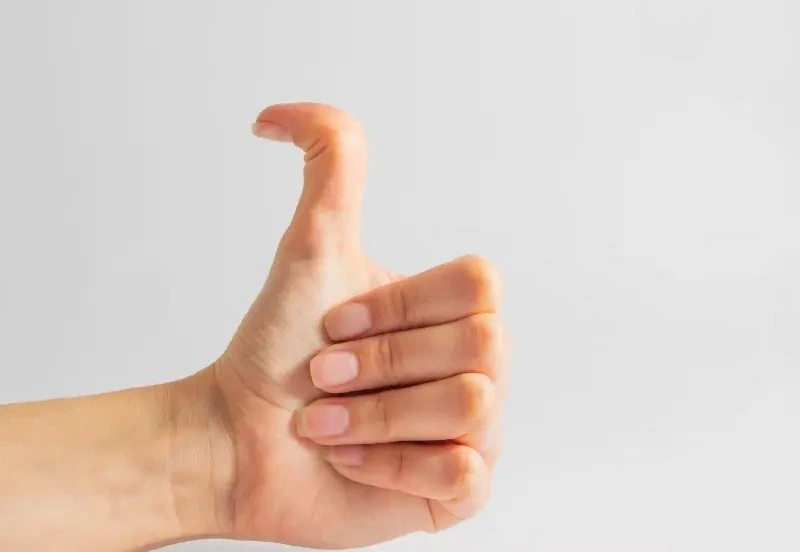
The thumb plays an essential role in almost every aspect of our daily lives—whether it’s gripping objects, writing, lifting, texting, cooking, or participating in sports. It is the anchor of the hand’s functionality and provides the fine motor control needed for precise movements. Because of its anatomical position and the wide range of activities it performs, the thumb is also vulnerable to injuries. One such injury, known as a hyper extended thumb, occurs when the thumb is bent backward beyond its normal physiological range of motion.
This excessive backward bend stretches or tears the supporting structures of the thumb—its ligaments, tendons, and joint capsule. As a result, a person may experience pain, swelling, instability, and difficulty performing even simple tasks like holding a pen or turning a key. A hyper extended thumb can present as a mild sprain involving overstretching of soft tissues or as a more severe injury such as damage to the ulnar collateral ligament (UCL) at the metacarpophalangeal (MCP) joint, commonly referred to as “skier’s thumb” or “gamekeeper’s thumb.”
At DMPhysios, a premier clinic in Noida specializing in spine and sports conditions with a focus on patient-centered rehabilitation, we routinely see and successfully treat individuals suffering from hyper extended thumb injuries caused by sports trauma, falls, repetitive stress, or occupational hazards. Our multidisciplinary team follows an evidence-based approach that combines accurate diagnosis, advanced physiotherapy techniques, and individualized care plans. This ensures that every patient not only recovers from the immediate injury but also regains full thumb function and prevents recurrences in the future.
Symptoms
Recognizing the symptoms of a hyper extended thumb is critical for timely diagnosis and treatment. Common signs include:
- Pain at the base of the thumb, especially during pinching or gripping.
- Swelling and bruising around the metacarpophalangeal (MCP) joint.
- Instability or looseness in the thumb joint.
- Reduced range of motion and difficulty performing tasks requiring thumb strength.
- Tenderness along the ligament or tendon involved.
- In severe cases, visible deformity or misalignment of the thumb.
At DMPhysios in Noida, our physiotherapists conduct detailed physical and functional assessments to differentiate between a mild hyper extended thumb sprain and more severe ligament injuries.
Types of Hyper Extended Thumb
While “hyper extended thumb” is an umbrella term, it can be categorized based on the severity or structures involved:
- Mild Hyperextension (Grade I Sprain):
- Ligaments are overstretched but not torn.
- Minimal pain and swelling.
- Moderate Hyperextension (Grade II Sprain):
- Partial tearing of the ligament or capsule.
- Increased pain, swelling, and some instability.
- Severe Hyperextension (Grade III Sprain):
- Complete rupture of the ligament, often the UCL.
- Marked instability, significant pain, and functional impairment.
- Chronic/Recurrent Hyper Extension:
- Occurs in individuals with ligament laxity, repeated injuries, or conditions like Ehlers-Danlos Syndrome.
At DMPhysios, we classify hyper extended thumb injuries accurately to guide appropriate rehabilitation and avoid long-term complications.
Causes
A hyper extended thumb typically results from a forceful backward bend of the thumb. Common causes include:
- Sports injuries: Skiing, basketball, volleyball, and wrestling are frequent culprits.
- Falls: Landing on an outstretched hand with the thumb extended.
- Direct trauma: Impact to the thumb during contact sports or accidents.
- Repetitive stress: Chronic overuse in activities like texting, gaming, or gripping tools.
- Sudden pulling injuries: For example, when a leash jerks a dog walker’s thumb backward.
The therapists at DMPhysios are highly experienced in identifying the root cause of a hyper extended thumb and designing interventions that address both injury and underlying biomechanics.
Risk Factors
Certain factors can make a person more susceptible to a hyper extended thumb:
- Participation in high-risk sports like skiing, basketball, or gymnastics.
- Previous thumb injuries or chronic ligament laxity.
- Occupations requiring repetitive pinch or grip movements.
- Joint hypermobility syndromes such as Ehlers-Danlos.
- Poor protective gear or improper technique during sports.
- Age-related ligament weakening.
By understanding these risk factors, DMPhysios helps patients adopt strategies to minimize recurrence of hyper extended thumb injuries.
Treatment
The treatment of a hyper extended thumb depends on the severity of the injury. Prompt intervention reduces pain and prevents chronic instability.
1. Initial First Aid (Acute Phase):
- Rest: Avoid activities that aggravate the thumb.
- Ice: Apply cold packs for 15–20 minutes several times a day to reduce swelling.
- Compression: Use a thumb support or bandage.
- Elevation: Keep the hand elevated to limit swelling.
2. Medical Management:
- Nonsteroidal anti-inflammatory drugs (NSAIDs) for pain and inflammation.
- Splinting or bracing the thumb to restrict movement.
- In severe cases, surgical repair may be needed (especially for complete ligament tears).
3. Rehabilitation:
Even after pain subsides, structured rehabilitation is essential. This is where DMPhysios excels—our physiotherapists craft a customized recovery plan for every hyper extended thumb patient.
Physiotherapy Treatment
Physiotherapy plays a central role in restoring strength, stability, and function after a hyper extended thumb injury. At DMPhysios, our approach combines hands-on therapy, exercises, and patient education.
Phase 1: Protection and Pain Relief (0–2 weeks)
- Thumb Splinting: We apply a custom splint to protect the injured ligament while allowing adjacent joints to move.
- Pain Relief Modalities: Ice therapy, gentle soft tissue mobilization, or electrotherapy to reduce pain and swelling.
- Gentle Range of Motion (ROM): Passive or active-assisted movements within a pain-free range to prevent stiffness.
Phase 2: Restoration of Motion and Stability (2–4 weeks)
- Progressive ROM Exercises: Controlled thumb flexion, extension, abduction, and opposition movements.
- Scar Tissue Mobilization: If post-surgical or after significant swelling to prevent adhesions.
- Joint Proprioception Training: Using putty or light resistance bands to retrain the thumb’s stability reflex.
Phase 3: Strengthening (4–6 weeks)
- Isometric Thumb Exercises: Pressing the thumb against a stable surface in various directions.
- Dynamic Strengthening: Using therapy putty, rubber bands, or grip trainers to strengthen the thenar muscles and supporting ligaments.
- Functional Drills: Pinching coins, buttoning shirts, or simulated sport-specific tasks.
Phase 4: Return to Function and Prevention (6–8 weeks)
- Sport-Specific Drills: Gradual reintroduction to gripping sports equipment or occupational tasks.
- Thumb Taping Techniques: Teaching athletes to tape the thumb for added support.
- Ergonomic Advice: Reducing strain during work, texting, or gaming.
At DMPhysios, each phase is adapted to the individual’s recovery timeline. We emphasize patient-centered rehabilitation—addressing not just the thumb but also the wrist, hand, and upper limb biomechanics to ensure full functional restoration after a hyper extended thumb.
Prevention
While some injuries are unavoidable, many cases of hyper extended thumb can be prevented with proactive measures:
- Warm-up and stretching before sports or heavy manual tasks.
- Proper technique when skiing, catching a ball, or performing occupational tasks.
- Use of protective gear like thumb braces or padded gloves during high-risk activities.
- Strengthening exercises for the thumb and hand muscles to enhance joint stability.
- Ergonomic modifications for repetitive tasks at work or during device use.
- Early rehabilitation after minor injuries to prevent chronic instability.
The prevention programs at DMPhysios are tailored for athletes, workers, and individuals with hypermobility, helping them maintain strong, stable thumbs and avoid recurrent hyper extended thumb injuries.
Conclusion
A hyper extended thumb may seem like a minor injury at first, but without proper diagnosis and rehabilitation, it can lead to chronic pain, instability, and reduced hand function. Understanding the symptoms, types, causes, and risk factors of a hyper extended thumb enables timely intervention and better outcomes.
At DMPhysios, a leading Noida-based clinic for spine and sports conditions offering patient-centered rehabilitation, we specialize in comprehensive assessment and customized treatment for hyper extended thumb injuries. From acute management to advanced physiotherapy and prevention programs, our goal is to restore your thumb’s function and get you back to your daily activities or sport safely and confidently. If you’re experiencing pain, instability, or difficulty using your thumb after an injury, don’t wait for it to worsen. Contact DMPhysios today for an expert evaluation and a personalized plan to recover from your hyper extended thumb and prevent future issues.