Overview
Paraplegia is a complex and often life-altering neurological condition marked by the partial or complete loss of motor and sensory function in the lower half of the body. In most cases, paraplegia affects both legs and may also involve portions of the trunk, abdominal muscles, and pelvic organs depending on the level of the spinal cord injury. Because the spinal cord serves as the primary communication highway between the brain and the rest of the body, any significant damage or interruption to its pathways in the thoracic, lumbar, or sacral regions can result in this form of paralysis.
Unlike quadriplegia, which impacts all four limbs, paraplegia primarily impairs lower limb movement, coordination, and sensation. It also frequently leads to challenges with bladder and bowel control, sexual function, and postural stability, which together can dramatically affect an individual’s independence and quality of life.
At DMPhysios, a leading clinic located in Noida specializing in spine and sports conditions with a strong emphasis on patient-centered rehabilitation, paraplegia care is approached in a truly holistic manner. This means that treatment goes far beyond simply managing symptoms: it encompasses early medical intervention, customized physiotherapy programs, patient and family education, and long-term functional training.
The dedicated team at DMPhysios strives not only to restore as much physical ability as possible but also to help individuals prevent complications such as pressure sores, joint stiffness, and secondary musculoskeletal issues. By focusing on each patient’s unique needs and goals, DMPhysios aims to maximize independence, enhance overall health, and improve the emotional and social well-being of people living with paraplegia.
Symptoms
The symptoms of paraplegia vary depending on the severity and level of spinal cord injury or nerve damage. Common signs and symptoms include:
- Loss of movement in the legs and lower trunk – This may be partial or complete paralysis.
- Loss of sensation below the level of injury – Including inability to feel touch, temperature, or pain.
- Bladder and bowel dysfunction – Difficulty controlling urinary or fecal continence.
- Sexual dysfunction – Reduced or absent sexual sensation and function.
- Muscle spasticity or flaccidity – Increased muscle tone or loss of muscle tone in the lower limbs.
- Chronic pain – Neuropathic or musculoskeletal pain below the level of injury.
- Autonomic dysreflexia (in high-level injuries) – A dangerous rise in blood pressure due to overactivity of the autonomic nervous system.
At DMPhysios, these symptoms are carefully assessed to develop individualized rehabilitation plans, ensuring each aspect of paraplegia’s impact on daily life is addressed.
Types of Paraplegia
Because the level and severity of spinal cord damage can differ greatly from one person to another, paraplegia does not present in a single uniform way. Clinicians classify the condition into several distinct types based on how much motor and sensory function is lost and on the nature of the muscle tone below the level of injury. Understanding these categories is essential for developing a personalized rehabilitation plan.
- Complete Paraplegia
In this form, there is a total loss of both motor and sensory function below the point of injury. Individuals with complete paraplegia have no voluntary movement or sensation in the affected areas. This means daily activities such as walking, standing, or even sensing temperature changes in the lower limbs become impossible without assistive devices or complete support. Because of the extent of impairment, prevention of complications and maximizing upper-body function become key priorities at DMPhysios. - Incomplete Paraplegia
This type involves partial preservation of motor or sensory pathways below the injury. A person may be able to move certain muscle groups, feel touch or pain in some parts of the lower limbs, or retain partial bladder and bowel control. The pattern of remaining function can be highly variable, which is why detailed assessment is crucial. At DMPhysios, therapists use these residual abilities as a foundation to build individualized strengthening, balance, and mobility programs. - Spastic Paraplegia
Spastic paraplegia is characterized by increased muscle tone (hypertonia), exaggerated reflexes, and involuntary muscle spasms or stiffness in the lower limbs. These features can make movements jerky or difficult but also sometimes provide enough tone to assist with standing transfers or using braces. Expert handling, stretching, and spasticity-reducing techniques offered at DMPhysios are particularly valuable for this group. - Flaccid Paraplegia
In flaccid paraplegia, the muscles below the injury become limp and weak, with markedly reduced tone and diminished reflexes. This lack of support can make sitting balance harder to maintain and increases the risk of joint contractures or pressure sores. Rehabilitation here focuses on positioning, external support devices, and gradual strengthening of any preserved muscles—an area where DMPhysios’ patient-centered approach can significantly improve long-term outcomes.
Recognizing these variations is vital because each type of paraplegia calls for a different therapeutic emphasis. The multidisciplinary team at DMPhysios uses this classification to design tailored rehabilitation strategies that maximize independence, minimize complications, and improve overall quality of life for individuals living with paraplegia.
Causes
Paraplegia can result from various traumatic and non-traumatic causes:
- Traumatic spinal cord injury – Accidents, falls, sports injuries, or violence causing fractures, dislocations, or compression of the spinal cord.
- Spinal tumors – Benign or malignant growths compressing the spinal cord.
- Spinal infections – Such as tuberculosis, abscesses, or meningitis affecting the spinal cord.
- Multiple sclerosis or demyelinating diseases – Causing damage to the nerve coverings.
- Spinal ischemia – Reduced blood flow to the spinal cord due to vascular conditions.
- Congenital conditions – Like spina bifida.
- Degenerative spinal disorders – Such as severe spinal stenosis or herniated discs compressing the cord over time.
At DMPhysios, understanding the cause of paraplegia is critical, as it informs both the medical management and the rehabilitation approach.
Risk Factors
Certain factors can increase the risk of developing paraplegia:
- High-risk activities such as contact sports, motorcycling, or working at heights.
- Pre-existing spinal conditions like severe degenerative disc disease.
- Osteoporosis or bone weakness increases the risk of spinal fractures.
- Infections or inflammatory disorders of the spine.
- Untreated spinal tumors or vascular malformations.
- Age-related degeneration of spinal structures.
- Inadequate protective measures during high-risk activities.
By educating patients about these risk factors, DMPhysios emphasizes prevention and early intervention to reduce the likelihood of paraplegia.
Treatment
While there is no single cure for paraplegia, prompt and comprehensive management can significantly improve outcomes:
- Emergency care – Stabilizing the spine immediately after injury to prevent further damage.
- Surgical intervention – Decompression, stabilization, or removal of tumors or abscesses.
- Medications – Steroids to reduce spinal cord swelling, pain management, and antispasmodic drugs.
- Assistive devices – Wheelchairs, standing frames, orthotics, and adaptive equipment to maximize independence.
- Psychological support – Counseling and support groups to address emotional and social challenges.
At DMPhysios, the treatment of paraplegia focuses on long-term rehabilitation and functional restoration rather than only acute care.
Physiotherapy Treatment
Physiotherapy is the cornerstone of paraplegia management. At DMPhysios, a Noida-based clinic for spine and sports conditions providing patient-centered rehabilitation, the physiotherapy team uses evidence-based techniques tailored to each individual’s needs. Key components include:
1. Early Stage Rehabilitation
- Positioning and bed mobility training to prevent pressure sores.
- Passive and active-assisted range of motion exercises to maintain joint mobility and prevent contractures.
- Respiratory exercises to strengthen breathing muscles if the injury is high thoracic.
2. Muscle Strengthening and Conditioning
- Strengthening of preserved upper limb muscles to enhance transfers and wheelchair mobility.
- Core stability exercises to improve balance in sitting and functional activities.
3. Spasticity and Pain Management
- Stretching programs to reduce muscle stiffness and improve flexibility.
- Use of splints or orthoses to maintain proper limb alignment.
- Modalities such as TENS, Accelerated Healing Therapy, or heat/cold therapy for pain relief.
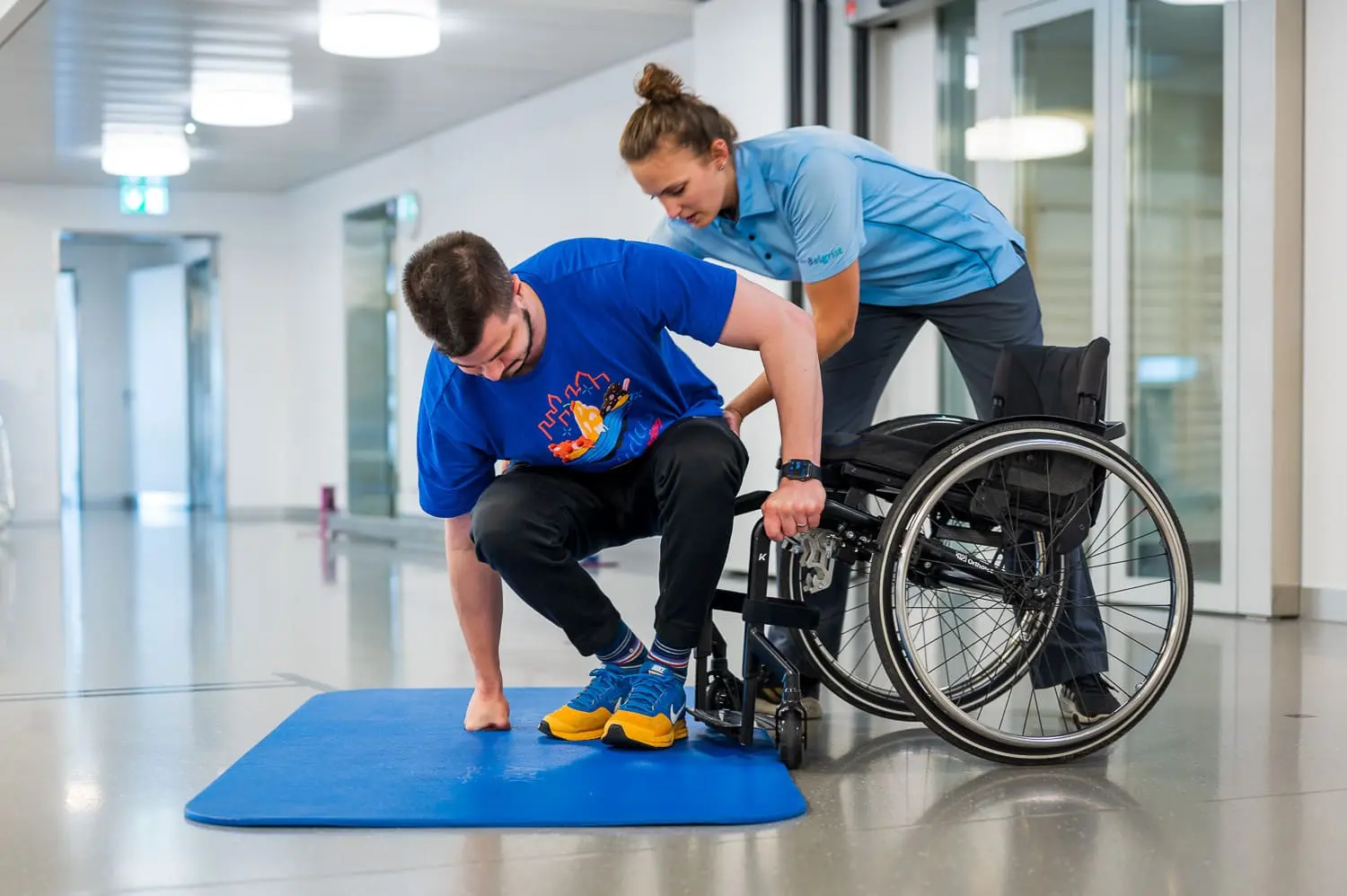
4. Mobility and Functional Training
- Wheelchair skills training for safe and efficient mobility.
- Transfer training (bed-to-wheelchair, wheelchair-to-toilet, etc.).
- Standing and gait training using parallel bars, walkers, or robotic exoskeletons if feasible.
5. Balance and Postural Control
- Sitting balance exercises to improve independence in daily activities.
- Progressive postural challenges to enhance core stability.
6. Cardiovascular Fitness
- Arm ergometry or hand cycling to maintain cardiovascular health.
- Aquatic therapy where appropriate for low-impact movement.
7. Education and Self-Management
- Teaching pressure relief techniques to prevent pressure ulcers.
- Training in bladder and bowel care routines.
- Guidance for family members on safe transfers and care techniques.
8. Community Reintegration
- Preparing individuals to return to work, school, or sports.
- Collaborating with occupational therapists for home modifications.
At DMPhysios, this structured physiotherapy approach empowers individuals with paraplegia to achieve their highest possible level of independence.
Prevention
Although not all causes of paraplegia are preventable, several strategies can reduce risk:
- Use seat belts and protective gear while driving or engaging in sports.
- Practice safe lifting techniques and maintain proper posture to protect the spine.
- Manage osteoporosis and other conditions that weaken bones.
- Seek prompt treatment for spinal infections, tumors, or vascular conditions.
- Undergo regular check-ups if at high risk due to congenital or degenerative spinal conditions.
- Educate children and adults about spinal safety.
DMPhysios actively promotes awareness campaigns and preventive strategies in Noida to reduce spinal injuries leading to paraplegia.
Conclusion
Paraplegia is a life-changing condition that affects not just mobility but also emotional, social, and functional aspects of an individual’s life. However, with early intervention, comprehensive medical care, and specialized rehabilitation, people living with paraplegia can achieve meaningful independence and improved quality of life.
At DMPhysios, a premier clinic in Noida specializing in spine and sports conditions with patient-centered rehabilitation, the focus is on individualized treatment plans that integrate advanced physiotherapy techniques, patient education, and emotional support. Whether you are dealing with a new diagnosis of paraplegia or looking to enhance your current rehabilitation program, DMPhysios is committed to guiding you through every step of your recovery.
Take the first step today — reach out to DMPhysios and start your journey toward regaining independence and improving your quality of life despite paraplegia.