Overview
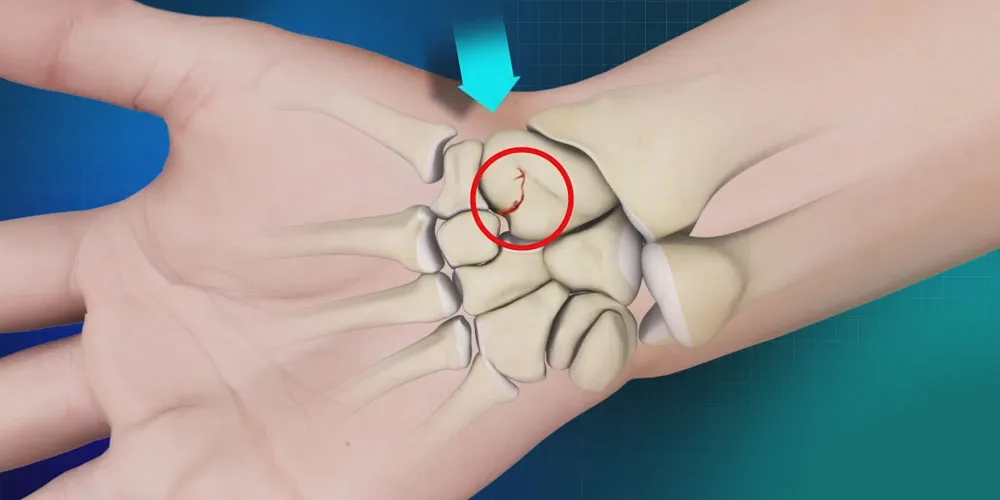
A scaphoid fracture refers to a break in the scaphoid bone, one of the small but vital carpal bones situated on the thumb side of the wrist. Although tiny in size, the scaphoid bone plays a significant role in maintaining the structural integrity, alignment, and smooth movement of the wrist joint. Acting as a bridge between the two rows of carpal bones, it distributes forces from the hand to the forearm and contributes to overall wrist stability and function.
Because of its unique blood supply and anatomical location, the scaphoid bone is more prone to delayed healing and diagnostic challenges compared to other wrist bones. A scaphoid fracture can sometimes mimic a simple sprain, leading to missed or late diagnoses. This is clinically important because the scaphoid is the most frequently fractured carpal bone, accounting for approximately 60–70% of all injuries to the carpal bones. Without prompt and appropriate care, complications such as non-union, malunion, or avascular necrosis (bone tissue death due to disrupted blood supply) can occur, potentially resulting in chronic pain and reduced wrist mobility.
At DMPhysios, a premier clinic in Noida specializing in spine and sports conditions with a strong focus on patient-centered rehabilitation, our team regularly evaluates and manages wrist injuries of varying severity. Among these, the scaphoid fracture remains a priority condition because early detection and evidence-based management dramatically improve outcomes. Whether caused by sports trauma, workplace accidents, or repetitive stress, our clinicians combine accurate assessment, advanced imaging recommendations, and customized physiotherapy plans to ensure patients regain optimal wrist function.
Recognizing the symptoms, causes, and treatment options for a scaphoid fracture empowers patients to seek care promptly and plays a crucial role in facilitating faster recovery. With proper education, timely diagnosis, and a structured rehabilitation approach like the one offered at DMPhysios, individuals can return to their normal activities and prevent long-term complications.
Symptoms
The symptoms of a scaphoid fracture can be subtle, which is why this injury is sometimes mistaken for a simple wrist sprain. However, timely recognition is key. Common signs include:
- Pain in the anatomical snuffbox: This is the classic hallmark of a scaphoid fracture—tenderness over the small depression on the thumb side of the wrist.
- Swelling and bruising around the base of the thumb or wrist.
- Pain on gripping or pinching objects, especially when trying to lift or twist.
- Reduced range of motion in the wrist joint.
- Persistent pain after a fall even if initial X-rays appear normal.
Because of its tricky presentation, scaphoid fractures are often missed in emergency settings. At DMPhysios, our clinicians emphasize careful physical examination and advanced imaging if needed to avoid delayed diagnosis.
Types of Scaphoid Fracture
Although the scaphoid is a small bone, fractures can occur in different regions, which influences healing potential and treatment decisions. The types of scaphoid fractures include:
- Distal Pole Fracture
- Occurs at the end of the bone closest to the thumb.
- Generally heals faster due to better blood supply.
- Waist Fracture
- The most common type of scaphoid fracture, occurring in the narrow middle portion of the bone.
- Healing may take longer because of moderate blood flow.
- Proximal Pole Fracture
- Occurs near the forearm end of the bone.
- Carries the highest risk of delayed healing or non-union because of poor blood supply.
- Displaced vs. Non-displaced Fractures
- Non-displaced: Bone fragments remain aligned, often treated conservatively.
- Displaced: Bone fragments are shifted or separated, usually requiring surgical fixation.
Recognizing the type of scaphoid fracture is critical because it guides the management plan, which is why DMPhysios collaborates closely with orthopedic specialists to ensure accurate diagnosis.
Causes
The most common cause of a scaphoid fracture is a fall on an outstretched hand (FOOSH) with the wrist extended. This mechanism transmits force to the carpal bones, causing the scaphoid to break. Other causes include:
- Sports injuries: Contact sports like football, basketball, and gymnastics increase the risk.
- Motor vehicle accidents: Sudden impact may lead to wrist trauma.
- Repetitive strain: Though rare, repetitive wrist stress in activities like weightlifting can predispose the scaphoid to injury.
At DMPhysios, we routinely educate athletes and active individuals on wrist protection techniques to minimize their risk of developing a scaphoid fracture.
Risk Factors
Several factors increase the likelihood of sustaining a scaphoid fracture:
- Young, active adults: Especially males aged 15–40 who are engaged in sports or manual labor.
- History of previous wrist injury.
- Poor bone health: Osteopenia or osteoporosis can increase fracture susceptibility.
- High-impact activities: Skateboarding, cycling, or skiing often result in falls on the hand.
Recognizing these risk factors can help in taking preventive measures, something our team at DMPhysios emphasizes during patient education sessions.
Treatment
Treatment depends on the location, severity, and displacement of the scaphoid fracture. Broadly, it can be classified as:
1. Conservative Treatment
For non-displaced scaphoid fractures, immobilization is the first line of management:
- Thumb spica cast or splint is applied for 6–12 weeks.
- Regular follow-up X-rays or CT scans ensure proper healing.
- Pain management with anti-inflammatory medication.
2. Surgical Treatment
Surgery may be recommended for:
- Displaced fractures.
- Proximal pole fractures with poor healing potential.
- Non-union or delayed union cases.
Procedures often involve:
- Percutaneous screw fixation or open reduction with internal fixation (ORIF) to realign and stabilize the bone.
- Bone grafting in cases of non-union.
At DMPhysios, we work closely with orthopedic surgeons to ensure a smooth transition from surgical treatment to rehabilitation, optimizing functional outcomes for patients recovering from a scaphoid fracture.
Physiotherapy Treatment
Rehabilitation is a critical component of recovery from a scaphoid fracture, especially after cast removal or surgery. Without proper physiotherapy, patients may experience stiffness, weakness, or persistent pain. At DMPhysios, our patient-centered rehabilitation programs for scaphoid fracture recovery include:
1. Acute Phase (During Immobilization)
- Finger and shoulder exercises: To maintain mobility in unaffected joints.
- Edema control: Elevation, gentle finger pumping, and compression to reduce swelling.
- Patient education: Guidance on protecting the injured wrist and maintaining cardiovascular fitness.
2. Post-immobilization Phase (After Cast/Splint Removal)
Once the cast is removed (or after surgery when cleared by the surgeon), we begin gradual mobilization:
- Gentle passive and active range of motion (ROM) exercises for the wrist.
- Thumb mobilization to restore function.
- Soft tissue mobilization to address scar tissue or stiffness.
3. Strengthening Phase
Gradual strengthening is essential to regain grip and wrist power:
- Isometric wrist exercises progressing to isotonic strengthening.
- Grip strengthening tools (stress balls, putty exercises).
- Forearm pronation and supination drills.
4. Proprioception and Functional Training
To restore wrist stability and coordination:
- Closed-chain exercises like wall push-ups.
- Balance board or wobble board for the wrist to enhance joint position sense.
- Sport-specific drills tailored for athletes.
5. Return to Activity Phase
- Gradual loading of the wrist during daily tasks.
- Progressive resistance training.
- Education on proper techniques to avoid re-injury.
At DMPhysios, we ensure that every rehabilitation program for a scaphoid fracture is tailored to the patient’s needs, occupation, and goals. Our team uses evidence-based techniques and state-of-the-art equipment to accelerate recovery while prioritizing safety and long-term wrist health.
Prevention
Although not all scaphoid fractures are preventable, the risk can be reduced with these strategies:
- Protective gear: Use wrist guards during high-risk sports such as skateboarding or snowboarding.
- Fall prevention training: Learning how to fall safely to minimize impact on the wrist.
- Strength and flexibility exercises: Stronger forearm muscles and improved proprioception may help absorb forces better.
- Ergonomic adjustments: For workers performing repetitive wrist movements.
At DMPhysios, prevention is an integral part of our care philosophy. We not only rehabilitate patients but also equip them with knowledge and exercises to reduce the risk of re-injury, especially in sports and physically demanding jobs.
Conclusion
A scaphoid fracture may appear minor at first but, if neglected, can lead to serious complications such as non-union, arthritis, or avascular necrosis. Early diagnosis, appropriate management, and comprehensive rehabilitation are essential for optimal outcomes.
DMPhysios, located in Noida and specializing in spine and sports conditions with patient-centered rehabilitation, offers expert physiotherapy services for individuals recovering from a scaphoid fracture. Our team focuses on personalized care—from pain management to advanced strengthening and functional training—to ensure patients return to their normal activities safely and effectively.If you or someone you know is dealing with wrist pain after a fall or has been diagnosed with a scaphoid fracture, don’t delay seeking professional help. Contact DMPhysios today to schedule a consultation and begin your journey to full recovery with a trusted rehabilitation partner.