Overview
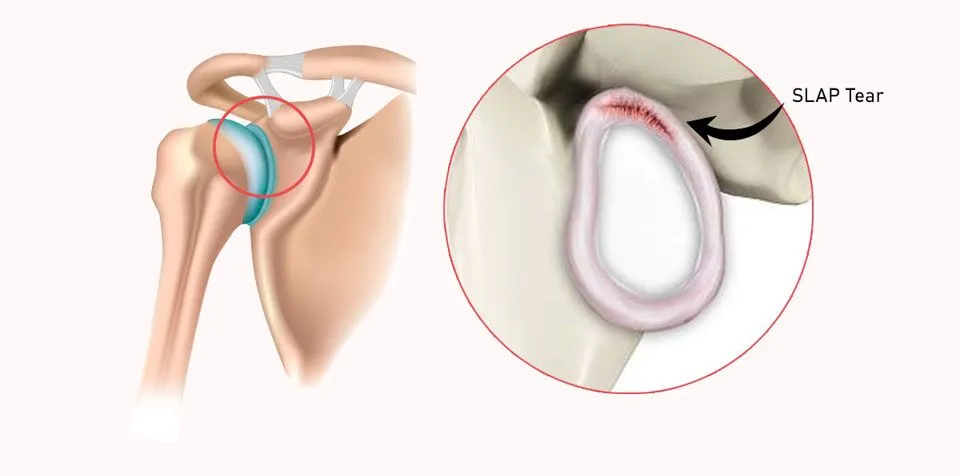
A SLAP tear, short for Superior Labrum Anterior and Posterior tear, is a specific type of injury that affects the labrum—a fibrocartilaginous ring that encircles the shoulder socket (glenoid) and plays a vital role in stabilizing the ball-and-socket joint of the shoulder. The injury involves the superior portion of the labrum, precisely at the point where the biceps tendon connects to the shoulder. This region is especially vulnerable to stress, particularly during overhead or forceful arm movements.
When a SLAP tear occurs, the integrity of the shoulder joint is compromised. Individuals may experience deep, poorly localized shoulder pain, mechanical symptoms like clicking or locking, and a noticeable decline in the shoulder’s functional capacity. Everyday tasks such as lifting, reaching, or throwing may become painful or difficult. Athletes involved in sports that require repetitive overhead actions—such as baseball, swimming, volleyball, and tennis—are especially at risk. Similarly, manual laborers who frequently carry, push, or pull heavy loads, and older adults experiencing degenerative changes in shoulder structures, are also susceptible to SLAP tears.
At DMPhysios, a premier physiotherapy clinic based in Noida known for its expertise in managing spine and sports-related conditions, SLAP tear rehabilitation is delivered through a patient-centered approach. This means each treatment plan is thoughtfully customized to align with the patient’s unique condition, lifestyle demands, and long-term functional goals. The clinic’s team of experienced physiotherapists emphasizes both the mechanical and muscular contributors to the injury, ensuring holistic recovery.
Gaining a clear understanding of the shoulder’s anatomy, the symptoms associated with a SLAP tear, its underlying causes, and the available treatment options—especially physiotherapy—can make a significant difference in early detection and recovery. With the right intervention and support, individuals can regain strength, restore mobility, and return to pain-free, high-functioning lives.
Symptoms of a SLAP Tear
SLAP tear symptoms can often be subtle and may overlap with other shoulder issues, making diagnosis a clinical challenge. Common symptoms include:
- Deep shoulder pain especially during overhead movements
- Catching, locking, or popping sensations in the shoulder
- Weakness or decreased performance in the shoulder joint
- Difficulty lifting objects or doing daily activities involving arm elevation
- Loss of shoulder range of motion
- Pain during sports, particularly those involving throwing or swimming
Since the labrum contributes to shoulder stability, a SLAP tear can also predispose patients to recurrent dislocations or feelings of the shoulder “giving out.”
Types of SLAP Tear
SLAP tears are categorized into different types based on how the superior labrum and biceps tendon anchor are affected. This classification helps in choosing the appropriate treatment strategy.
1. Type I SLAP Tear
- Involves minor fraying of the superior labrum
- The biceps tendon attachment remains intact
- Common in older adults due to age-related degeneration
- Often causes mild symptoms like discomfort or clicking
- Usually managed with conservative physiotherapy without surgery
- DMPhysios often sees this type in middle-aged or elderly patients with chronic shoulder pain
2. Type II SLAP Tear
- Most frequent type encountered clinically
- Characterized by a complete detachment of the labrum and the biceps tendon from the glenoid rim
- Leads to shoulder instability, pain during overhead activity, and reduced strength
- Frequently seen in athletes and people who perform repetitive arm movements
- May require surgical repair followed by structured rehab at DMPhysios, which specializes in sport-specific recovery
3. Type III SLAP Tear
- Features a bucket-handle tear of the labrum
- The torn flap may move, causing locking or mechanical symptoms in the shoulder
- The biceps tendon stays attached
- Typically results from acute trauma, like a fall or heavy lifting
- Often managed with arthroscopic debridement and a guided post-op rehab plan at DMPhysios
4. Type IV SLAP Tear
- Involves a bucket-handle tear that extends into the biceps tendon
- Generally more severe, leading to considerable weakness and pain during lifting or shoulder motion
- Treatment may involve biceps tenodesis or repair, depending on the patient’s age and activity level
- Requires a comprehensive and personalized rehabilitation plan, such as those offered at DMPhysios, to restore full shoulder function
Causes of SLAP Tear
Several mechanisms can lead to a SLAP tear, including acute trauma and chronic overuse. Common causes are:
- Falling onto an outstretched arm
- Direct blow to the shoulder, such as during contact sports or accidents
- Repeated overhead motions like throwing, swimming, or weightlifting
- Sudden pulling or traction injuries, such as trying to catch a heavy falling object
- Degenerative changes associated with aging, which weaken the labrum over time
At DMPhysios, clinicians pay close attention to these causes during assessment, tailoring rehabilitation plans based on whether the injury is traumatic or degenerative in origin.
Risk Factors
Understanding risk factors helps in both early diagnosis and prevention of SLAP tears. Individuals most at risk include:
- Athletes involved in sports requiring repetitive overhead motion (e.g., baseball, tennis, swimming)
- Manual laborers who frequently lift, push, or pull heavy loads
- People aged 35 and above, due to age-related wear and tear
- Those with poor shoulder biomechanics, muscle imbalances, or scapular dyskinesis
- Previous history of shoulder injuries or instability
- Weightlifters, particularly those doing heavy overhead presses without proper form
Physiotherapists at DMPhysios often screen for these risk factors during assessments, especially in clients presenting with vague or chronic shoulder pain.
Diagnosis and Clinical Assessment
Diagnosing a SLAP tear typically begins with a detailed history and physical examination. Clinical tests like the O’Brien’s test, Crank test, and Speed’s test may be used to provoke symptoms. However, because SLAP tears can mimic other shoulder pathologies like rotator cuff injuries or biceps tendonitis, MRI with contrast (MR arthrogram) is often recommended for accurate visualization of the labral tear.
At DMPhysios, shoulder assessments are thorough and individualized. Along with clinical tests, practitioners analyze movement patterns, postural deviations, and muscular imbalances to form a complete diagnosis that goes beyond imaging alone.
Treatment
Not all SLAP tears require surgery. Treatment depends on the type of tear, age of the patient, level of activity, and functional goals.
Conservative (Non-Surgical) Treatment
- NSAIDs to manage pain and inflammation
- Rest and activity modification to reduce aggravation
- Steroid injections, occasionally used for temporary relief
- Physical therapy, which remains the cornerstone of non-operative treatment
Surgical Treatment
Surgery may be required for persistent pain, complex tears, or in high-level athletes who need full shoulder function. Common procedures include:
- Arthroscopic debridement (for Type I tears)
- SLAP repair using sutures to reattach the labrum (Types II and III)
- Biceps tenodesis, where the biceps tendon is reattached elsewhere to reduce strain on the labrum (especially for Type IV tears or in older patients)
Following surgery, post-operative physiotherapy is critical for restoring range, strength, and function.
Physiotherapy Treatment
At DMPhysios, physiotherapy for SLAP tear is highly individualized and based on evidence-driven protocols that evolve through various phases:
Phase 1: Pain Management and Protection
- Activity modification to avoid aggravating motions (especially overhead or behind-the-back movements)
- Cold therapy to reduce inflammation
- Electrotherapy (e.g., Accelerated Healing Therapy) for pain relief
- Manual therapy to reduce muscular tightness and scapular dysfunction
- Gentle range of motion (ROM) exercises, avoiding end-range flexion or external rotation initially
Phase 2: Restoring Mobility
- Passive and active-assisted ROM exercises, including pendulums, pulley-assisted movements
- Scapular stabilization exercises (e.g., wall slides, scapular clocks)
- Capsular stretching if tightness is limiting movement
Phase 3: Strengthening and Neuromuscular Re-education
- Isometric strengthening, starting with rotator cuff muscles
- Closed kinetic chain exercises, like wall push-ups and quadruped drills
- Progressive resistance training using therabands and light weights
- Proprioception exercises, such as ball stabilization and rhythmic stabilization drills
Phase 4: Functional and Sport-Specific Training
- Overhead control training, mimicking sports or job-specific movements
- Plyometrics and agility drills (especially for throwers and swimmers)
- Gradual return-to-play or return-to-work plan, monitored and adjusted as needed
At DMPhysios, treatment is constantly re-evaluated and personalized. The clinic’s patient-centered rehab philosophy ensures clients are not just pain-free but also confident and functional in their daily and athletic activities.
Prevention of SLAP Tears
While not all SLAP tears are preventable, several strategies can reduce the risk:
- Warm-up properly before sports or strenuous activity
- Strengthen the rotator cuff and scapular stabilizers
- Avoid poor lifting mechanics, especially overhead
- Focus on shoulder flexibility and mobility
- Cross-train to avoid repetitive strain, particularly for athletes
- Listen to the body — persistent shoulder discomfort should not be ignored
At DMPhysios, clients receive detailed injury prevention education, including personalized home exercise programs, ergonomic advice, and sport-specific conditioning to reduce recurrence.
Conclusion
A SLAP tear can significantly impact shoulder function, limit performance, and decrease quality of life if not addressed promptly and properly. With early diagnosis, comprehensive physiotherapy, and a structured rehabilitation approach, most individuals can recover fully and return to their desired activities.
DMPhysios, a trusted clinic in Noida, stands out in the management of SLAP tears by delivering patient-centered care tailored to individual needs. Whether you’re an athlete, a working professional, or someone experiencing age-related shoulder pain, the multidisciplinary team at DMPhysios ensures you receive holistic, evidence-based, and compassionate care.If you’re struggling with shoulder pain, clicking or instability, don’t ignore the signs. Visit DMPhysios in Noida to get assessed by our expert physiotherapists and begin your journey to pain-free living with a personalized rehabilitation program. Book your appointment today and let your recovery be our priority.