Overview
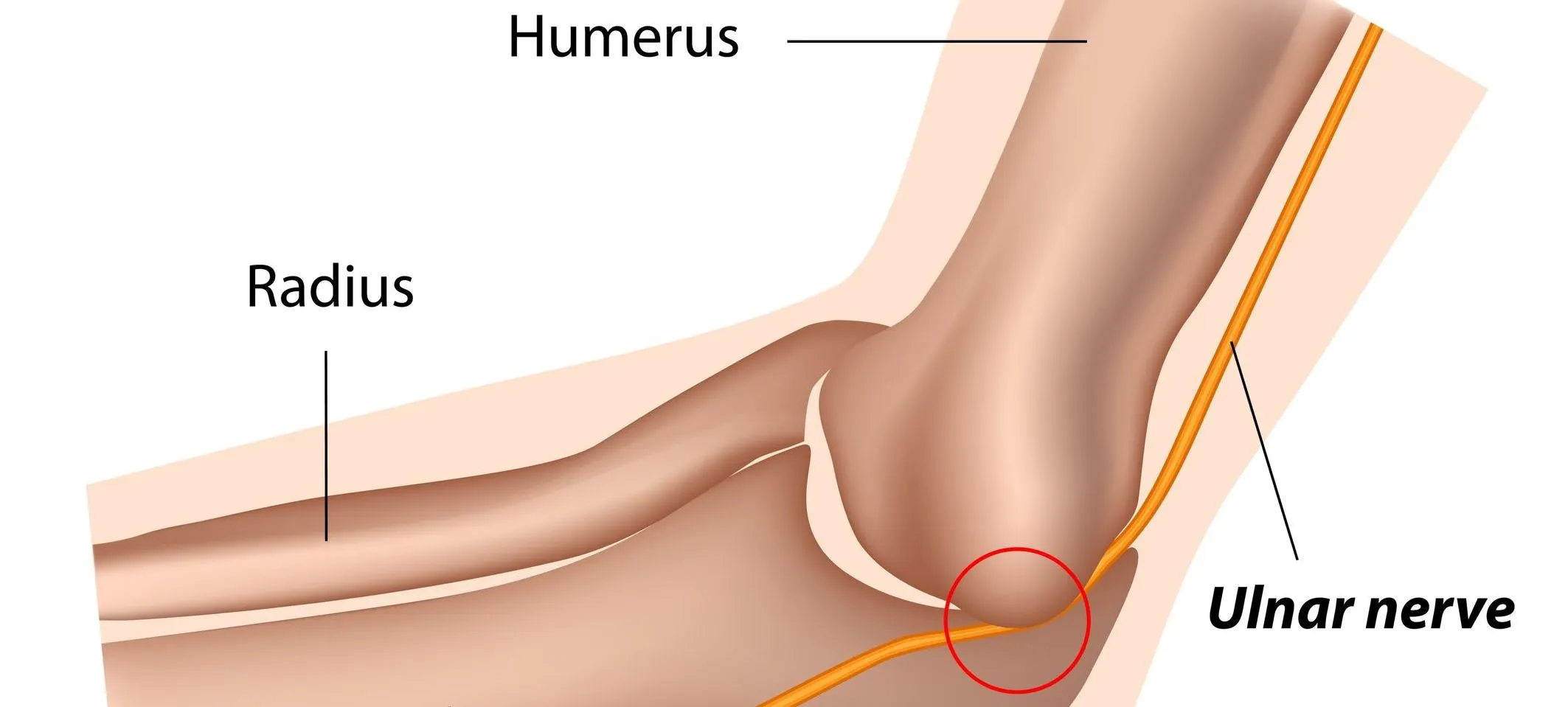
Ulnar nerve impingement is a condition in which the ulnar nerve, one of the three major nerves supplying the upper limb, becomes compressed, irritated, or entrapped as it passes through narrow anatomical spaces in the arm, elbow, or wrist. This delicate nerve originates from the brachial plexus in the neck, travels down the inner aspect of the upper arm, winds around the elbow through a bony groove known as the cubital tunnel, and continues into the forearm and hand. It plays a vital role in transmitting sensation to the ring and little fingers and in powering several small but important intrinsic muscles of the hand responsible for grip strength and fine motor coordination.
When this nerve is subjected to sustained pressure or repetitive microtrauma, its normal function becomes disrupted. As a result, people may experience a range of symptoms including pain along the inner forearm, tingling or numbness in the fingers, hand weakness, and reduced dexterity in everyday tasks such as typing, writing, or holding objects. In more advanced cases, muscle wasting can even develop in the hand. Ulnar nerve impingement often occurs in athletes who repeatedly flex their elbows or wrists, workers engaged in repetitive or forceful upper limb activities, or individuals recovering from injuries that alter the normal tissue space around the nerve.
At DMPhysios, a renowned clinic in Noida specializing in spine and sports conditions, we understand how disruptive this problem can be to daily life and performance. Our patient-centered rehabilitation programs are designed to address conditions like ulnar nerve impingement comprehensively. Using a combination of detailed assessment, advanced physiotherapy techniques, ergonomic advice, and preventive strategies, we help patients relieve nerve pressure, restore optimal function, and prevent recurrences so they can return to work, sport, and daily activities with confidence.
Symptoms
Recognizing the symptoms early can help in timely intervention. Common signs include:
- Numbness and tingling in the ring and little fingers
- Hand weakness, particularly when gripping objects
- Clumsiness with fine motor tasks such as buttoning shirts or typing
- Pain along the inner elbow, forearm, or hand
- Loss of grip strength or difficulty spreading the fingers apart
- Muscle wasting in severe or chronic cases, particularly in the hand’s intrinsic muscles
- Worsening of symptoms when the elbow is bent for prolonged periods (phone use, reading, or sleeping with elbow flexed)
At DMPhysios, clinicians assess these symptoms using detailed clinical and diagnostic tests to determine the severity and exact location of ulnar nerve impingement.
Types of Ulnar Nerve Impingement
1. Cubital Tunnel Syndrome (Elbow Region)
- Most common form of ulnar nerve impingement.
- Compression occurs at the cubital tunnel near the medial epicondyle (inner elbow).
- Symptoms worsen with prolonged elbow flexion (e.g., holding a phone, leaning on elbows, sleeping with bent arms).
- May cause numbness, tingling, and weakness in the hand and forearm.
2. Guyon’s Canal Syndrome (Wrist Region)
- Compression occurs at Guyon’s canal near the wrist.
- Often seen in cyclists (“handlebar palsy”) and workers using vibrating tools.
- Symptoms primarily affect hand strength and finger coordination rather than elbow pain.
- May cause clumsiness, reduced grip, and difficulty with fine motor tasks.
3. Double Crush Syndrome
- Simultaneous compression at more than one site (e.g., neck and elbow, or elbow and wrist).
- Can make symptoms more complex and persistent.
- Requires detailed evaluation to identify all areas of entrapment.
DMPhysios emphasizes a thorough clinical work-up to identify which type of ulnar nerve impingement a patient has to tailor treatment effectively.
Causes
The following factors can lead to ulnar nerve compression:
- Prolonged elbow flexion: Sleeping with elbows bent or resting elbows on hard surfaces.
- Direct trauma: A blow to the inner elbow (“funny bone” area).
- Repetitive activities: Typing, cycling, or heavy lifting can cause microtrauma to the nerve.
- Arthritic changes: Bony spurs or joint degeneration narrowing nerve pathways.
- Soft tissue swelling: After injury or surgery.
- Occupational hazards: Vibrating tools or repetitive gripping movements.
- Anatomical variations: Narrow cubital tunnels or tight fascial bands.
At DMPhysios, identifying the root cause of ulnar nerve impingement is an essential first step in designing a patient-specific rehabilitation program.
Risk Factors
Some individuals are at higher risk of developing ulnar nerve impingement:
- Athletes: Especially throwers, weightlifters, and cyclists.
- Occupational factors: Office workers, assembly line workers, or musicians.
- History of elbow injury or fracture.
- Medical conditions: Diabetes, hypothyroidism, or inflammatory arthritis.
- Poor posture: Rounded shoulders or forward head posture increasing nerve tension.
- Prolonged use of mobile devices or computers.
DMPhysios, a Noida-based clinic focused on spine and sports conditions, routinely educates patients about these risk factors to minimize future nerve problems.
Treatment
Treatment depends on the severity and duration of symptoms. The goals are to relieve nerve pressure, reduce inflammation, and restore normal function. Options include:
1. Conservative (Non-surgical) Management
- Activity modification: Avoid leaning on elbows, reduce repetitive wrist flexion, and change workspace ergonomics.
- Splinting: Night splints to keep the elbow slightly extended can reduce compression.
- Anti-inflammatory medications: For pain and swelling (prescribed by a physician).
- Nerve gliding exercises: Gentle movements to mobilize the nerve without irritation.
- Physiotherapy interventions: Strengthening, posture correction, and ergonomic training (explained in detail below).
2. Surgical Management
If conservative care fails after several months or if there is significant muscle wasting/weakness, surgery may be needed to decompress or transpose the ulnar nerve. Post-operative rehabilitation is critical, and DMPhysios provides specialized protocols for patients recovering from ulnar nerve surgeries.
Physiotherapy Treatment
Physiotherapy is the cornerstone of conservative management and post-surgical recovery for ulnar nerve impingement. At DMPhysios, each patient undergoes a personalized, evidence-based rehabilitation program. Here’s how we approach it:
1. Comprehensive Assessment
- Detailed history of symptom onset, aggravating factors, and occupational demands.
- Physical tests such as Tinel’s sign at the elbow or wrist, elbow flexion test, and grip strength assessment.
- Posture analysis to identify contributing factors.
2. Pain and Inflammation Management
- Cold therapy: Short-term ice application to reduce local inflammation.
- Therapeutic ultrasound or laser therapy: To decrease pain and promote healing.
- Soft tissue mobilization: Gentle massage of surrounding muscles to reduce tension.
3. Nerve Gliding / Neural Mobilization
- Gentle ulnar nerve gliding exercises are taught to maintain nerve mobility and reduce adhesions.
- These are progressed carefully to avoid nerve irritation.
4. Postural Correction
- Strengthening scapular stabilizers (serratus anterior, trapezius) to improve shoulder mechanics.
- Ergonomic advice for workstation setup and daily tasks to minimize elbow flexion stress.
5. Strengthening and Flexibility Training
- Forearm and wrist exercises: To strengthen muscles that support the nerve.
- Hand intrinsic muscle training: Using therapy putty or grip tools.
- Stretching: For tight muscles around the elbow and wrist.
6. Functional Training
- Simulated tasks or sport-specific drills to return patients to their normal activities.
- Education on pacing, breaks, and protective techniques during repetitive tasks.
7. Post-Surgical Rehabilitation (If Needed)
- Gradual restoration of elbow movement and hand function.
- Scar tissue management and progressive strengthening.
This structured physiotherapy approach at DMPhysios not only addresses current symptoms but also corrects underlying biomechanical issues to prevent recurrence of ulnar nerve impingement.
Prevention
Preventive strategies are essential, especially for individuals at risk:
- Avoid prolonged elbow flexion (keep elbows straight when sleeping).
- Use elbow pads if leaning on hard surfaces.
- Set up an ergonomic workspace to reduce repetitive stress.
- Take frequent breaks from typing, cycling, or using vibrating tools.
- Maintain good posture with shoulders back and spine neutral.
- Strengthen supporting muscles around the shoulder, arm, and hand.
- Perform regular nerve gliding exercises if you have a history of nerve issues.
At DMPhysios, prevention is a cornerstone of care. We teach our patients not just how to recover from ulnar nerve impingement, but how to avoid it altogether by integrating safe movement patterns into their daily lives.
Conclusion
Ulnar nerve impingement is a common yet often overlooked cause of hand and forearm discomfort. Left untreated, it can lead to persistent pain, weakness, and even permanent nerve damage. Early recognition, appropriate medical evaluation, and a structured physiotherapy program can restore normal function and prevent long-term complications.
At DMPhysios, a premier Noida-based clinic for spine and sports conditions, we provide patient-centered rehabilitation for individuals suffering from ulnar nerve impingement. Our multidisciplinary approach includes precise diagnosis, individualized physiotherapy treatment, ergonomic education, and preventive strategies.If you or someone you know is experiencing symptoms of ulnar nerve impingement, don’t wait for the condition to worsen. Contact DMPhysios today to book an appointment and take the first step toward pain-free, optimal upper limb function.